
There are places that surprise without the need for special effects and Bevagna is one of them. During our trip to Umbria we decided to dedicate a stop to it and, from the first steps, we had the feeling of entering a different dimension, where time seems to have stopped. Surrounded by a splendid medieval wall, this small town in the Umbrian Valley preserves an extraordinary historical heritage. Its paved streets, stone houses and the silence that accompanies every walk make the experience authentic and engaging.
Walking within the walls is already a journey into history
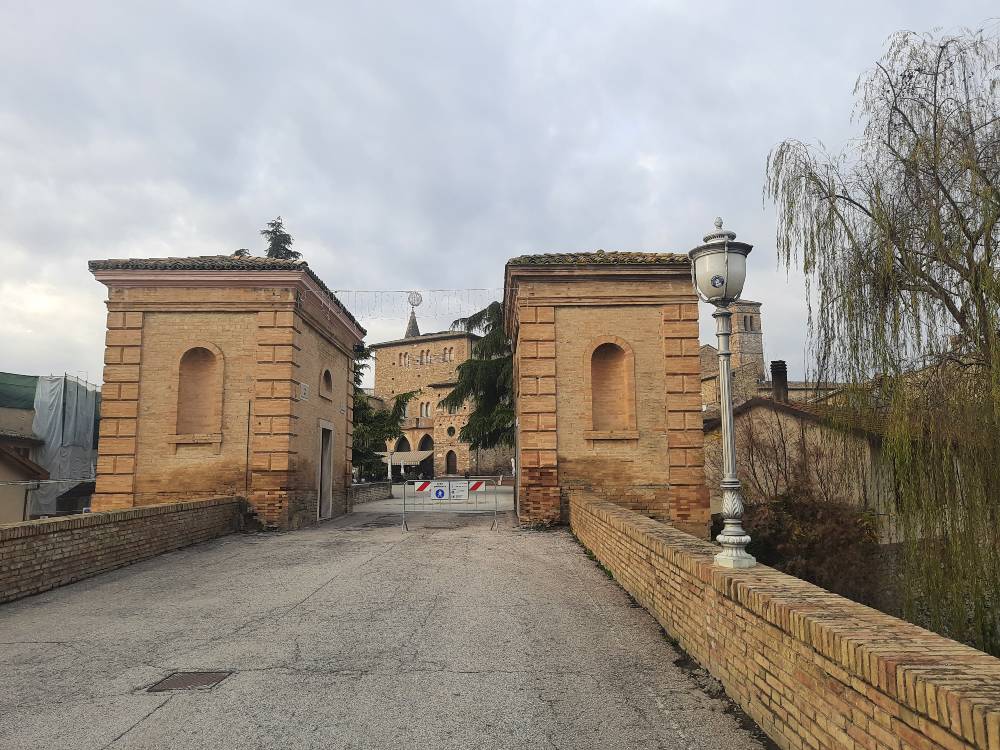
Even before entering the historic center we walked along part of the ancient defensive walls, still perfectly preserved today. The towers and access gates tell of the city’s strategic past. Among the most evocative are Porta Cannara, with its imposing tower, Porta Foligno, an ancient connection with the Via Flaminia, and Porta Todi, which leads to the bridge over the Clitunno river. Walking along these fortifications means observing centuries of history engraved in the stone.
@RebeccaManzi/GreenMe
@RebeccaManzi/GreenMe
Piazza Silvestri, the most beautiful heart of Bevagna
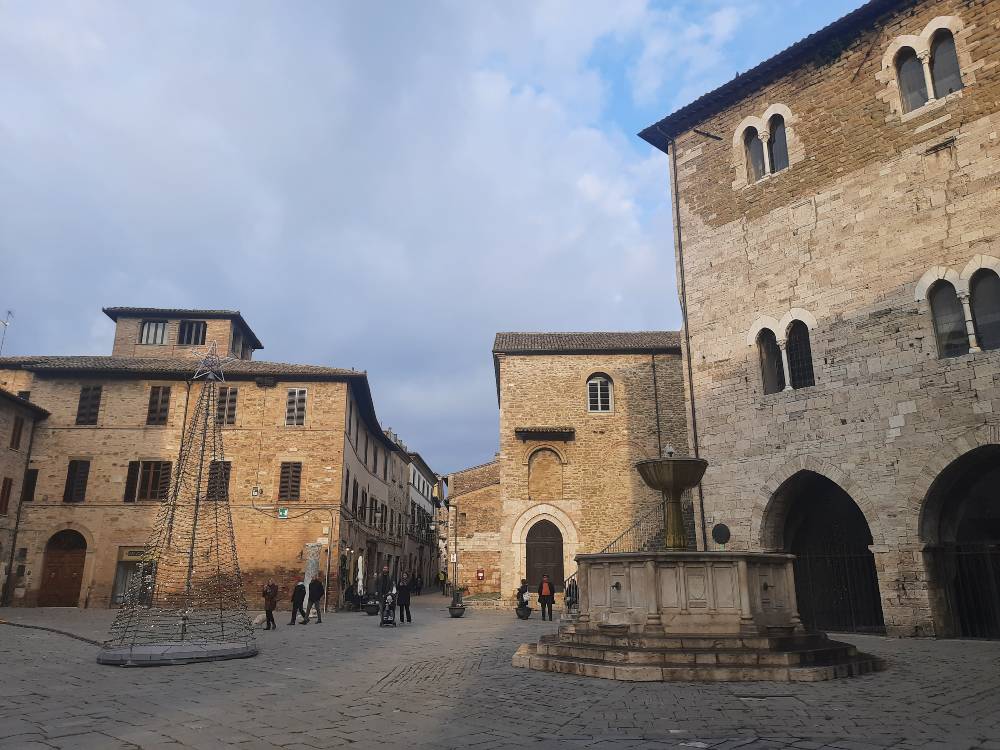
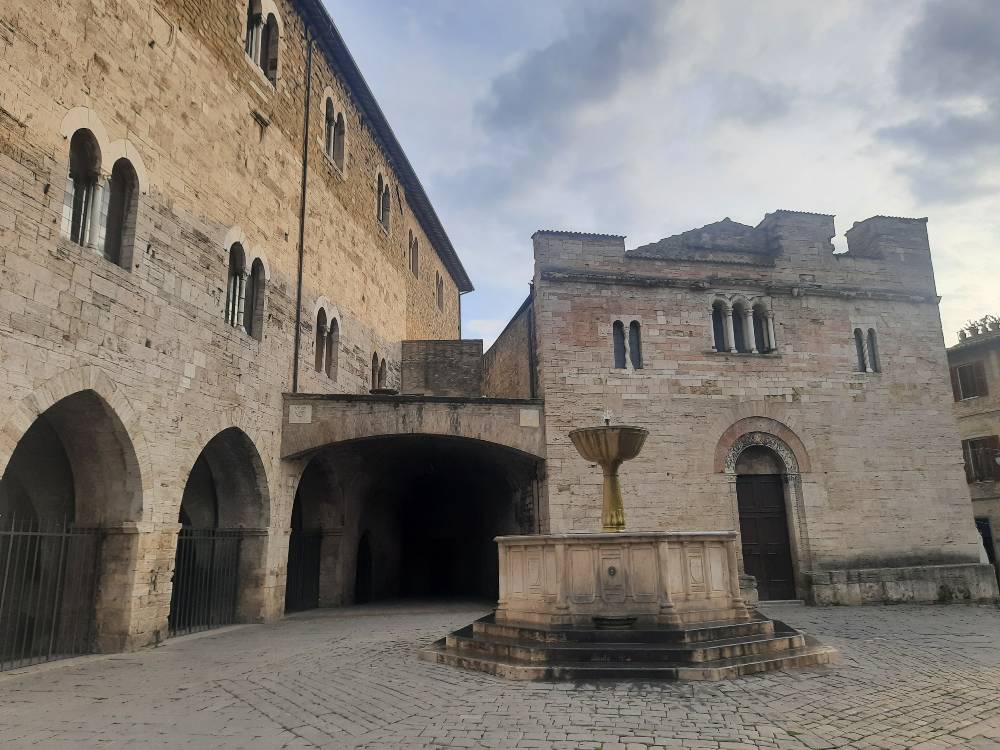
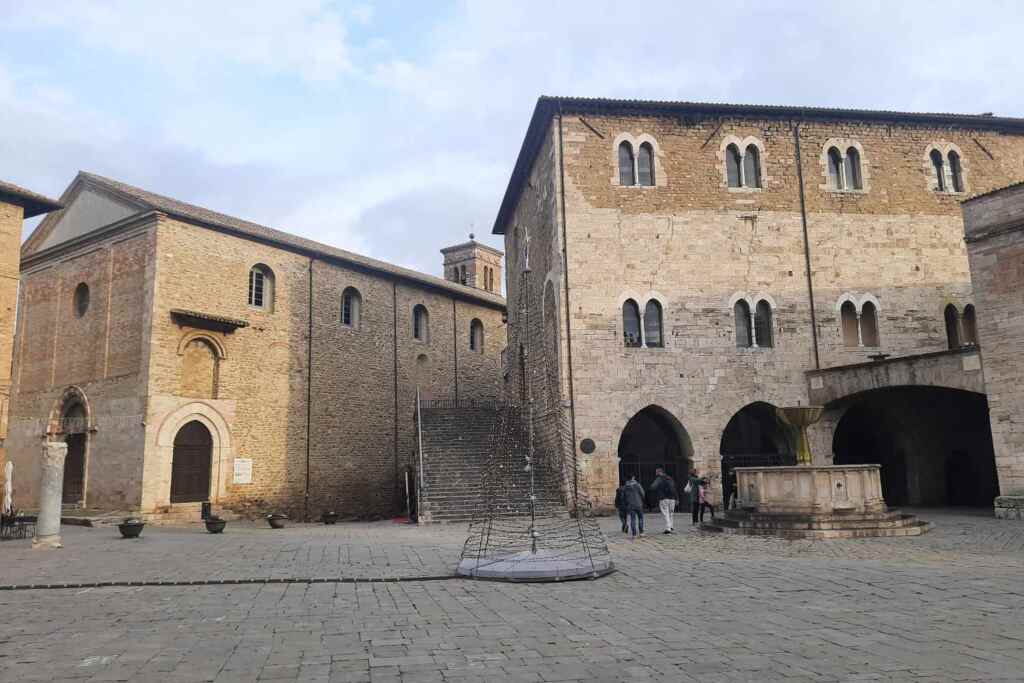
The place that struck us most was undoubtedly Piazza Silvestri, considered one of the most fascinating medieval squares in Umbria. Its irregular shape creates a particular harmony, while in the center a nineteenth-century fountain and a Roman column stand out, testifying to the different eras the village has passed through. Some of the most important buildings in the city are concentrated around the square, creating a setting of rare elegance that invites you to simply stop and observe.
@RebeccaManzi/GreenMe
The Palazzo dei Consoli and the little jewel of the Torti Theatre
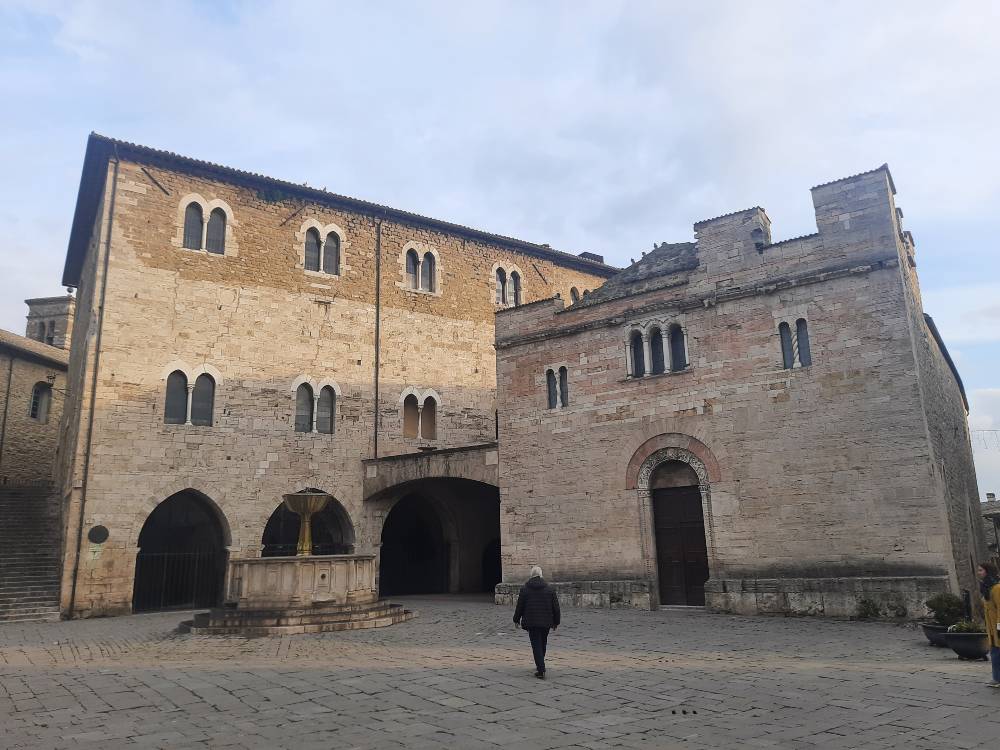
The majestic Palazzo dei Consoli, built in the 13th century, dominates Piazza Silvestri. The façade, with the elegant Gothic mullioned windows, and the spectacular external staircase represent one of the most significant examples of medieval Umbrian civil architecture. Inside there is the refined Torti Theatre, inaugurated in the nineteenth century. Despite its small size, it retains decorations and frescoes that make it a small artistic marvel.
@RebeccaManzi/GreenMe
The Romanesque churches that tell of centuries of faith
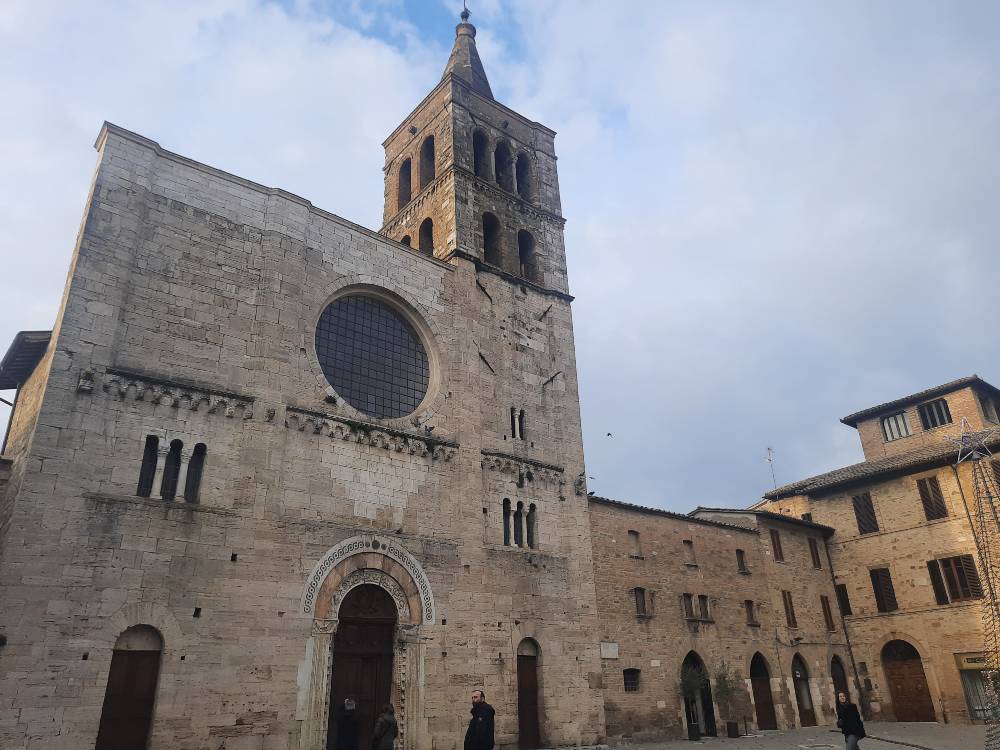
In front of the Palazzo dei Consoli there are two authentic masterpieces of Umbrian Romanesque: the Church of San Michele and the Church of San Silvestro. The first is striking for its magnificent decorated portal and sturdy bell tower. Inside it houses works of art, statues and a precious wooden crucifix, as well as the famous silver statue of San Vincenzo.
@RebeccaManzi/GreenMe
The Church of San Silvestro, however, fascinates with its essentiality. The unfinished façade, the three-light window supported by elegant columns and the intimate atmosphere of the three naves convey a feeling of great peace. Not far away is also the Church of San Domenico and San Giacomo, which preserves fourteenth-century frescoes, medieval wooden sculptures and the urn with the remains of the Blessed Giacomo Bianconi.
@RebeccaManzi/GreenMe
@RebeccaManzi/GreenMe
The traces of ancient Roman Mevania
Walking through the alleys you realize that the ancient Roman Mevania still lives beneath the medieval Bevagna. The remains of the Roman Baths are visible, with a precious mosaic decorated with marine motifs, while the Roman Temple, incorporated into subsequent buildings, still retains part of its original structures.
The route that the ancient Roman Theater follows is also curious: today it is no longer visible in its entirety, but the semicircular shape of the streets and houses still allows you to glimpse the imposing construction that once hosted thousands of spectators.
The medieval workshops, where ancient crafts are still alive
One of the most fascinating aspects of Bevagna is represented by its artisan workshops. Here we discovered processes that still follow techniques handed down over the centuries: the production of the famous Tela Bevagna, obtained from hemp, the creation of cotton wool paper, the ancient waxworks and textile workshops. These are not simple shops, but authentic historical laboratories that allow us to understand how medieval artisans lived.
The bridge over the Clitunno and the ancient wash house
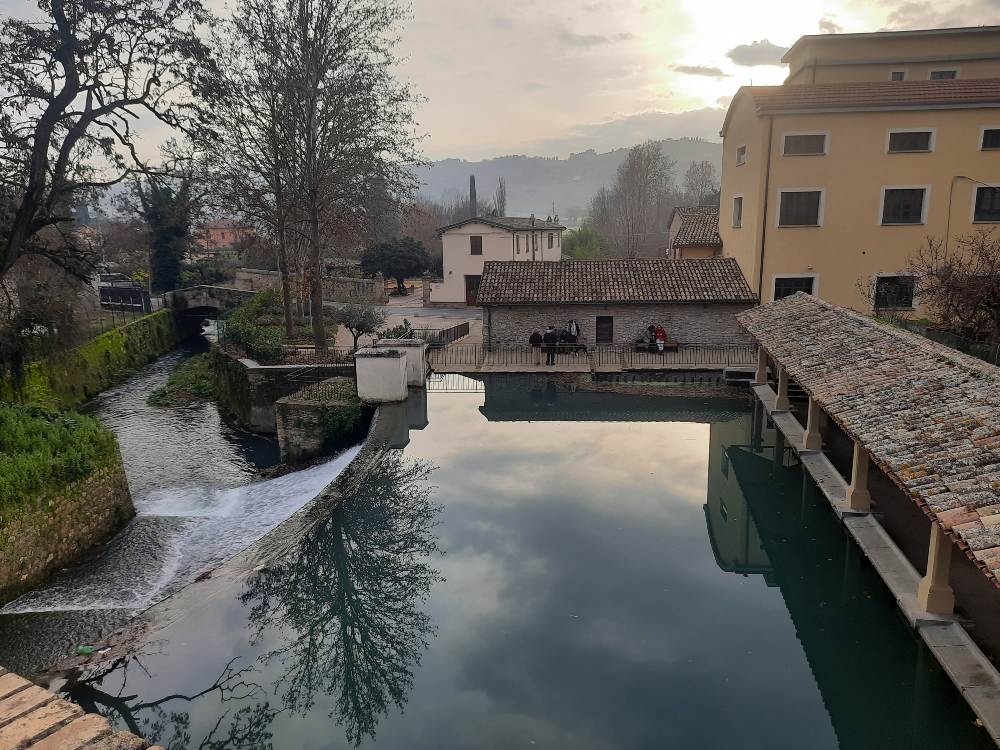
Before leaving the village we reached one of the most photographed corners of Bevagna: the bridge over the Clitunno river. From here you can admire the Accolta, the ancient public wash house where the women of the town once met to wash their clothes. The water creates a small waterfall which makes this place even more evocative and represents one of the most romantic views of the village.
@RebeccaManzi/GreenMe
Why visit Bevagna
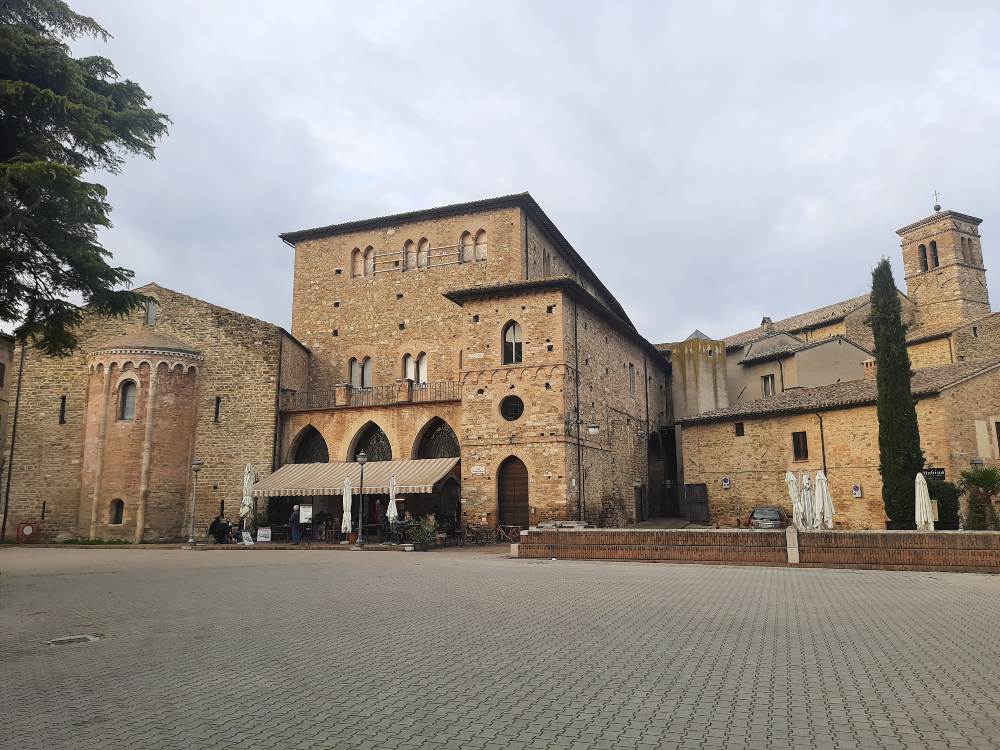
Our visit left us with the feeling of having discovered one of the most authentic places in Umbria. Bevagna does not focus on large spectacular monuments, but conquers with its atmosphere, with the perfect balance between history, art and traditions and with the ability to make every visitor feel part of a centuries-long story. It is an ideal destination to include in an itinerary between Assisi, Spello, Foligno and Spoleto, but it also deserves a day all to itself, to be experienced calmly, simply letting yourself be guided by the curiosity behind every alley.
@RebeccaManzi/GreenMe
You might also be interested in:
