
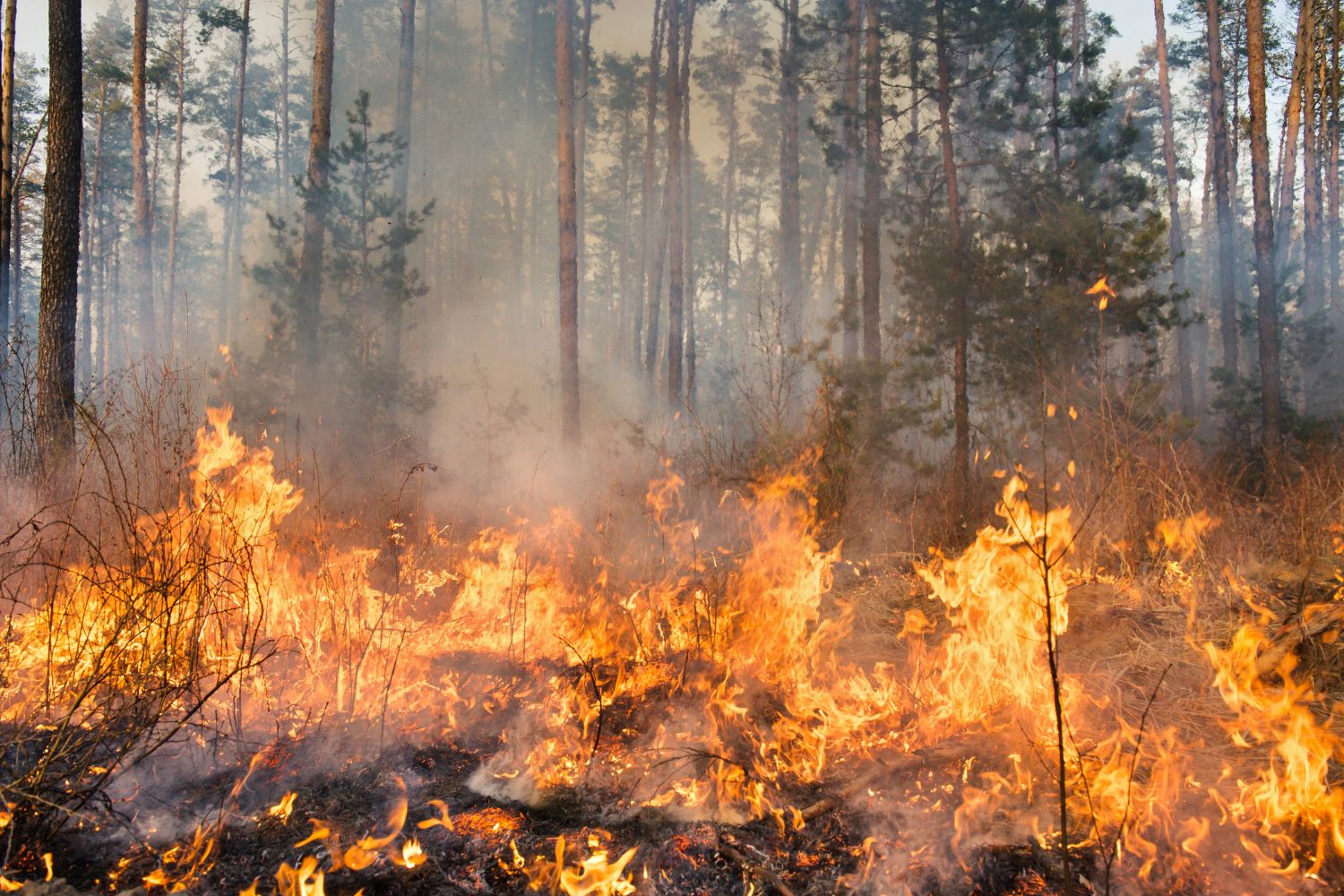
It’s no longer just a summer emergency. The fire always arrives earlier, stays longer and finds increasingly fragile territories. It is one of the most evident effects of the climate crisis, which is changing the face of forest fires in Italy: today they do not only flare up in the warmer months, but already in winter and spring, when the firefighting season has not yet officially begun.
This new reality is photographed by Legambiente’s Italy in smoke 2026 report, according to which from 1 January to 15 June 2026, 469 fires have already been recorded, with 9,545 hectares of territory going up in smoke, an increase of 36.3% compared to the same period in 2025.
If, therefore, until a few years ago fires were a phenomenon concentrated especially in the height of summer and in the southern regions, today the scenario has changed.
Increasingly high temperatures and long periods of drought are making even traditionally less exposed territories vulnerable. Among the Northern regions, for example, Piedmont went from 23 hectares burned in the same period of 2025 to 355 hectares in the first months of 2026, while Liguria recorded 386 hectares gone up in smoke. In Tuscany, in the month of May alone, a fire in the province of Lucca devastated 623 hectares of territory.
@Legambiente
In the South, however, Sicily and Calabria continue to pay the highest price. Sicily leads the ranking with 4,769 hectares burned and also holds the sad record of protected areas affected: 1,800 hectares destroyed within sites of the Natura 2000 network.
The fire always returns to the same places
Among the novelties of the report there is also a new indicator, the municipal recidivism index, which measures how often fires are repeated in the same territories.
The result is worrying: ten municipalities, all between Sicily and Calabria, record a systematic concentration of fires. A figure which, according to Legambiente, speaks of the structural fragility of the territory and the need to intervene before the flames ignite.
Prevention represents the only truly effective defense against forest fires together with the care of the forest and the fight against the abandonment of the countryside, says Stefano Ciafani, national president of Legambiente.
For the environmentalist association the problem is not just climate-related. Also weighing are years of poor forestry planning, the fragmentation of skills and the insufficient application of the framework law on forest fires, 353 of 2000, which provides for fundamental tools such as the register of areas affected by fire and specific constraints to prevent their transformation.
The 14 proposals to stop the emergency
For this reason, Legambiente has presented 14 proposals to the Government to change the approach and move from emergency management to prevention.
Among the main requests is the bringing forward of the forest firefighting season from 15 June to 15 May, so as to adapt the institutional calendar to a climate that has now profoundly changed.
The association also calls for the full application of law 353/2000, concrete support for municipalities to update the register of burned areas, a transparent national fire monitoring system, greater coordination of civil protection and a strengthening of prevention strategies in protected areas.
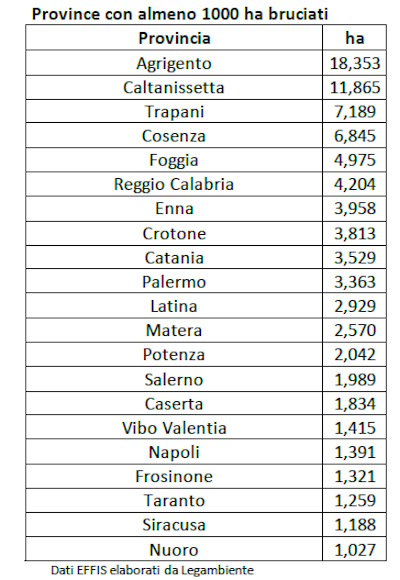
@Legambiente
In 2025 the flames devoured 96,517 hectares of territory, almost double compared to the previous year. A figure that risks being exceeded if the pace recorded in the first months of 2026 were to continue during the summer.
For Legambiente the message is clear: fires can no longer be considered exceptional events.
They are now one of the most evident manifestations of the climate crisis and the fragility of our territories. Continuing to intervene only when the fire has already blazed means chasing an emergency destined to repeat itself.
The real challenge today is another: learning to take care of the woods before they burn. Because every hectare saved not only represents a preserved piece of nature, but also biodiversity, soil, water and the future that we choose not to lose.
HERE is the full report.
