
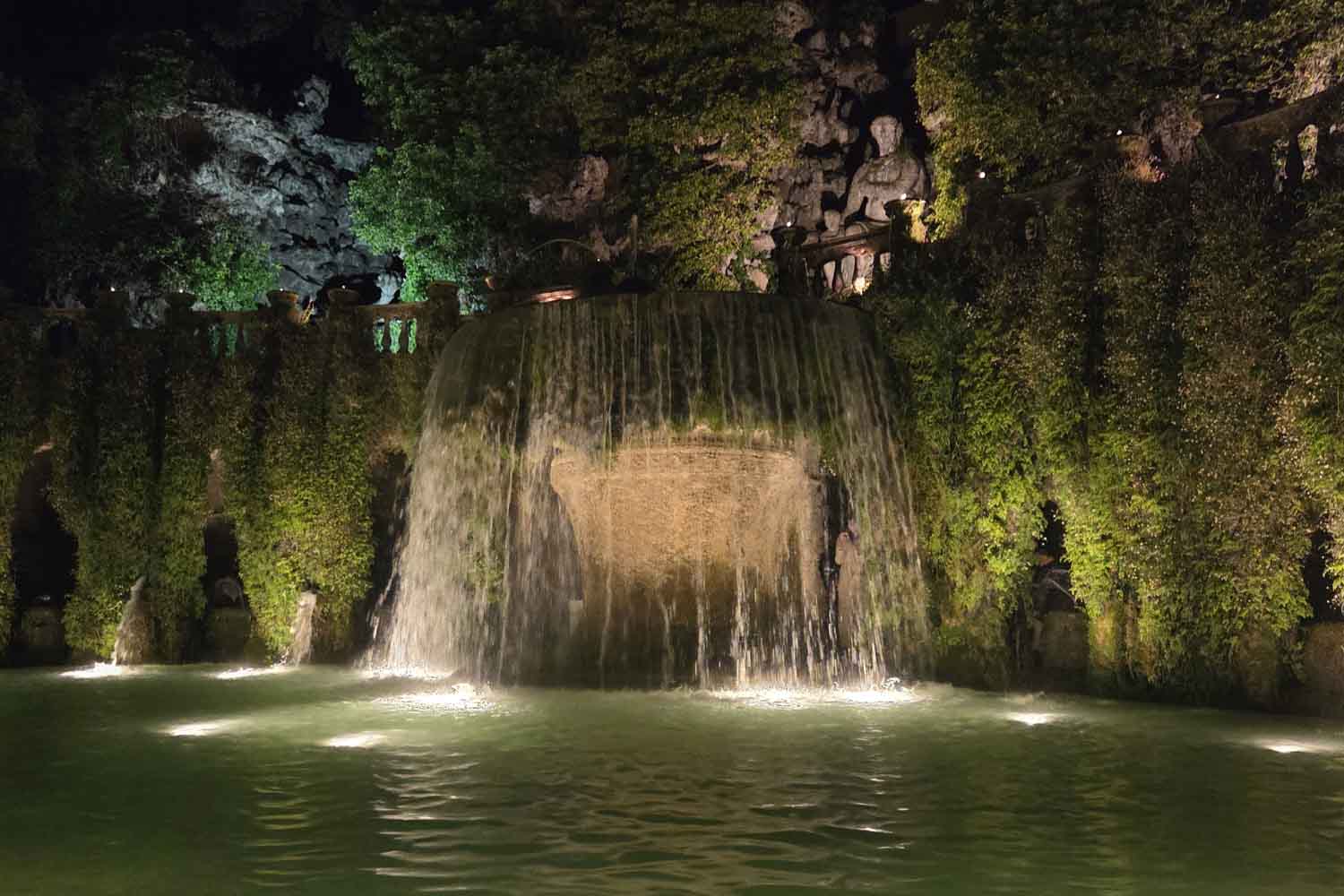
In Villa d’Este water is everywhere. It descends, bounces, fills tanks, activates fountains and accompanies visitors until it becomes almost invisible: part of the landscape, good for photographs and background noise. The exhibition Cosmogonies of water. Claudia Mülleropen from 16 July to 18 October 2026, try to stop this automatism for a moment and bring the water back before your eyes.
Three installations site-specific they occupy the Palace, the Greenhouse of the Melangoli Garden and the Ariadne Fountain. The project was born from the work of the Chilean artist Claudia Müller on waterways, on the materials transported by the current and on the borders continually crossed by an element which, with the divisions drawn on the maps, has always had a rather distracted relationship. The exhibition is the first initiative of the MuseoNatura program, promoted by the Villa Adriana and Villa d’Este Institute with the Municipality of Licenza.
The location helps. The garden of Villa d’Este is also recognized by UNESCO for its complex water distribution system, fountains and hydraulic automatons introduced in the sixteenth century. Here water was channeled, designed and transformed into spectacle long before the word “immersive” entered any cultural statement. UNESCO calls it a masterpiece of hydraulic engineering.
Branches collected along the river become a water circuit
The itinerary includes Frontera Liquidaa three-part video work dedicated to the unstable separation between what remains above the surface and what ends up submerged. An apparently clear border, until the water level decides otherwise.
It is found in the Greenhouse of the Melangoli Garden Milky Water. The work was born from research conducted along the Aniene during the artist’s residency in Licenza. Müller worked on the shapes of the branches collected on the banks and transported by the river, obtaining casts then assembled with ceramic, wood, bronze and mirrors. Inside the structure the water continues to circulate.
©Cosmogonies of water – Claudia Muller
Those plant fragments thus cease to be debris to be removed and become the material trace of the path taken by the river. The installation recalls a hydrographic network, a nymphaeum and, through the title, even a celestial geography. Many suggestions together, perhaps too many for those looking for an immediate ecological message. The work works best when it stays close to the material: branches, water, sediments and surfaces that reflect what is around them.
Ariadne’s Fountain enters the opera
Water Spirals it was instead created for the Ariadne Fountain and follows the circular movement of the water within the historical system of the Villa. The installation does not simply add an object next to the fountain: it tries to fit into its functioning and the path that connects springs, canals and gardens.
The exhibition is presented by the Institute as a reflection on the relationship between art, territory, biodiversity and the cosmic dimension. These are very broad words. The works, fortunately, are more concrete: they show water as it passes through materials and places, modifies shapes and preserves traces of what it encounters.
The distinction is useful. Cosmogonies of water it is an art exhibition, not an intervention against the water crisis, river pollution or the loss of biodiversity. It can make a relationship that we tend to treat as obvious more visible. It does not clean up the Aniene and does not reduce the Villa’s consumption. Loading installations with similar tasks would also mean transforming water into a rhetorical decoration, after having just tried to free it from the architectural one.
Times and tickets
The exhibition is curated by Alberto Samonà, Davide Bertolini and Sara Tarissi de Jacobis and can be visited at Villa d’Este until 18 October 2026. Entrance is included in the Villa’s ordinary ticket, except for discounts and free tickets.
Updated information is available on the official page of the Villa Adriana and Villa d’Este Institute. In a place built to dominate the water, Müller tries to follow it. It’s a small shift, but more interesting than yet another promise of “dialogue between past and present”: for once the fountain doesn’t just have to look good in photography.
