
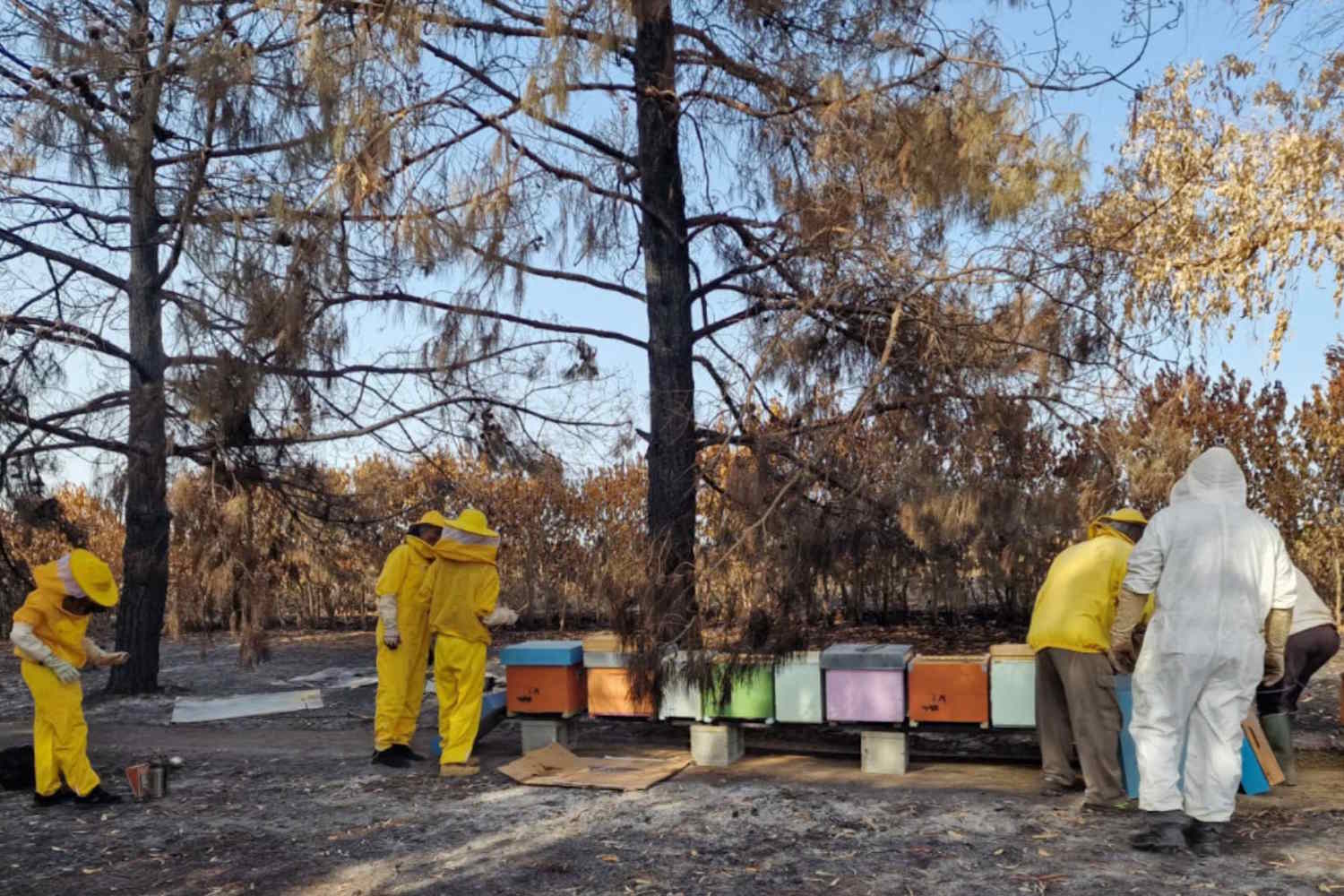
Is called “Sa paradura” and it is one of the oldest customs in the Sardinian agro-pastoral world that has reappeared in these days in which many images tell two faces of Sardinia: the dramatic one of the fires that devour the land and the brighter one of the community that leaves no one behind.
The fire that hit the hinterland of Cagliari, between Selargius and Monserrato, destroyed hectares of fields and caused a real silent massacre: over 750 thousand bees died in the flames, along with hives, equipment and years of work by local beekeepers.
A very hard blow for a sector already tested by drought, record temperatures and climate change. But in those most difficult moments, the “Sa paradura” re-emerged, one of the most beautiful traditions of Sardinian culture.
What is “Sa paradura”
The term, in Sardinian, literally indicates “the reconstitution of the flock” and indicates the collective gesture with which shepherds help those who have lost their livestock due to a disaster, an illness or a dramatic event. The practice works like this: each shepherd donates one or more sheep (or other animals from his flock) to the shepherd in difficulty. The many small donations, added together, allow the affected person to rebuild their assets and start again.
It is not a simple fundraising ante litteram: it is a social pact based on an ancient principle of Sardinian agro-pastoral culture: “today I help you, tomorrow the community will help me”.
Sa paradura it has become a symbol of mutual aid, resilience and rural solidarity. One of the best-known episodes dates back to 2010, when thousands of Sardinian shepherds took part in a parade to help Abruzzo farmers hit by the L’Aquila earthquake, donating sheep to rebuild the destroyed flocks.
View this post on Instagram
It is a tradition that tells of a very current idea: the community as a protection network, where the value lies not only in possession, but in the ability to share what you have to allow others to get back on their feet. And this time the tradition has been adapted to the world of beekeeping. The beekeepers of the Cagliari area have chosen, in fact, to donate swarms, material and technical support to their colleagues left without anything after the fire, allowing them to start again.
A gesture that quickly made the rounds on social media, becoming the symbol of a Sardinia capable of reacting even in the face of the toughest emergencies.
The alarm for bees and agriculture
The fire represents only one part of a larger problem. This summer’s climatic conditions are increasing pressure on the agricultural sector and exceptional heat waves, combined with water scarcity and the spread of fires, are creating new difficulties for farmers and beekeepers. The first reports concern beehives, which are increasingly vulnerable to high temperatures and the effects of the climate crisis.
The concern also looks to the recent past. In 2023, the extreme heat had already caused significant damage to Sardinian beekeepers, with numerous dead bees and honeycombs compromised by the high temperatures. Let us remember that bees are not just honey producers: they are sentinels of the environment and fundamental protagonists of pollination, indispensable for biodiversity and agricultural production.
The story of Sa paradura of Sardinian beekeepers reminds us of an important thing: when fire destroys, solidarity can become the first seed of rebirth.
