
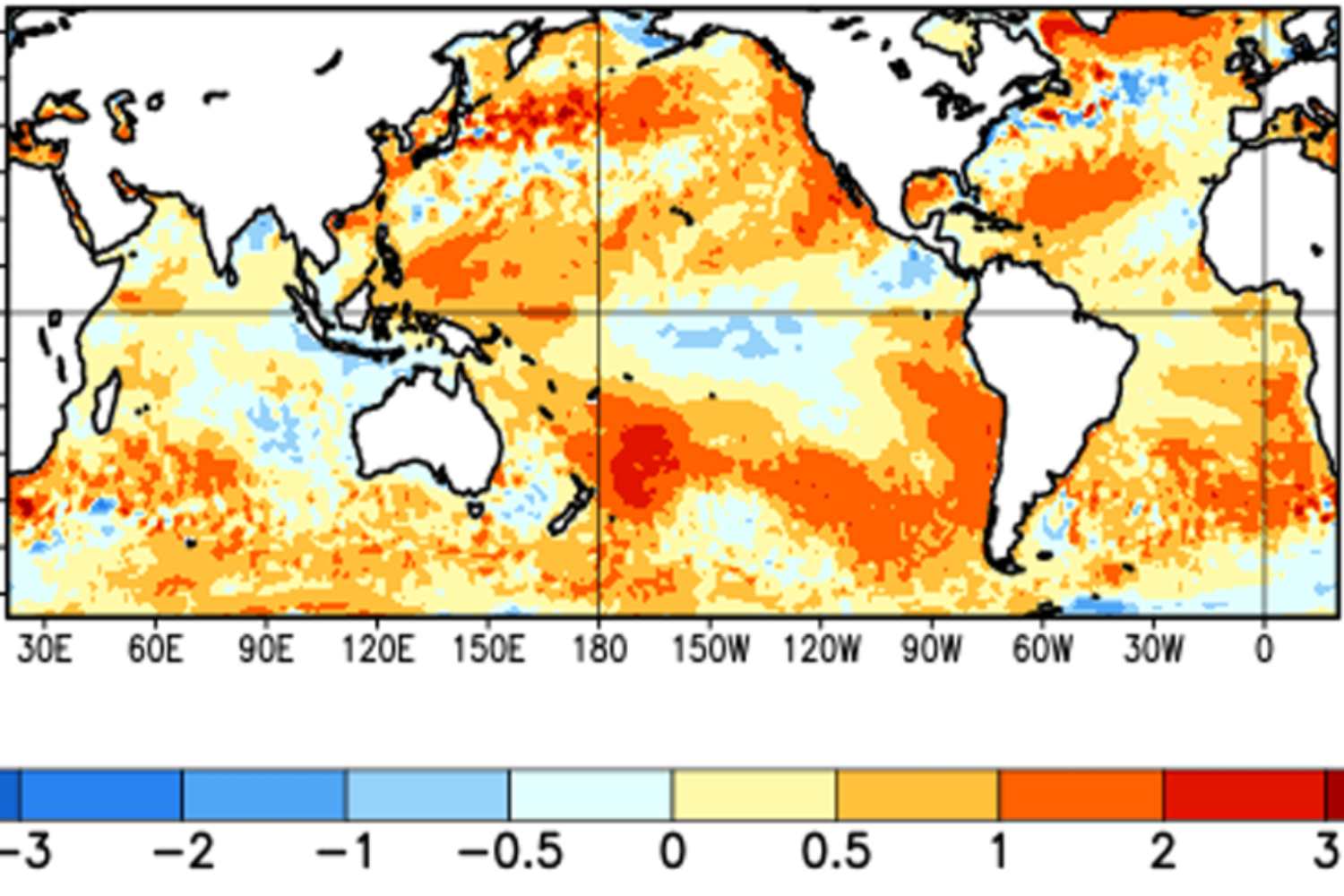
An increasingly warm ocean, global temperatures already at historic highs and a natural phenomenon that could further amplify the effects of the climate crisis. This is the scenario that is worrying scientists: the return of El Niño, which, according to some projections, could turn into one of the most intense events ever recorded in the last 150 years.
This was reported by research published in Nature, which analyzed the latest data on ocean temperatures and available climate models. According to estimates, the phenomenon developing in the Pacific Ocean could reach exceptional levels, with important consequences on the global climate.
El Niño is neither a new phenomenon nor directly caused by climate change. It is a natural phase of the ENSO cycle (El Niño-Southern Oscillation), a large oscillation involving tropical Pacific surface temperatures and atmospheric winds. When this occurs, ocean surface waters warm more than normal and release more heat into the atmosphere.
This can change rainfall patterns, intensify some extreme events and temporarily contribute to the increase in average global temperatures. The problem today is that El Niño arrives on a planet already deeply heated by greenhouse gas emissions.
The risk of a record-breaking 2027
According to projections reported by Nature, the combination of a particularly intense El Niño and human-caused global warming could lead to new climate records in 2027.
Scientists hypothesize that the global average temperature could approach values up to 1.7°C above the pre-industrial average, a threshold extremely close to the 1.5°C limit indicated by the Paris Agreement as a target not to be exceeded. An increase that would not just be a number: it would mean greater chances of extreme heat waves, droughts, torrential rains and increasingly strong stress on ecosystems.
@Zeke Hausfather/Berkeley Earth
According to Zeke Hausfather, a climate scientist at Berkeley Earth, some climate models indicate that this El Niño episode could surpass previous records by a very significant margin.
The simulations analyzed would show Pacific surface temperatures potentially higher than the major event of 2015-2016, one of the strongest El Niños ever observed. In short, according to scientists, the current behavior of the ocean-atmosphere system resembles the scenarios that had been predicted for a future in which climate change would amplify these phenomena.
The US National Oceanic and Atmospheric Administration (NOAA) also constantly monitors the evolution of El Niño. According to the latest forecasts, there is a significant probability that the phenomenon will reach a “very intense” phase by the end of the year and that El Niño conditions could persist until the spring of 2027.
