
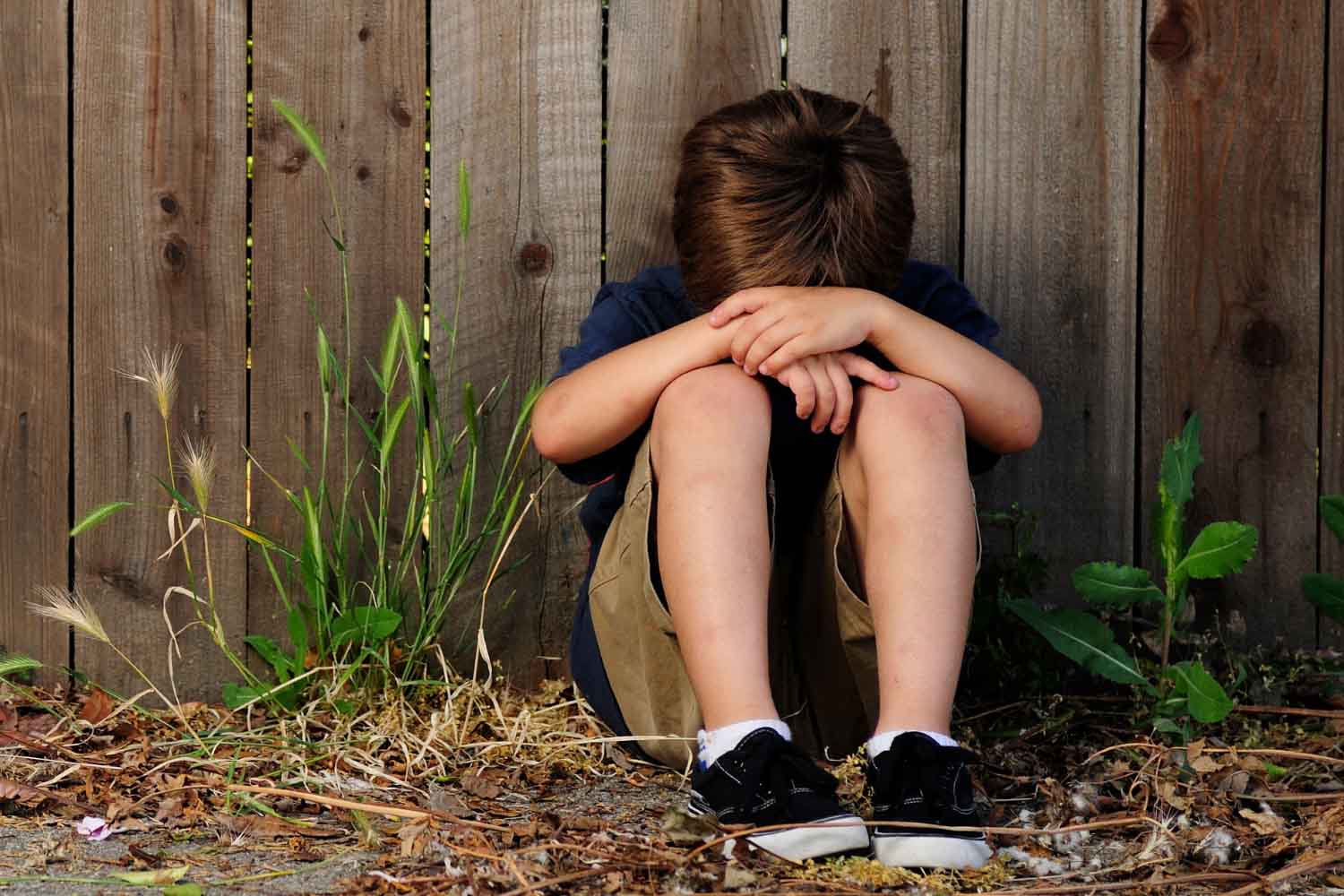
Childhood ends. However, some of the things that happened in those years continue to travel with the person, in the memories, in the responses to stress, in the way in which one approaches others or always remains ready to defend oneself.
Three recent studies have observed different aspects of childhood trauma: the stability of memories of abuse and neglect, differences in brain structure and the skills developed by children who grow up after severe deprivation. A long story emerges, which reaches far beyond childhood. However, this story also includes the care received afterwards.
The memories of the mistreatment remain stable
Anyone who talks about abuse experienced as a child often encounters an implicit, sometimes even explicit, question: can you be sure you remember well? A meta-analysis published in Nature Mental Health tried to answer by bringing together 49 studies and almost 40 thousand people, interviewed several times on their experiences of mistreatment during childhood.
After an average of about two and a half years, four out of five participants provided consistent answers. Memories of abuse were particularly stable, while memories of neglect changed more often.
The difference is understandable. A violent act has a moment, a gesture, sometimes a precise place. Neglect is made up above all of absences: no one who listens, no one who protects, no one who notices. As children it can be difficult to recognize as abnormal what represents the only known normality. The words often come later.
Stories varied more among children and adolescents than among adults. As you grow up you can reinterpret episodes, understand their seriousness or finally find the confidence necessary to report them. Human memory doesn’t work like a video recording, yet the study shows that experiences of mistreatment are remembered with much greater consistency than some automatic distrust suggests.
A response modified over time, therefore, is not enough to make the entire story unreliable. It can indicate hesitation, fear, awareness gained later or a different way of reading one’s story. Behind a crossed box in a questionnaire there remains a person who is trying to name something that happened when perhaps he didn’t yet have the tools to understand it.
Trauma can be associated with differences in the brain
A second study published in Biological Psychiatry analyzed the MRI scans of 3,711 people between the ages of 8 and 69, collected by 25 international research centers. The scientists compared the images with models of typical brain development, similar to the curves used by pediatricians to observe weight and height growth. In this case, of course, the measurements concerned volumes, thickness and surface area of different regions of the brain.
The most extensive associations were observed in young adult women who had experienced childhood maltreatment. Differences that emerged included smaller volumes in the hippocampus and putamen and a thinner entorhinal cortex. They are areas involved, with different functions, in memory, learning, orientation and information processing.
In men, the configurations changed based on the type of experience: abuse was associated with more widespread differences, while the effects linked to neglect appeared more limited. Age, sex and form of trauma therefore seem to intervene differently. The brain does not keep a single imprint that is the same for everyone, like a stamp left on the forehead.
The study does not transform an MRI into a machine capable of reading the past. However, it shows that the experiences lived during the developmental years can be associated with biological differences that can be observed even much later.
Those differences can also be read as the result of an organism that has adapted to a difficult environment. A child forced to constantly monitor an adult’s tone of voice, a sudden noise or the risk of being rejected is learning to survive. The problem comes when that state of alert remains on even when the danger has passed, like a burglar alarm that continues to ring in front of a now closed window.
Good care can change subsequent years
The third study looks at what happens next. The Bucharest Early Intervention Project, published on Developmental Psychologyfollowed abandoned children raised in institutions in Bucharest, Romania.
These structures provided basic needs, with little opportunity to build a stable, individual bond with an adult. Some of the children had been placed in foster families selected and supported by the project, while the others continued to receive the ordinary assistance expected at the time.
At 18, the kids who grew up in foster care showed better skills in communication, socialization and managing daily life than those who stayed in the facilities longer. The quality of care received during adolescence helped explain an important part of this difference.
The data is significant because it concerns concrete skills: asking for help, building relationships, organizing yourself, taking care of yourself. Skills often considered natural, as if they should appear on their own upon reaching adulthood together with the electoral card. Instead, they need to be learned within reliable relationships.
Foster care did not erase all the effects of the initial deprivation. However, it offered a better path. Attention, continuity and presence continued to produce results many years after first joining the family.
For those who have gone through trauma, the word “resilience” is used with some generosity. Sometimes it almost feels like a delivery: you’ve survived this far, so take care of getting yourself together again. Studies show responsibility is distributed differently. We need adults capable of believing, services that intervene early and relationships stable enough to allow a child to lower his guard, little by little.
Good care doesn’t erase what happened. It can change the weight that that story will have in subsequent years. A child can learn to survive on his own. Letting it go can’t be the plan.
