
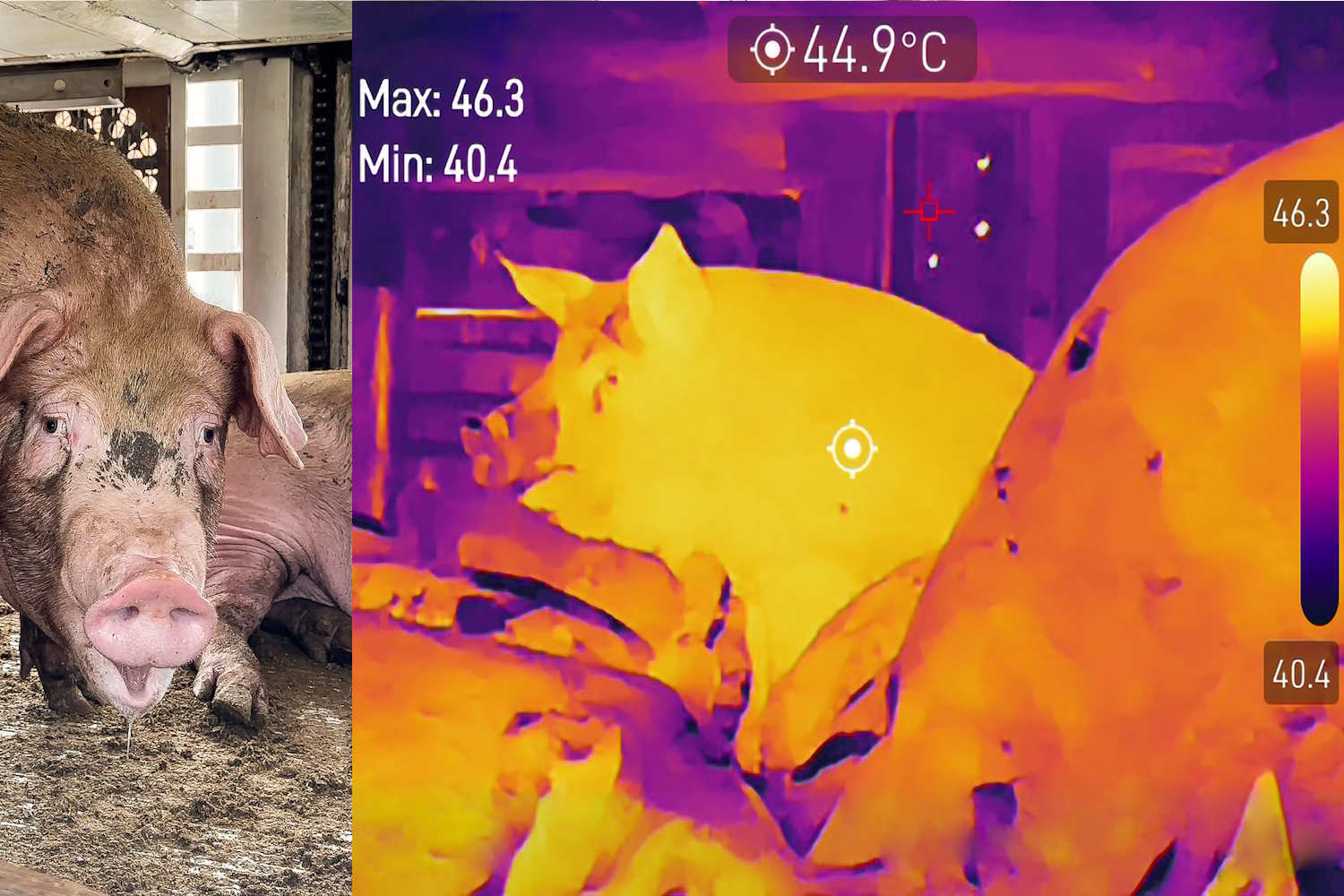
While Italy faces one of the hottest summers in recent years, between record temperatures and frequent weather warnings for extreme heat, thousands of animals continue to be transported by road during the hottest hours of the day.
This was once again reported byessereanimali, which documented the conditions in which pigs travel to the main Italian slaughterhouses: hot trucks, lack of water, overcrowded spaces and animals in obvious suffering, even to the point of death.
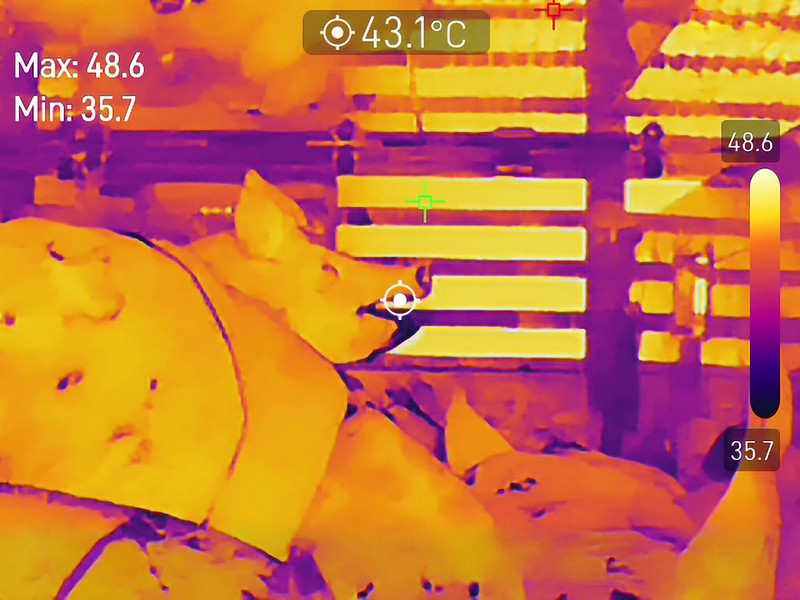
For the first time in Italy the association used a thermal imager, an instrument capable of detecting the infrared radiation emitted by objects and transforming it into thermal images, clearly showing the thermal stress suffered by the animals during transport. The measurements showed temperatures inside the vehicles of up to 45°C.
Thousands of pigs transported during the hottest hours
During the first weeks of July, the investigative team ofessereanimalimonitoredthetransportofliveanimalsbetween11.30amand5.30pm, precisely during the hours considered most critical for temperatures. The checks were concentrated near three of the main Italian pig slaughterhouses also destined for the PDO supply chain, located between Emilia-Romagna and Lombardy, in the provinces of Modena and Mantua.
Activists counted at least ten trucks for each plant and, overall, around 15,000 pigs.
View this post on Instagram
According to what was documented, all the animals observed showed signs compatible with a state of heat stress. And the images are heartbreaking:
essereanimali also documented the presence of around ten dead pigs inside a slaughterhouse. One of the animals, according to what the association found, died during transport: the images shot with a drone show the body of the animal unloaded from the truck via a forklift and subsequently thrown into a container intended for slaughter waste.
@Being Animals
Regulations that are still insufficient
At the root of the problem, according to Being Animals, there is also a serious regulatory gap. The current European regulation on the transport of live animals, EC Regulation no. 1/2005, for domestic journeys of less than eight hours does not establish precise maximum temperatures nor always guarantee access to water during the journey.
Current laws provide only vague declarations for domestic travel, but it is essential to remember that the EU Regulation still establishes that no one is authorized to transport or have animals transported in conditions that expose them to unnecessary injury or suffering, says Chiara Caprio, institutional relations manager ofessere animali.
For this reason, we believe that the journeys documented by our team on Italian motorways during this atrocious summer period are still outside the scope of legality and we will file complaints with the authorities against all those involved.
The note from the Ministry of Health
The first images released byessereanimali at the beginning of July led to the issuing of a ministerial note by the Ministry of Health on 10 July, with the aim of reminding the competent authorities on the application of the measures provided for by current legislation.
The note invites, among other things, to favor travel during the cooler hours of the day, to check the correct density of the animals transported, the functioning of the ventilation systems and temperature detectors, as well as the presence and correct functioning of the drinkers.
We appreciated the issuing of the note on the protection of the health and well-being of animals transported in recent weeks by the Ministry of Health, but we are still far from real protection, concludes Caprio.
During our monitoring, dozens of trucks were documented transporting suffering or even dead animals during the peak of the heat. An unacceptable condition which highlights the need for more precise legislation, capable of clearly prohibiting transport in extreme temperatures even for national journeys of less than eight hours.
