
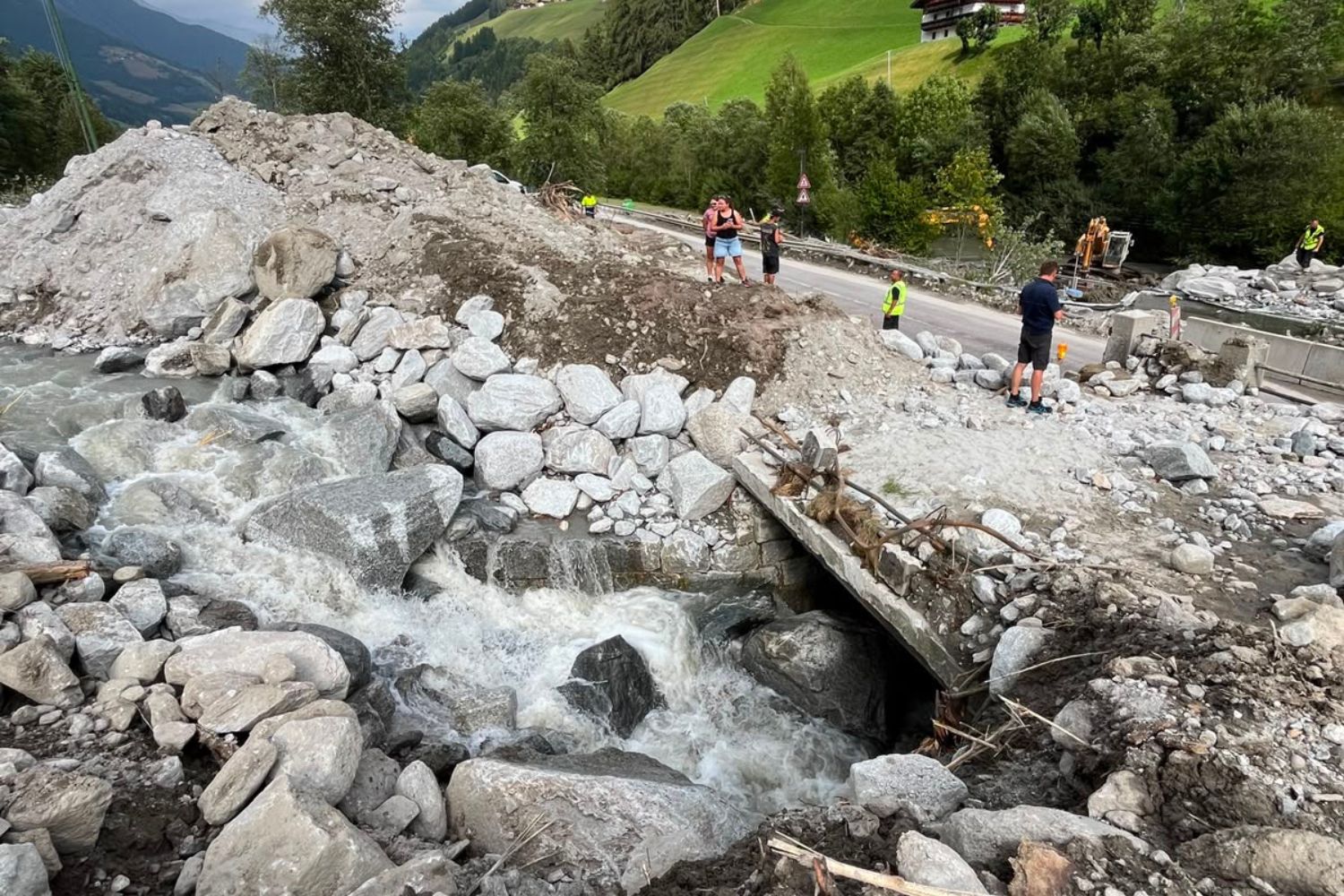
The situation is progressively returning to normal in the Aurina Valley, in Alto Adige, after the large debris flow caused by the violent storm that affected the Gisse area, between Lutago and San Giovanni, on the night of 6 August. The approximately 120 people evacuated as a precaution were able to return to the structures and their homes, while the clearing operations of the material dragged downstream continue.
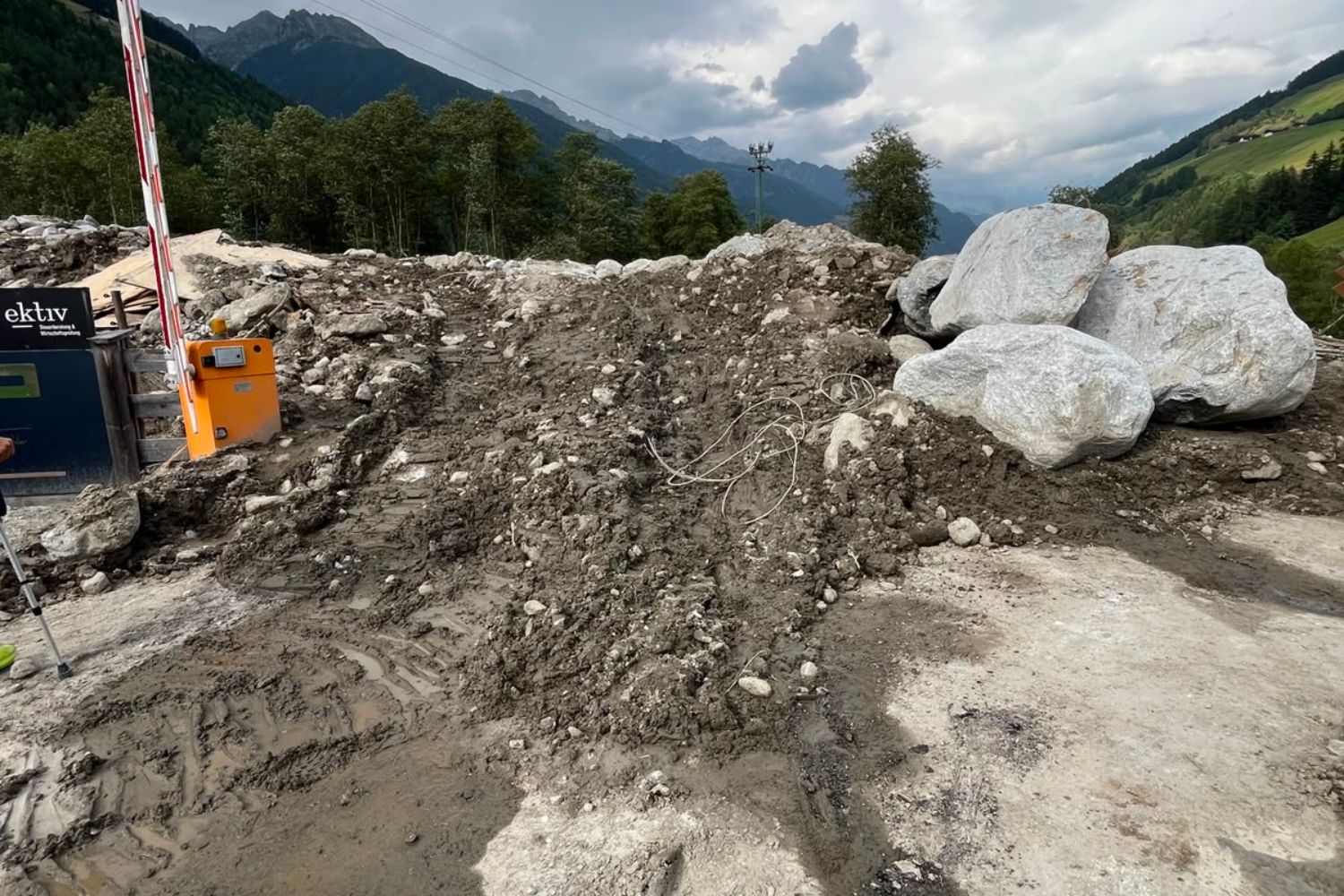
Mud, debris and numerous trunks had invaded the road of the Valle Aurina, causing the temporary isolation of the villages located in the innermost part of the valley. Despite the size of the event and the considerable inconvenience caused to the population and roads, no injuries were reported.
The landslide after the violent storm of August 6th
@Jessica Gruber
The emergency had arisen on the night of 6 August, when an intense storm had affected the Aurina Valley with particularly heavy rainfall. In some areas, more than 50 millimeters of rain had fallen in a short time.
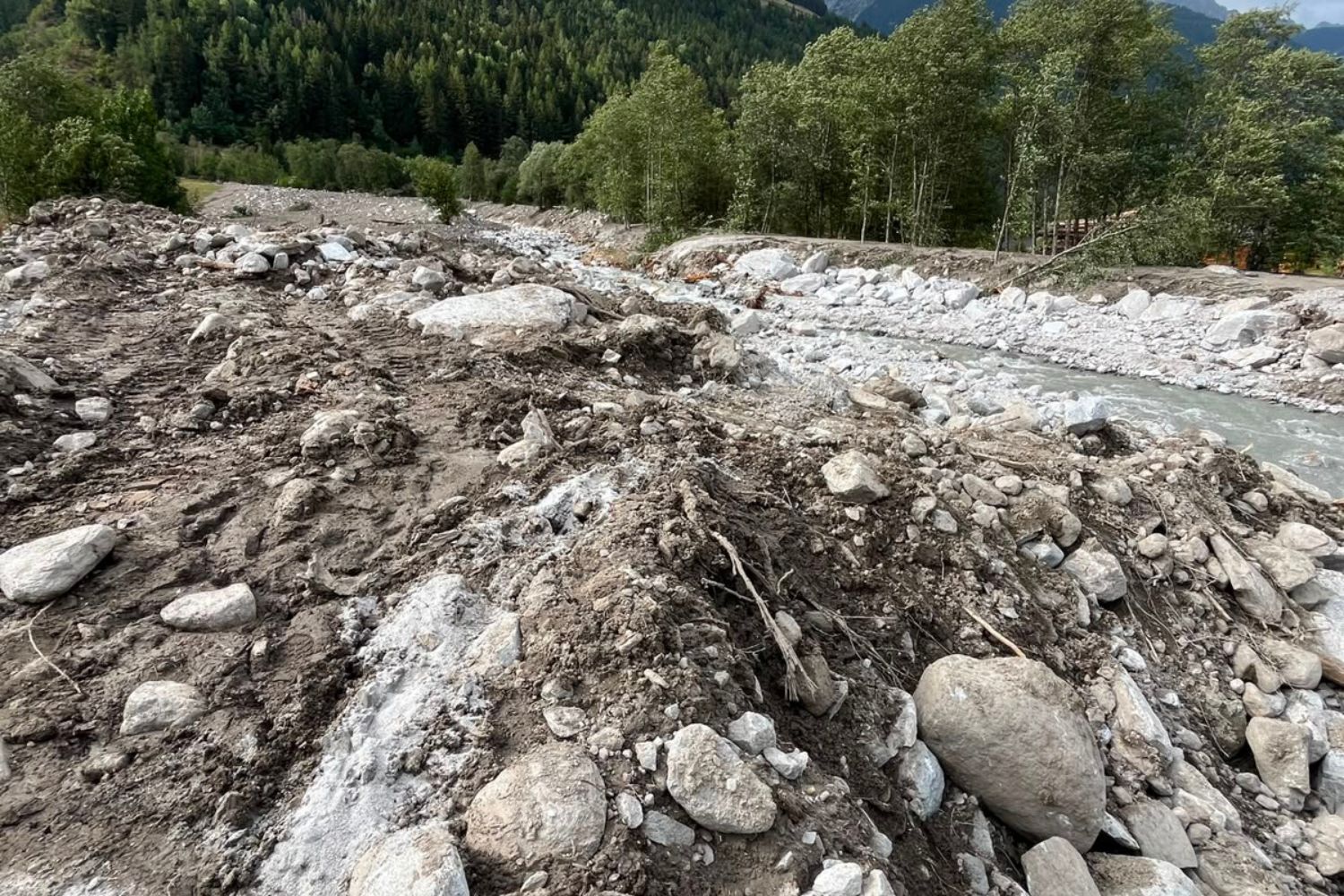
The large quantity of water had mobilized soil, rocks, mud and vegetation along the Rio Rosso, in the area of Malga Daimer. The material had then reached the valley floor, flowing into the Gisse area and also affecting the bed of the Aurino stream.
The debris flow had temporarily blocked the watercourse and covered the roadway with a large quantity of material, making it necessary to completely stop traffic.
Around 120 people had been evacuated
Given the situation and the risk of further movements of material, the authorities had ordered the evacuation of around 120 people as a precaution.
The measure affected the guests of a hotel and the inhabitants of three residential buildings located in the areas considered most exposed.
Some of the people who were stranded due to the road interruption were welcomed in Lutago, inside the multipurpose hall. An assistance point had been set up here with healthcare personnel, rescuers and operators involved in managing the emergency.
The displaced people have returned
Two days after the landslide, the picture has significantly improved. The evacuated people were able to leave the temporary accommodation and return to their homes and the structures affected by the precautionary measure.
The return of the displaced represents one of the main signs of the gradual return to normality after the most difficult hours of the emergency.
However, attention remains high in the most affected areas, where the slopes and waterways are monitored to verify the presence of any further situations of instability.
Work continues to remove mud and debris
The restoration operations are not yet completed. Excavators, mechanical shovels and other heavy equipment continue to work to remove the enormous amount of mud, logs, stones and debris accumulated along the road and in the surrounding areas.
The objective is to completely clear the roadway, make the areas involved safe and restore normal traffic conditions.
The dimensions of the casting make a particularly demanding intervention necessary. In addition to the removal of debris, checks are carried out on the infrastructure and works affected by the event.
The mobilization of relief efforts was impressive
@Jessica Gruber
From the first hours of the emergency, a vast relief effort was activated. Numerous teams of volunteer firefighters from various centers in the Aurina Valley and nearby localities operated in the area.
The Alpine Rescue, the White Cross, healthcare personnel and numerous volunteers also participated in the operations. Special vehicles, drones, light towers and equipment were used to allow operators to work even during the night hours.
For safety reasons, the operations center was organized in the area of the San Martino sports field, from where the various rescue and assistance activities were coordinated.
Viability towards a return to normality
One of the main problems caused by the landslide concerned roads. The enormous mass of material that had poured onto the road had in fact interrupted the main connection with the upper Aurina Valley.
The teams working on site are working to ensure the complete restoration of connections and allow normal traffic to return.
Particular attention also remains on hiking routes in the areas affected by the flow, where ground conditions may require further checks before full reopening.
Attention remains high on the weather
Despite the progressive improvement of the situation, attention remains high on weather conditions. After the intense rainfall that caused the flow on August 6, the area is being monitored with particular attention in case of new storms.
Intense rainfall on land already saturated with water can in fact encourage new landslides or movements of material in the most fragile areas.
For this reason, even after the return of the evacuated people, the control of the areas affected by the event continues.
The most serious emergency can therefore be considered to be overcoming: no injuries were reported and the displaced people were able to return to their homes and evacuated structures.
However, the cleaning, safety measures and restoration of connections still remain to be completed.
