
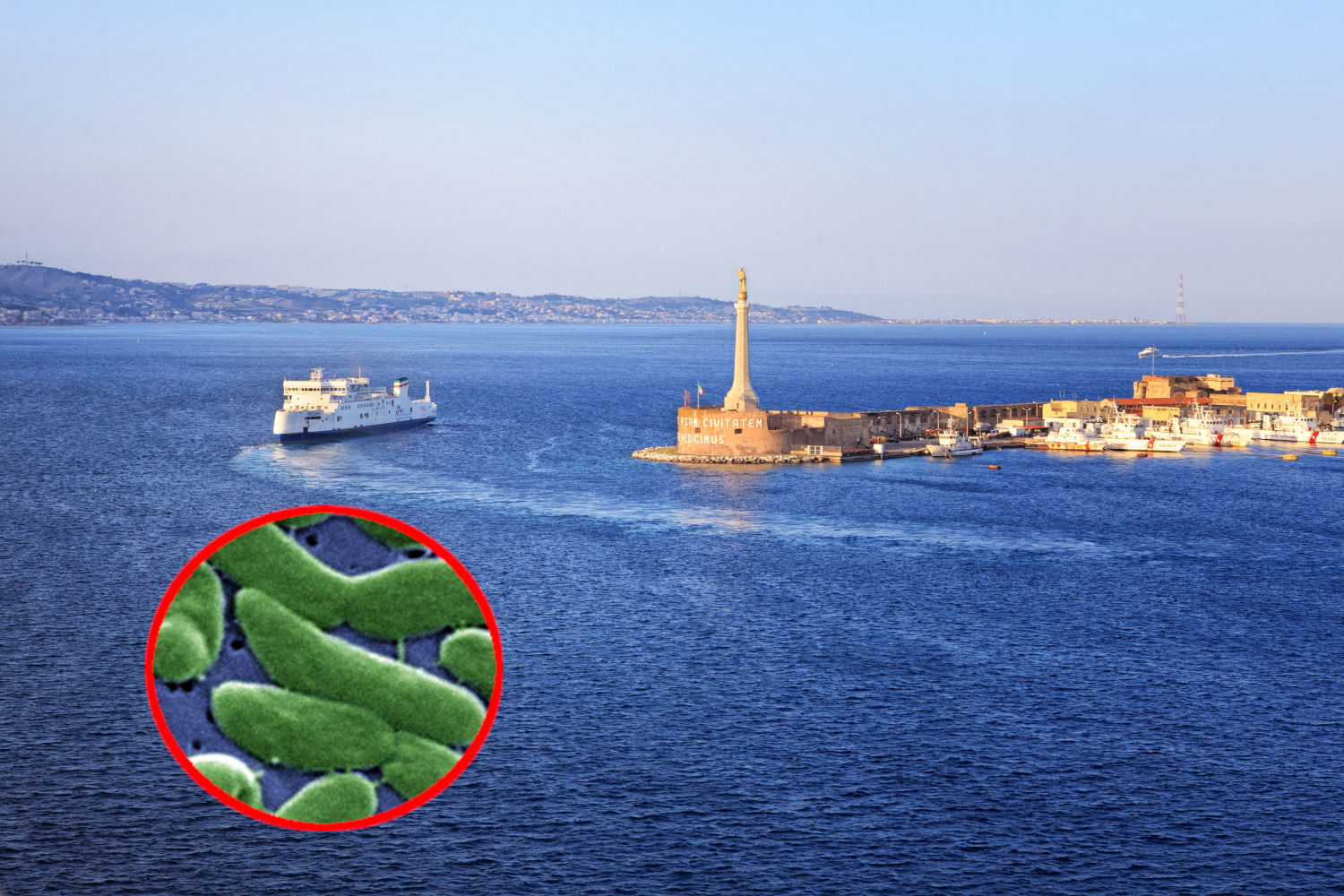
An invisible threat is once again stirring the waters of the Mediterranean and triggering health surveillance systems. Vibrio vulnificus, known as a flesh-eating bacterium, has come under close observation in the Strait of Messina, where a study conducted 21 years ago by the University of Messina had already ascertained its presence in plankton and in the waters between Sicily and Calabria.
The media buzz was reignited following the alarm raised overseas by the Florida Department of Health, which as of July 30 had already recorded 12 infections and one death in Palm Beach County, to which are added another two deaths and 14 infections in the state, in addition to the five deaths recorded in Louisiana. Numbers that follow the 33 cases with 5 deaths in 2025 and the explosion in 2024, when infections in Florida reached 82 with 19 victims, within a US average of around 100 cases per year with a fatality rate of one third.
Vibrio vulnificus: Matteo Bassetti’s recommendations
Infectious disease specialist Matteo Bassetti, head of the Irccs San Martino polyclinic hospital in Genoa, also spoke on the spread of the bacterium in the USA. The expert explained how this microorganism uses warm and brackish coastal waters as an ideal habitat, penetrating the human body through open wounds, abrasions, freshly made tattoos or through the ingestion of raw or undercooked seafood, in particular oysters. The speed with which the bacterium attacks the tissues is frightening: in many cases a devastating necrotizing fasciitis is triggered, a fulminant infection that destroys the skin and surrounding structures and makes its way directly into the bloodstream.
The global warming factor and ECDC data
Sea warming plays a decisive role in the proliferation of these pathogens and in the expansion of their range of action in previously less exposed geographical areas. The summer heat waves that are affecting Central Europe create the perfect environment for the multiplication of bacteria belonging to the genus Vibrio.
For this reason, the European Center for Disease Prevention and Control (ECDC) also recommends maximum caution in avoiding swimming in the sea in the presence of skin lesions and has updated the Vibrio Viewer tool, a real-time platform that tracks marine areas with environmental conditions favorable to the development of bacteremia.
Symptoms and what to do
The symptoms of the infection can begin with gastrointestinal disorders and violent gastroenteritis, accompanied by diarrhea and high fever, and then degenerate on the skin with the appearance of bullous and hemorrhagic lesions. In the most serious clinical pictures, the progression towards fulminant septicemia leads the overall lethality to oscillate between 20% and 35%, exceeding the threshold of 50% in cases of septic shock or in fragile subjects such as liver disease and immunosuppressed subjects. The only medical response consists of immediate hospitalization in intensive care for the administration of a massive combined antibiotic therapy, often accompanied by the surgical removal of necrotized tissues or the amputation of limbs in extreme cases.
View this post on Instagram
