
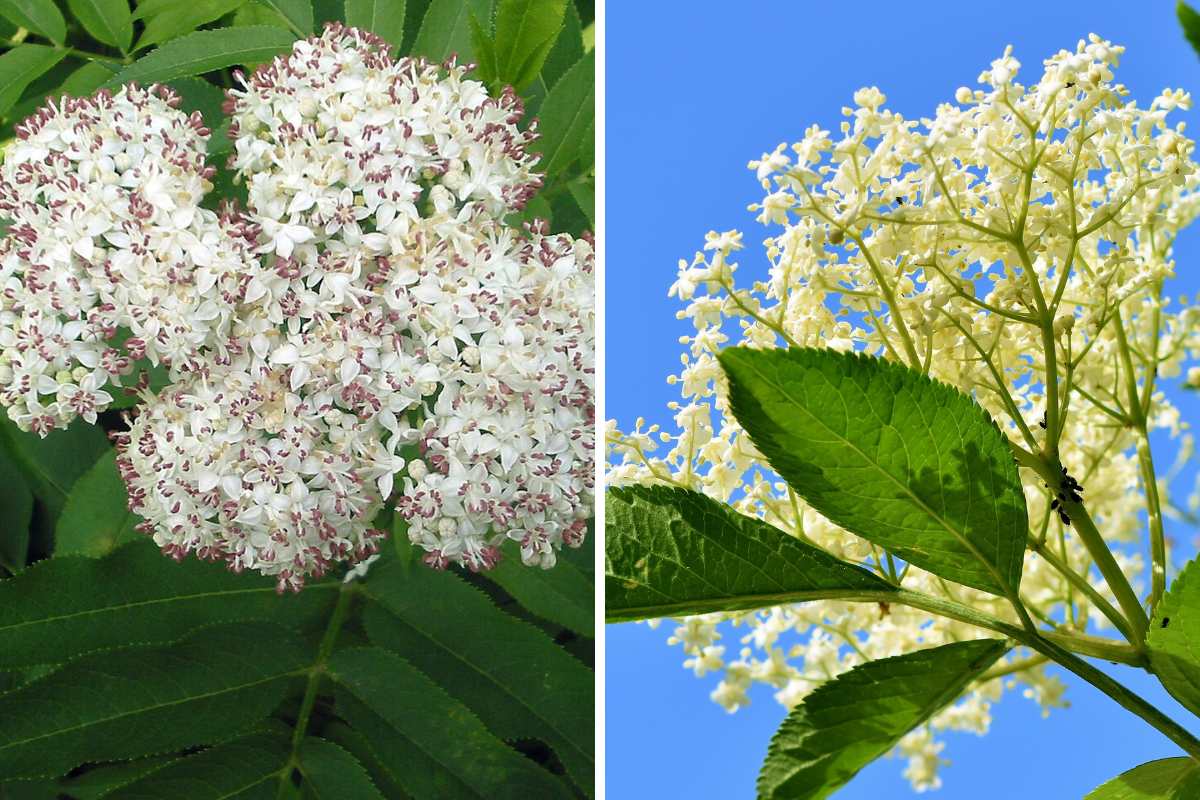
Elderberry is a plant with countless properties, widespread throughout Italy, with a particular predilection for hilly and mountainous areas. It is a plant that, over the seasons, transforms into an explosion of white flowers and then produces small dark and juicy berries, loved not only by wild animals, but also by man, who uses them for the preparation of jams and other products. However, we must underline the presence of a species of elderberry, the Sambucus Ebulusalso known as Ebbio or sambuchella, whose fruits are toxic and can cause serious problems if ingested.
Differences between elderberry varieties
Elderberry Ebbio @wikipedia
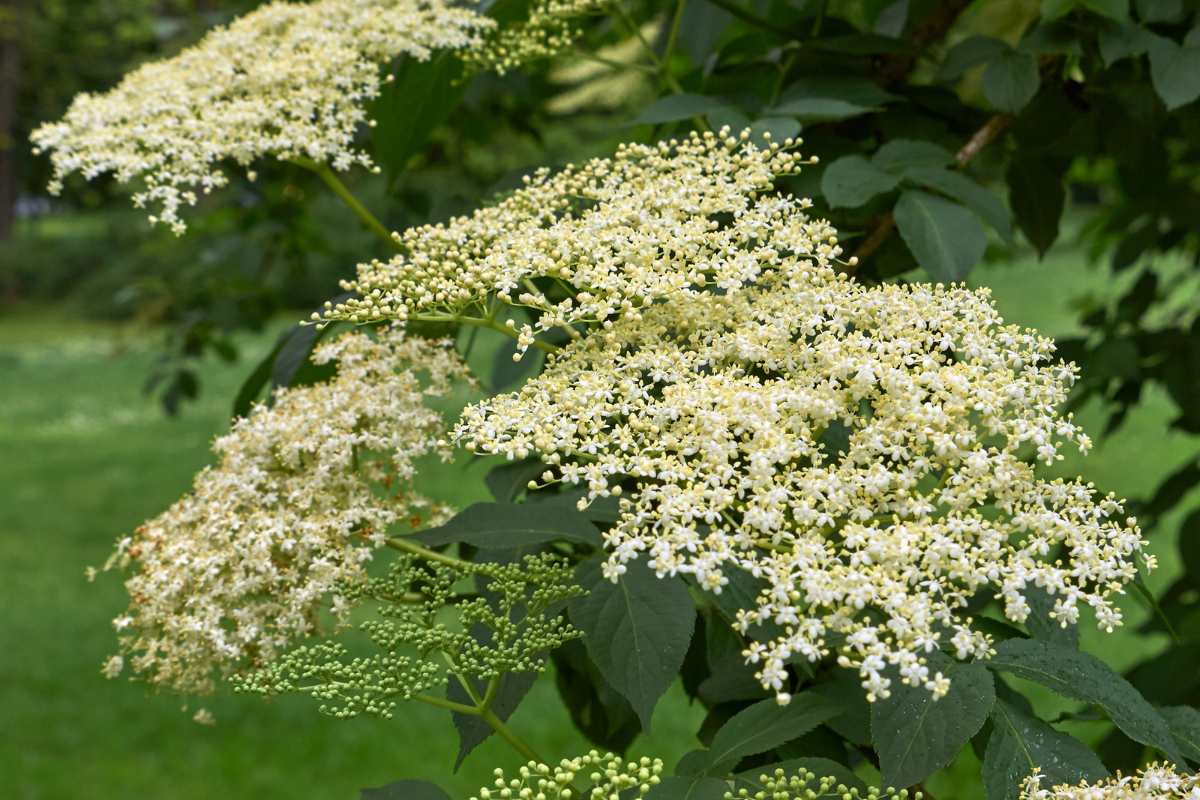
Black elderberry
Recognizing the two varieties of elderberry is essential for anyone who wants to try their hand at harvesting berries for culinary or therapeutic use.
When talking about elderberry it is important to precisely distinguish the different species, especially if you collect flowers and berries spontaneously. The black elderberry (Sambucus nigra) is a shrub or small tree with a woody and branched stem, while the black elderberry (Sambucus ebulus) is a perennial herbaceous plant, generally shorter and without a true woody structure. To recognize them correctly, however, it is not advisable to rely on just one detail: you need to look at the overall shape, stem, leaves, flowers and arrangement of the fruits. If there is any doubt about the identification, the safest choice is not to collect or consume the plant.
The most obvious difference between these two plants lies in their structure: the black elderberry develops like a shrub with a woody trunk and branched from the base, while the Ebbio has a more herbaceous appearance, with a single green stem. This distinction is fundamental, especially for those approaching harvesting without much experience.
Even the flowers of the two plants, although similar, have different characteristics. Black elderberry produces umbrella-shaped inflorescences, large and dense, white in color with a light yellow shade. These flowers are often used to make syrups and desserts, such as elderflower pancakes. The Ebbio, on the other hand, despite having similar inflorescences, has slightly larger flowers with pink-violet details inside, details that clearly distinguish it from the elderberry.
The issue becomes more complex when it comes to fruits. Both plants produce dark berries, but there are key differences in their appearance and arrangement. The berries of the black elderberry are grouped in clusters that hang downwards, scattered throughout the plant. On the contrary, Ebbio berries grow upright, firmly in the center of the plant, almost as if they defied gravity. This feature is crucial to avoid accidentally picking toxic berries.
The flowering of the black elder typically occurs between May and June in the central regions of Italy, while the Ebbio flowers a little later, starting in June and continuing through August. This difference in flowering time can further aid in the recognition of the two plants, especially when the berries are not yet ripe.
How to deal with elderberries
Even in the case of edible black elderberry, attention must be paid to the parts used. The berries must be completely ripe and must be carefully separated from stems, leaves, twigs and still green fruits. Different parts of the plant may in fact contain cyanogenic glycosides, substances potentially responsible for nausea, vomiting and other gastrointestinal disorders. For this reason, berries should not be consumed raw, but subjected to adequate heat treatment before being used for jams, syrups or other food preparations.
Furthermore, the consumption of these berries must be moderate, as they have a laxative effect and, in high doses, can be harmful. Some herbalists even advise against the food use of elderberry, precisely due to the presence of these compounds, even if with due precautions elderberry has always been used in the kitchen without particular problems.
How to make jam with elderberries: the recipe
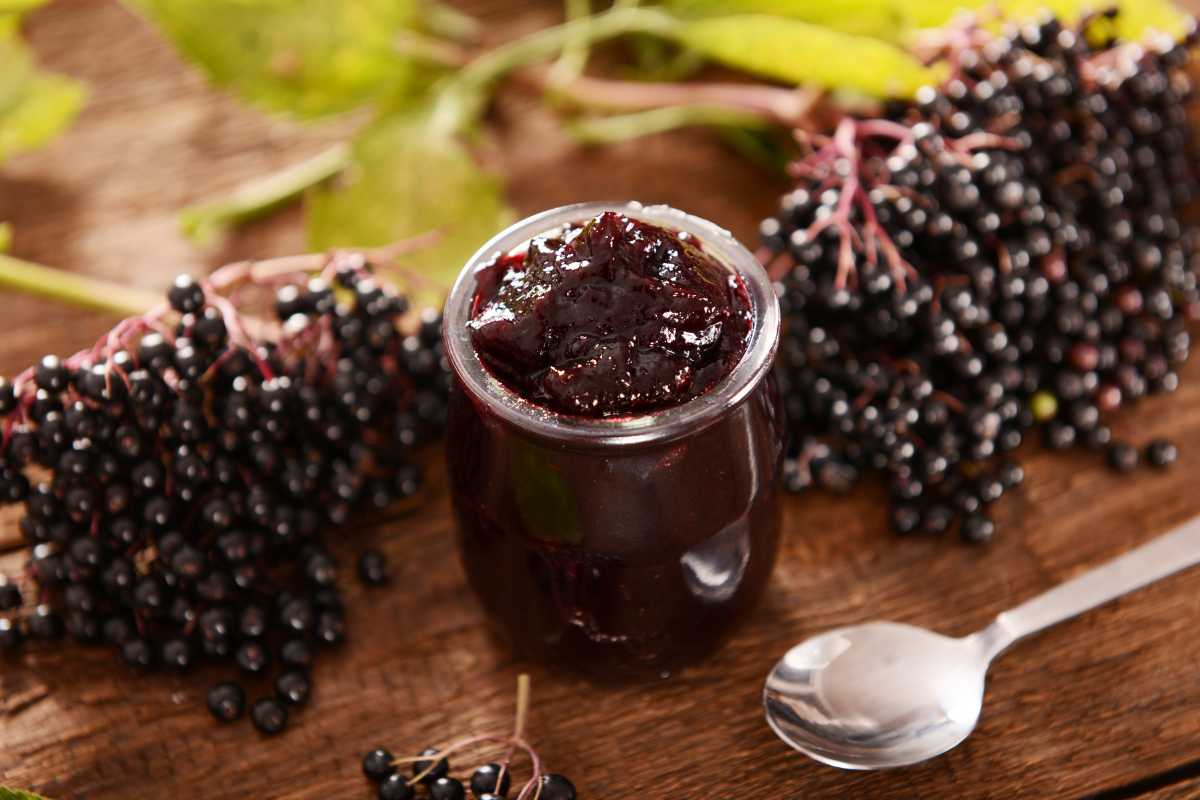
With the arrival of summer, elderberries ripen, ready to be harvested and transformed into delicious jams. Although this year the season was adverse, with irregular and often insufficient ripening, elderberry remains one of the most fascinating and versatile plants of our countryside.
If you are lucky enough to find a healthy and fruity elderberry, you can try your hand at making elderberry jam, a classic of traditional cuisine. The recipe is simple, but requires a little patience, especially in the phase of picking and cleaning the berries, which are quite small and delicate. Here’s how to make delicious elderberry jam.
Ingredients:
Procedure:
The first thing to do is to harvest the black elderberries at the right time, between August and September, when they are fully ripe and of an intense black-violet color. After harvesting them, the berries must be removed from the twigs and washed carefully. It is advisable to leave them to soak for a few minutes so as to bring out any impurities, twigs and unripe fruits, which have a more reddish colour.
After draining the berries, weigh them to make sure you have the required amount and place them in a thick-bottomed pot. Add the lemon juice and brown sugar, then turn the heat on low. The jam will have to cook slowly for about 30-40 minutes, during which it is important to stir frequently to prevent it from sticking to the bottom of the pan and to obtain uniform cooking.
While the jam is cooking, you can sterilize the jars you will use for storage, a fundamental step to ensure that the jam is kept over time without problems. Once cooking is finished, pour the jam into the still hot jars, screw on the caps and turn the jars upside down onto a wooden surface. This process allows you to create a vacuum in the jars, ensuring optimal conservation.
You can customize the consistency of the jam to your taste. If you prefer a more rustic jam, you can leave it as is, and alternatively, if you want a more velvety consistency, you can pass the cooked berries through a food mill before adding the sugar. This step allows you to eliminate any seeds and obtain a smoother jam. After pureeing it, put the jam back on the heat with the sugar and cook for another 15 minutes.
A useful trick to check if the jam has reached the right consistency is to do the “saucer test”: pour a drop of jam onto a cold saucer and tilt it. If the drop slides off easily, the jam needs to cook a little longer, but if it drips slowly, it means it is ready.
To further thicken the jam, you can add half an apple with the peel during cooking. In fact, apples contain pectin, a natural substance that helps thicken jams. In any case, if you have followed the procedure carefully and cooked the berries with seeds, it should not be necessary to add any other thickeners.
Once prepared, elderberry jam can be stored in a cool, dark place for several months. It is excellent for spreading on bread for breakfast, but it also lends itself to accompanying mature cheeses or as a filling for desserts.
How to be sure of the preservation of jam
Simply filling the jars while they are still hot and turning them upside down should not in itself be considered a guarantee of safety. To prepare a jam intended to be preserved for a long time it is necessary to work in hygienic conditions, use suitable jars and capsules, correctly follow the instructions for heat treatment and respect a recipe with adequate proportions. The formation of a vacuum indicates that the container has been closed, but does not in itself allow us to establish that the product is microbiologically safe.
Before consuming an elderberry preserve, it is also advisable to always check the integrity of the jar and the capsule. Swellings, leaks, anomalous presence of gas, liquid leakage, unusual odors or obvious alterations are signs that should lead you to discard the product without tasting it. After opening, the jam should be stored in the refrigerator and consumed relatively quickly. Even the harvesting period is not identical every year: the ripening of the berries depends on climate, altitude and exposure and generally occurs between the end of summer and the beginning of autumn.
