
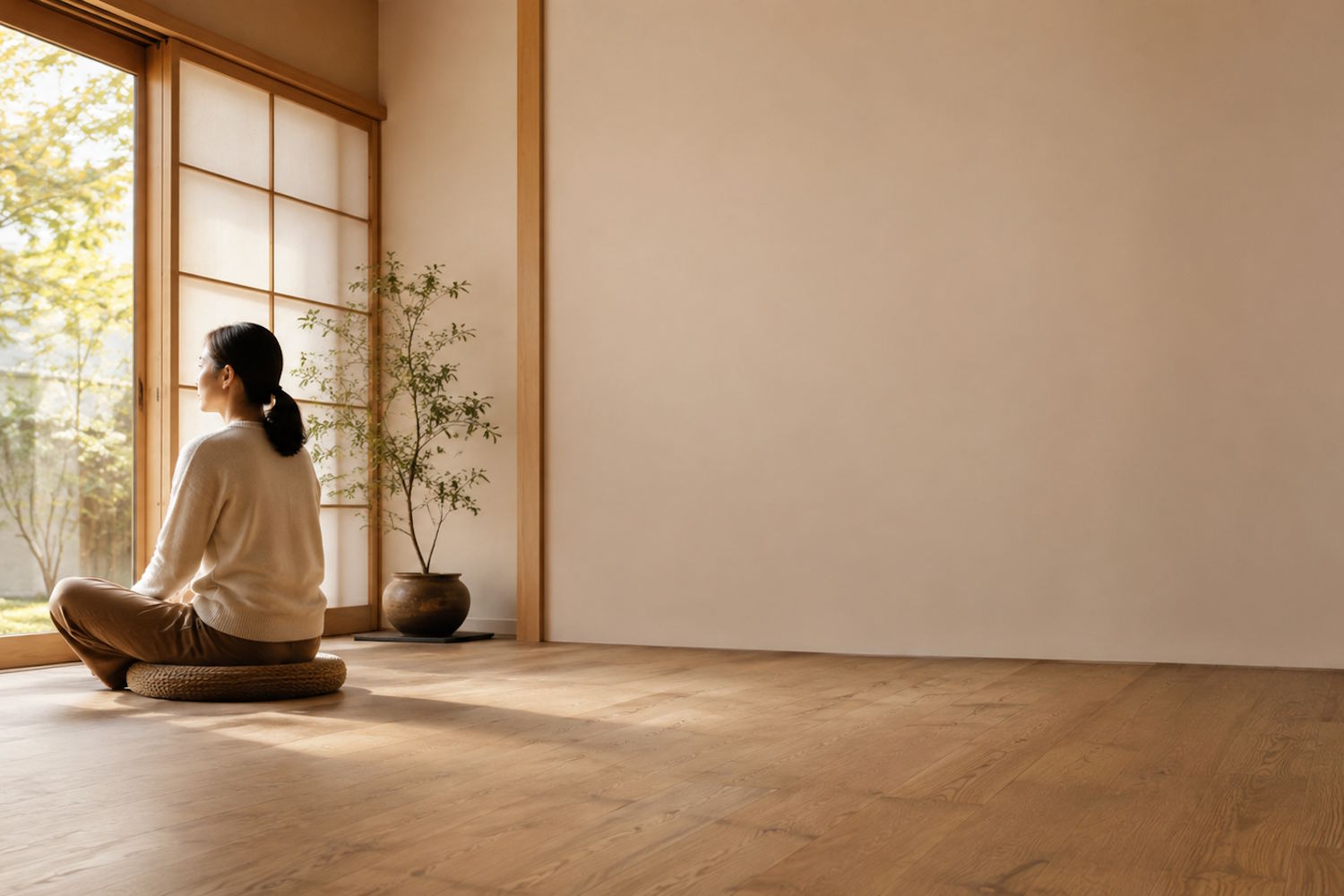
A pause. While discussing, we pause to avoid saying unnecessarily harmful things. You simply remain silent for a few minutes, without vomiting all over yourself right away. Japanese couples do it, but not only: it is also necessary to pause before a decision is shared, or the space a leader leaves for a team to reflect, or the time before the next email exchange. And it’s magnificent.
It is the wonderful rule of “But“, a Japanese philosophical – and aesthetic – concept that depicts the empty space between things, an essential condition for the existence and meaning of things themselves. lietmotiv? Absence can be as important as presence. Who knows him?
Think about it: when was the last time you waited for someone without immediately picking up the phone? Or that you drank a coffee without reading, listening, responding, scrolling? We have developed a certain intolerance for emptiness: silence in a conversation seems embarrassing to us, an afternoon without plans is almost wasted and a free wall makes us want to hang something on it. Five minutes without stimuli immediately become an opportunity to check notifications, emails, messages.
As if every space left free was a defect to be corrected.
What Ma really is
Yet, in Japanese culture there is that word capable of completely overturning this perspective: Ma, which does not simply mean “empty”, rather the space between things, the interval that allows things to exist fully. The pause between two words, the silence between two notes, the space around an object. The moment before answering. And perhaps this is precisely what we have forgotten: not everything that is empty must be filled.
In Japanese, Ma (間: there are two components in the character. The first is the external frame that indicates a door 門, the second indicates the sun 日) indicates a space, a distance, an interval or a pause and in Japanese aesthetic and artistic culture the concept takes on a much broader meaning: that is not simply something that is missing, but something that contributes to giving shape and meaning to what surrounds it. The opposite, in short, of nihil Western, of the void that represents nothingness.
View this post on Instagram
Think of a room: it is certainly made up of walls, doors and windows. But in reality what allows us to enter, walk, sit, live is precisely the free space between those walls. With Ma something similar happens: the void stops being absence and becomes possibility and represents that crack through which light can enter.
And be careful: Ma does not invite us to spend our days immobile, but is rather an invitation not to compress each experience against the next, to let there be a margin and a breath between one thing and another, because, if there is no distance, even beautiful things risk becoming confused. A song without pauses would become a continuous sound, a page without margins would be suffocating, a conversation in which no one ever stops talking would be exhausting.
Where we can meet Ma in Japanese culture
The concept of Ma emerges in many forms of Japanese art and culture, from architecture to the performing arts. In traditional theatrical forms, for example, the pauses between one gesture and another or between lines can have an expressive value as important as what is said or done.
How to bring a little Ma into our days
We could start with tiny things:
In short, Ma does not add. Remove and leave a free space. And he asks us this question: “What would happen if I finally left some of the day empty?“. At first we might feel strange and we might get bored, the hand might automatically look for the phone. A certain restlessness might even appear.
But then, inside that seemingly useless space, we might notice something that the noise had covered. A thought, a tiredness, a desire, a person who has remained inside us, the taste of coffee. Or simply nothing and even that nothing, every now and then, can be enough.
