
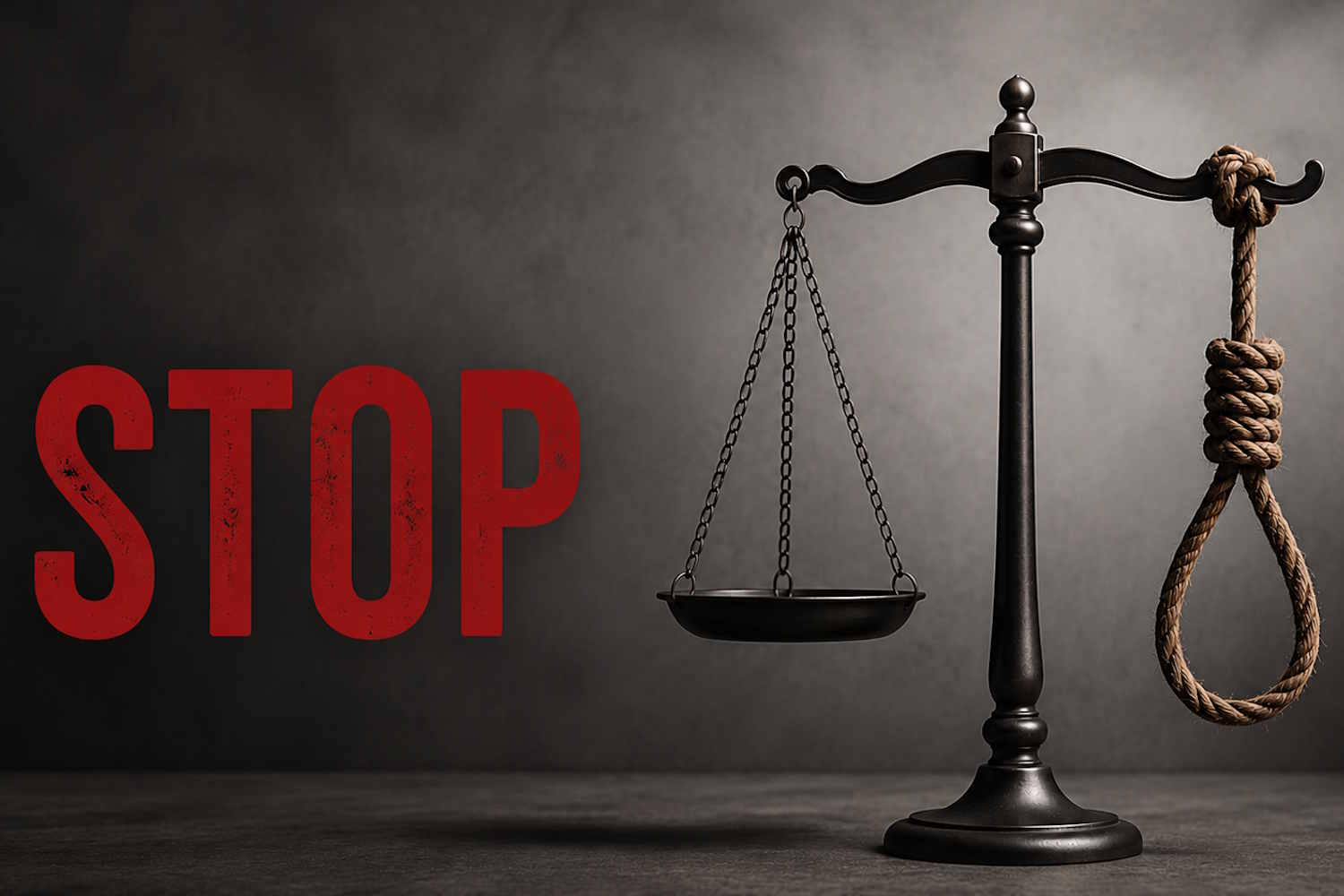
There is a fine line between no longer carrying out a death sentence and erasing that possibility from the law. Lebanon has just decided to cross it. In fact, in these hours, the Lebanese Parliament has approved a law that abolishes the death penalty for all crimes, replacing it with life imprisonment with forced labor.
A historic step for a country in which the last execution dates back more than twenty years ago, but where dozens of people formally continued to live on death row. The law has not yet entered into force: it will have to be sent to the President for definitive signature and then published in the Official Journal.
Once this process is completed, Lebanon is set to become the 114th country in the world to have abolished the death penalty for all crimes, according to Amnesty International.
Justice must be based on human rights, not on irreversible and cruel punishment, declares Heba Morayef, regional director of the organization for the Middle East and North Africa, who underlined how the vote transforms what until yesterday was essentially a long stop to executions into a stable legal protection of the right to life.
A phrase that contains the political and symbolic meaning of this decision, since Lebanon had not carried out a capital sentence since January 17, 2004, but the death penalty continued to exist in the legal system. And, according to data from the Prisons Directorate of the Ministry of Justice cited by Amnesty, at the end of January 2026 there were still 85 people on death row.
More than twenty years without executions
In Lebanon, for over two decades no person was subjected to the death penalty, yet a death sentence could still be pronounced. A fragile balance, therefore, which depended entirely on the authorities’ practice, not on a guaranteed right. Now, with the new law and once the process is completed, this scenario will change radically.
Behind this vote are years of mobilization of Lebanese and international civil society and the work of organizations such as the Lebanese Association for Civil Rights (LACR), the National Campaign for the Abolition of the Death Penalty in Lebanon and the Association Justice and Mercy (AJEM).
The parliamentary process formally began on 7 October 2025, when seven deputies presented the bill to the Parliamentary Commission on Human Rights. The government expressed a favorable opinion on 20 November 2025. The text was then passed by the Human Rights Commission on 23 February 2026, by the Justice Committee on 2 June and by the Joint Commission on 9 July, before final approval in the Chamber on 11 August 2026.
Now another piece is missing: Amnesty is asking Beirut to ratify the Second Optional Protocol to the International Covenant on Civil and Political Rights, the United Nations treaty aimed at abolishing the death penalty. This is the step that would make the Lebanese commitment even more solid also on the level of international law.
Meanwhile, Lebanon is part of a trend which, despite enormous contradictions and setbacks, sees more and more states moving away from the death penalty.
According to data released by Amnesty International, 145 countries in the world are now abolitionist by law or in practice, while 54 continue to maintain capital punishment in their systems. If the newly approved law completes the expected process, Lebanon will officially enter among the states that have canceled it for all crimes.
It will not erase the judicial errors of the past and it will not single-handedly resolve the fragilities of the Lebanese justice system. But after more than twenty years in which executions were suspended without capital punishment having really disappeared, what Parliament voted for is a step that transforms a de facto choice into a right.
