
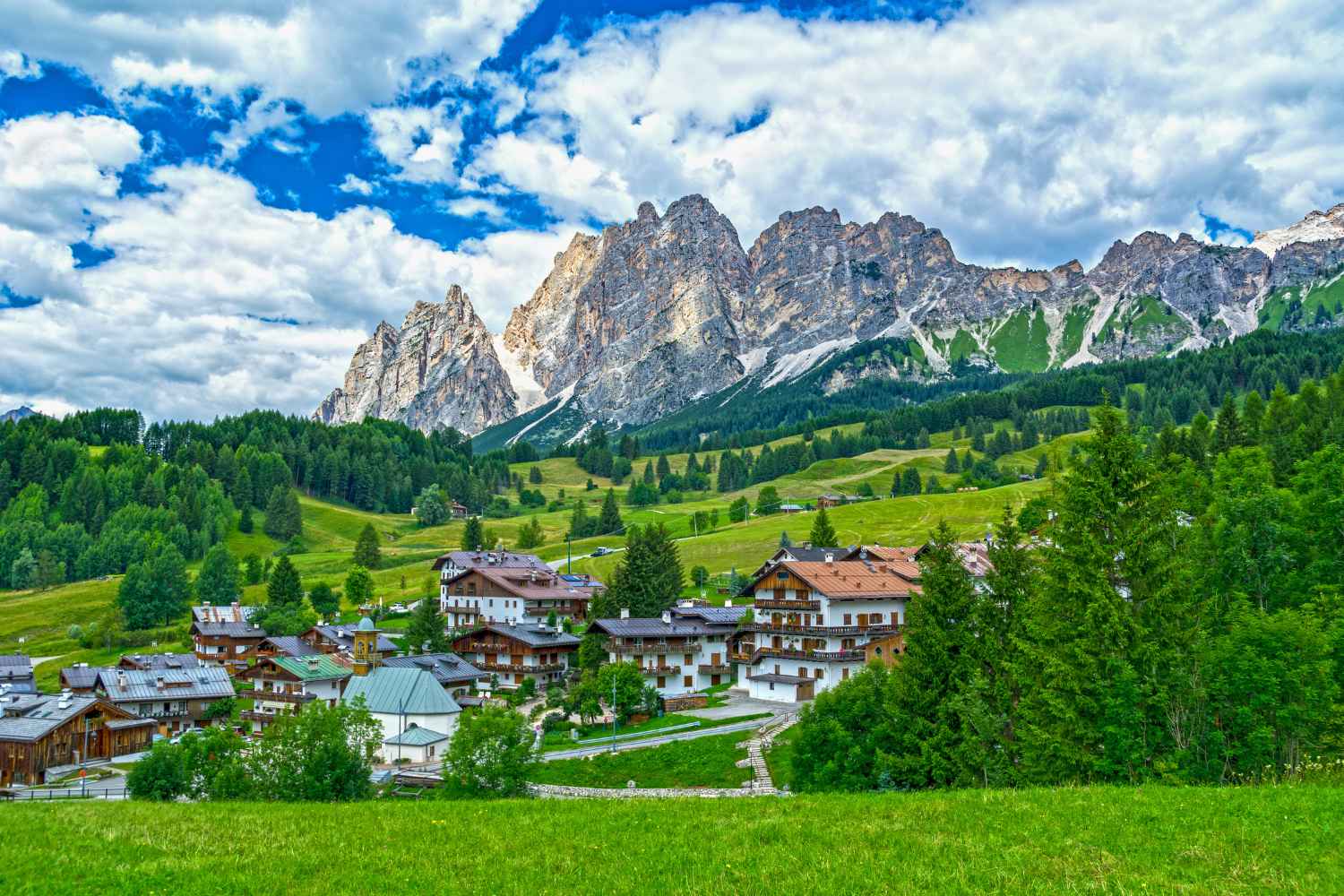
Tents pitched where they shouldn’t be, sleeping bags on benches, campers transformed into small campsites and impromptu picnics at the foot of historic buildings. Cortina d’Ampezzo is trying to put a stop to the behavior that in recent weeks has reignited the debate on the so-called “coarse tourism”.
The Municipality is preparing a new ordinance dedicated to urban decoration, with a series of bans concentrated especially in the center of the Dolomite town. Stefano Ghezze, councilor for the local police and civil protection, explained the administration’s line: the problem, according to the municipality, is not the presence of tourists in itself, but some behaviors deemed incompatible with respect for the city and those who live there.
There are embarrassing situations for the community, for the residents and our guests, signs of an overtourism that we cannot tolerate”, explained Ghezze, as reported by the national press. The administration’s intention would therefore be to intervene with clearer rules, without introducing a generalized limit on arrivals.
Stop improvised campsites in the urban centre
The clearest measure announced concerns the ban on camping in the urban centre, in any form. The measure also arises from reports of people found sleeping on benches, tents set up in public spaces and vehicles used not only for parking, but as actual camping bases.
However, the problem of vans and campers is the most complex from a regulatory point of view. The administration admitted that the current rules do not always allow the local police to intervene as they would like. For this reason the ordinance should only be a first step, intended to be followed by a modification of the municipal local police regulation.
The distinction is important: parking a camper in compliance with the Highway Code does not automatically equate to camping. The Municipality therefore focuses above all on behaviors that transform parking spaces into de facto equipped areas, with tents, tables, drying racks or other installations.
No packed lunch on the steps of the basilica
The restriction should also concern the consumption of food in some of the symbolic places of the town. In particular, according to previews, it will be forbidden to consume packed meals on the historic buildings and on the steps of the Basilica of Saints Philip and James.
It would therefore not be a general ban on eating sandwiches or food brought from home throughout Cortina, as an overly broad reading of the measure might suggest. The provision would be aimed at certain places in the center and would have the aim of preventing monuments, stairways and particularly valuable spaces from being used as picnic and bivouac areas.
The clothing hub in Corso Italia
Among the points destined to spark greater discussion is that relating to clothing during the walk along Corso Italia, the heart of shopping and city life.
The previews speak of indications against clothing considered “unsuitable” for the urban context. At the moment, however, as the definitive text of the ordinance is not available on the institutional website, it is not possible to establish precisely which items or behaviors will be prohibited, nor what the possible sanctions will be.
It is a non-secondary detail: the difference is significant between a generic reminder of decorum and a real administrative ban. Only the publication of the provision will allow us to know the exact scope of the rule and the ways in which it can be applied by agents.
The pressure of tourism after the Olympics
The decision does not come suddenly. Cortina had already begun in recent months to strengthen controls in the area to address the growth in tourist flows after the Winter Olympic and Paralympic Games.
In July, the Municipality, the Province of Belluno and the Veneto Region started a pilot project against the effects of overtourism, involving the use of the provincial police on paths, in meadow areas and in high mountain areas. The project combines surveillance activities, information to visitors and prevention of behavior harmful to the environment.
The philosophy declared by the institutions is to avoid, at least for now, more drastic measures such as turnstiles or closed numbers, focusing instead on the presence of agents and the education of visitors. The local police commander Luis Caranfa had defined the initiative as “a concrete step” to tackle overtourism while simultaneously safeguarding the territory and the quality of life of residents.
From Sorapiss to the bivouacs: the episodes that sparked the controversy
In recent months, reports of excessive behavior have multiplied. Among the most discussed cases, that of a tourist who transported a SUP to Lake Sorapiss and then used it on the water despite local restrictions, in addition to reports of tents, waste and camping equipment in areas frequented by campers and vans.
They are different episodes, but they have fueled the same question: how to keep one of the most famous Alpine destinations in the world open and accessible without transforming tourist success into a problem for the environment and for residents?
Cortina’s response seems to be moving towards a more rigid model in terms of urban decoration, supported by a greater presence of police forces in natural areas.
