
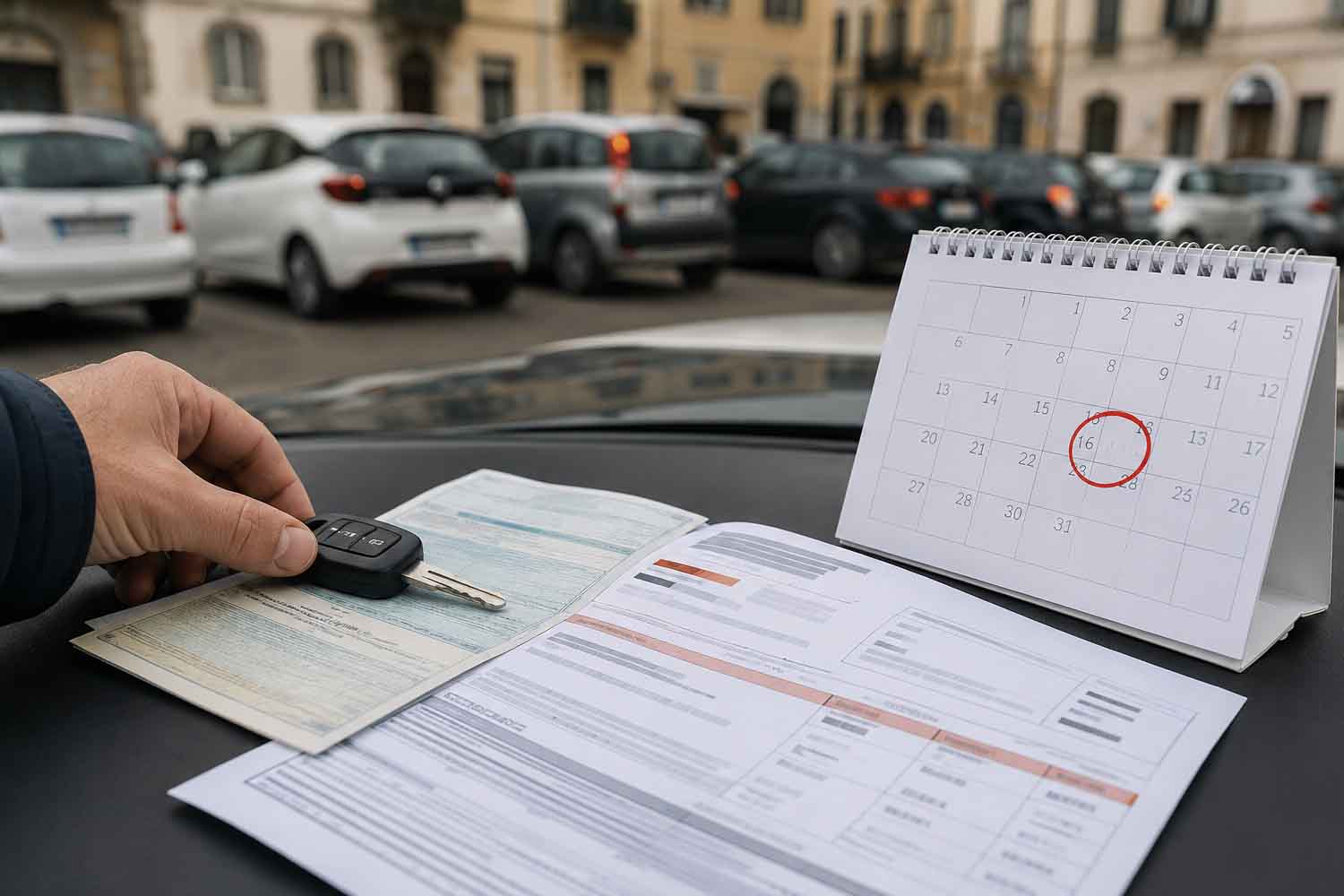
A car registered on 12 March 2028 will have its first tax due by 30 April. From the following year, March will become its reference month for renewals. It is the most visible innovation of the car tax reform approved for final examination by the Council of Ministers at the meeting of 4 August and communicated the following day. The amounts remain linked to power, environmental class and regional regulation. In short, the wallet remains in place. Above all, the calendar is changing.
The provision is part of the legislative decree on regional and local taxes and regional fiscal federalism, already passed to Parliament as Government Act no. 276. In the opinion delivered on 3 August 2026, the Senate Finance Commission asked to postpone the new rules on car tax until 1 January 2028, thus postponing a reform which in previous versions should have started earlier.
The month of registration becomes the date to remember
Today the system is less uniform than it might seem. In many regions the first tax on a new vehicle must be paid by the end of the month of registration; if the license plate arrives in the last ten days, the deadline may be postponed to the end of the following month. Lombardy and Piedmont already apply a different rule: the first payment can be made by the last day of the following month. ACI also summarizes it in the 2026 deadline guide.
From 2028 the new regulation brings this mechanism towards a common rule: the first payment will be due by the last day of the month following the month of registration. For renewals, however, the deadline will fall on the last day of the month in which the vehicle was registered. A car registered in March, therefore, will have the first appointment by April and will then return to having to deal with the tax every March. The scheme was already described in the parliamentary documentation of Government Act no. 276; in August 2026 the Senate asked for it to be postponed to 2028.
For cars already in circulation there will therefore not be a major collective reshuffling of deadlines. The rules already applicable and regional autonomy will continue to have an impact. It is a fairly important detail, given that the tax remains a regional tax and it is enough to move from one Region to another to find differences in tariffs, concessions and calendars.
The decree also maintains a space for quarterly payments: the Regions will be able to provide them for certain categories of vehicles, however starting the calculation from the month of registration. The simplification, evidently, preserves some regional features.
Administrative detention, the tax continues to accrue
One of the most relevant clarifications concerns vehicles subjected to administrative tax detention. The decree establishes that the arrest ordered by the collection agent does not suspend the tax obligation: the vehicle can remain blocked, the tax continues to be paid. The provision was already contained in the scheme examined by the Senate, where it was expressly clarified that the fiscal administrative stop does not interrupt the payment of the stamp duty.
This step deserves attention because tax and the material possibility of using the car follow two different tracks. The tax is linked to the possession and registered location of the vehicle; having the car stopped for a collection procedure does not automatically equate to making the tax obligation disappear. A car that doesn’t move can therefore continue to have a rather active tax life.
Long-term rental, the collecting region changes
The reform also affects long-term rental and corporate fleets. For legal entities, when the registered office is different from that in which the main ordinary management of the business is carried out, the latter will determine the Region to which the revenue from the car tax is due. The rule therefore concerns the actual organization of the company; it doesn’t mean chasing the single car on the map to find out where it has spent the most kilometres. The wording appears in the parliamentary documentation of the measure.
One passage will arrive before the rest. From 1 January 2027, long-term rental contracts without a driver must also be registered in the Public Automotive Registry. The Senate Finance Committee expressly referred to this new registration in its opinion on the decree.
The management of cars purchased by dealers for resale also changes: the interruption of the obligation to pay the tax is linked to the correct registration of the transfer to the PRA within the established deadlines. The objective of the entire package is to make the passage of information between registers, taxpayers and Regions more linear, a terrain on which for decades the car tax has cultivated a fair collection of exceptions.
How much you will pay, however, remains another story. The reform does not cancel the tax, does not eliminate the super tax and does not introduce a generalized discount. In 2028, for many motorists, the most concrete news will be much less spectacular: looking at the month written on the first registration and remembering it once a year. For the Italian tax authorities, almost minimalism.
