
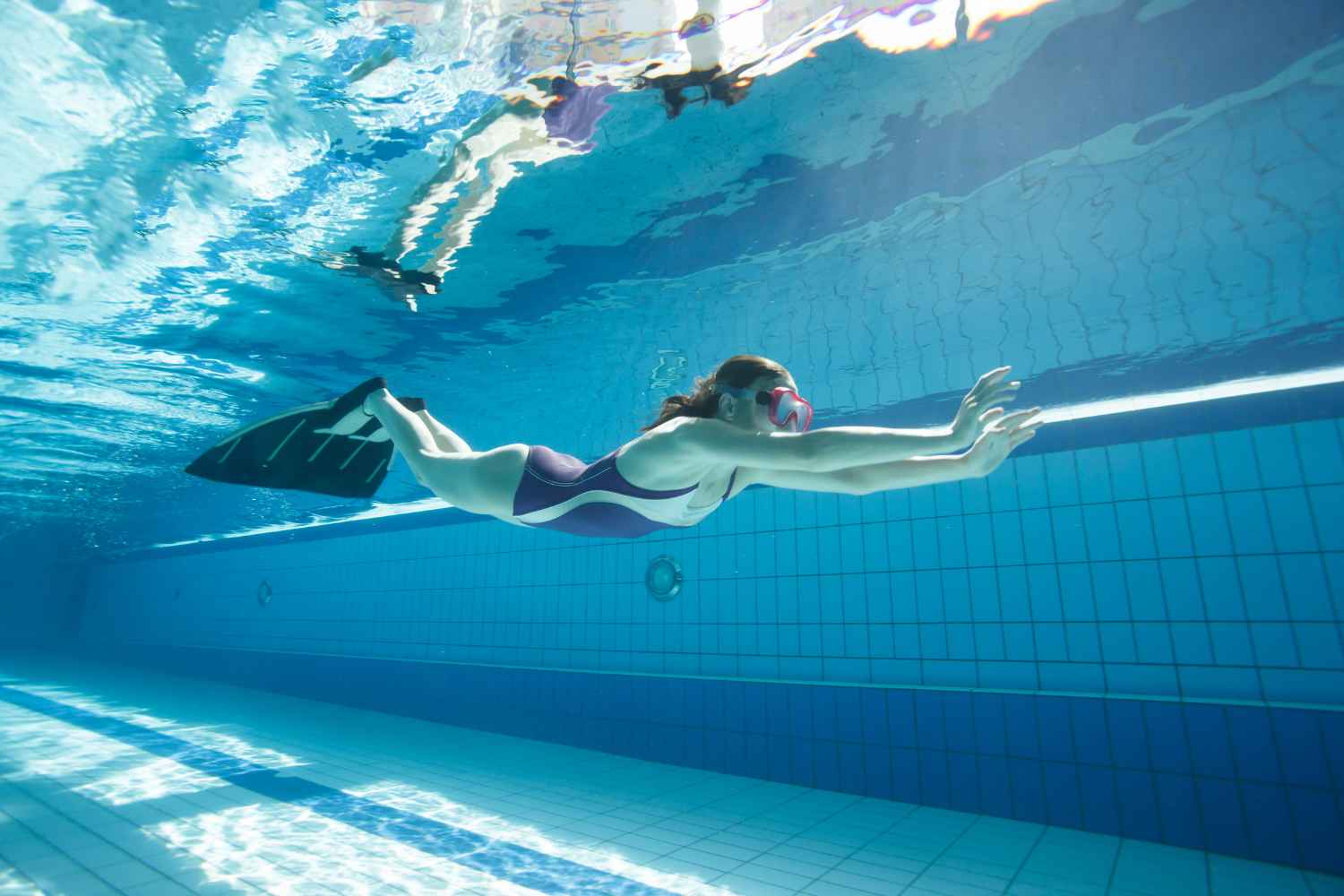
The tragedy of a 19-year-old boy, who died in early August in a private swimming pool in Montecchio Precalcino, in the Vicenza area, has brought attention to a risk that is often underestimated: freediving practiced in the swimming pool as a game or challenge between friends.
According to initial reconstructions, still being examined by investigators, the young man may have died during a freediving competition with a friend, a challenge to whoever could stay underwater the longest. The boy would have submerged without returning to the surface. The emergency services intervened quickly, but there was nothing that could be done for him. The Vicenza Prosecutor’s Office is investigating the dynamics and will have to clarify whether it was a blackout caused by a lack of oxygen or an illness.
Beyond the specific story, the episode draws attention to a very specific danger. As Ulss 6 Euganea explains in a Facebook post edited by Dr. Maria Rita Marchi, director of the Pneumology UOC of the Cittadella Hospital, holding your breath underwater for too long can lead to a sudden loss of consciousness, with potentially dramatic consequences.
The risks of freediving
When we hold our breath, the body naturally continues to consume oxygen. As time passes, therefore, the quantity of available oxygen decreases while that of carbon dioxide increases. It is precisely the increase in CO₂ that generates the growing need to breathe. But this mechanism can be altered, creating a particularly dangerous situation.
One of the most common mistakes consists in taking very deep and rapid breaths before diving, in the belief that this way you can “stock up on air” and stay underwater longer.
In reality, explains Ulss 6 Euganea, hyperventilation does not allow you to store a significantly greater quantity of oxygen. Instead, it rapidly reduces the concentration of carbon dioxide in the blood. The result is deceptive: the urge to breathe arrives later, but in the meantime the oxygen continues to decrease.
A person can therefore reach oxygenation levels incompatible with normal brain activity without feeling the need to resurface in time. This can lead to the so-called hypoxic blackout, i.e. a sudden loss of consciousness caused by lack of oxygen.
The problem is particularly serious in water: those who lose consciousness underwater cannot call for help and can quickly drown. Additionally, fainting can occur without noticeable movement, making it difficult for those nearby to immediately notice what is happening.
Freediving does not become safe simply because it is practiced by a young person who is trained or capable of swimming well. Indeed, according to the expert, hypoxic blackout episodes particularly concern men under 40 and in good physical shape.
Being trained can in fact help to make freediving perceived as easier and to unconsciously push beyond one’s limit. The pool environment can also create a false feeling of security: the water is shallow, there are other people and it seems like you have everything under control.
But a sudden loss of consciousness underwater changes the situation completely.
Another element to consider is the so-called diving reflex. The contact of water, especially if cold, with the face and nostrils activates an automatic response of the body which leads, among other things, to a slowing of the heart rate and a redistribution of blood flow towards essential organs such as the heart and brain.
This response can change the perception of effort during the dive. In some people, especially in the presence of heart disease, arrhythmias or other cardiovascular problems may also occur.
The challenges between friends
“Who can stay underwater the longest?”. It may seem like a harmless game, especially among kids and young adults. In reality, competition itself can push us to ignore the body’s signals and continue freediving when it would already be necessary to breathe. The risk increases further if, before the dive, you resort to hyperventilation to try to resist longer.
For this reason, Ulss 6 Euganea invites us not to transform freediving into a competition and not to encourage games based on underwater resistance.
Particular attention should be paid to children and teenagers, to whom it is important to explain that a competition to see who can stay underwater the longest is not a safe game.
The fundamental rules to avoid accidents
The message from the experts is very clear: freediving should not be improvised in the pool or anywhere else.
It is especially important:
