
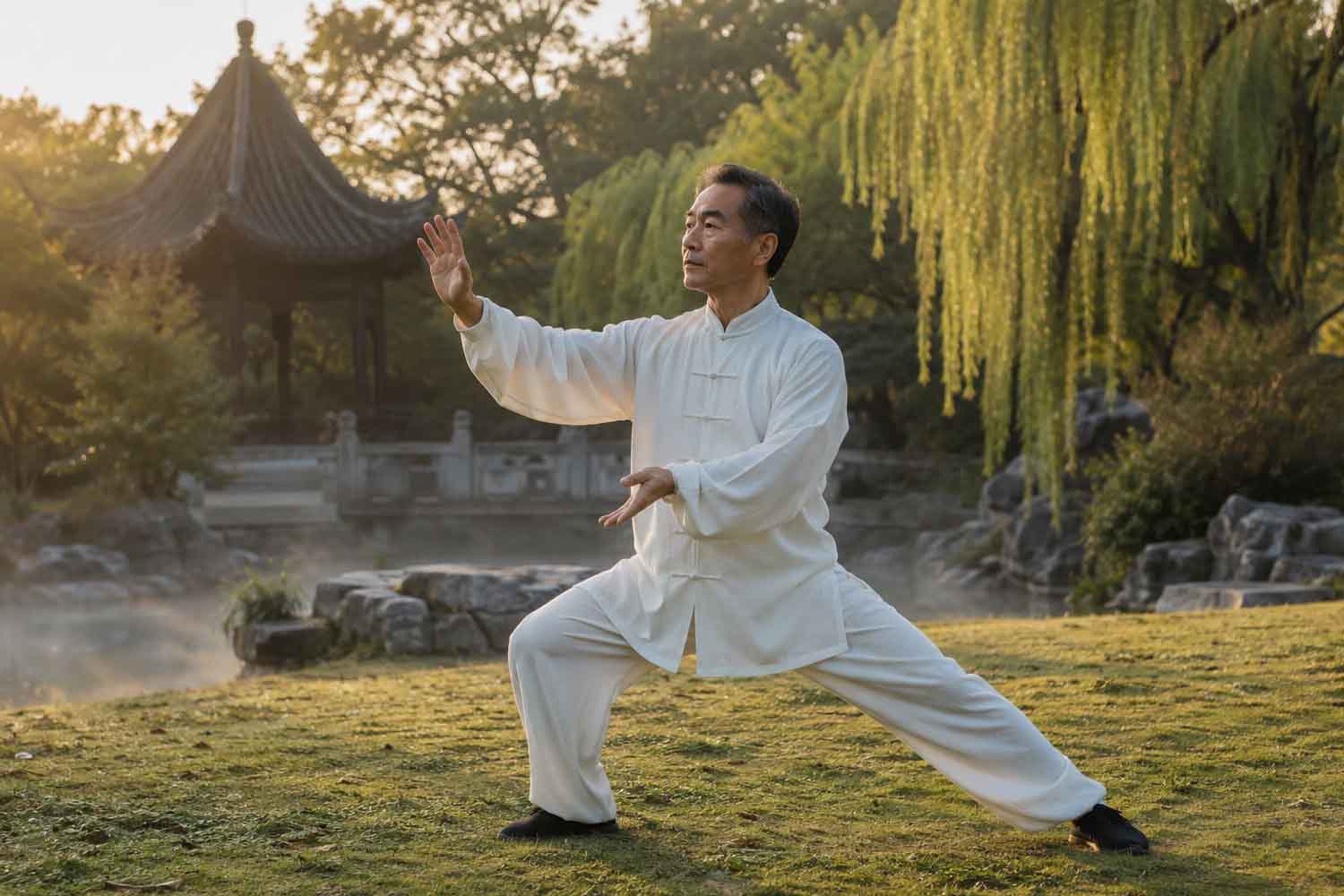
Clear eyes, regular sleep, present attention, ability to respond to what happens. In ancient Chinese medicine, consciousness also showed itself this way, through the body and the way a person was in the world. It was the expression of an organism in harmony, a kind of light capable of becoming brighter or dimmer.
From this image comes the idea of a possible “health of conscience”. The formula is suggestive and intercepts something that contemporary medicine knows well: sleep, movement, breathing, stress and signals coming from the organs influence our mental state. However, a clear boundary is needed. “Conscience health” is not a recognized diagnosis and the Chinese theory of shen it belongs to an ancient medical and philosophical system, with categories different from those of neurology and psychiatry.
The shen between heart, body and mind
The main reference is the Huangdi NeijingThe Classic interior of the Yellow Emperora corpus formed in Chinese antiquity and become one of the fundamental texts of traditional medicine. Lo appears inside shena term that can indicate spirit, vitality, mental presence, perceptive ability and psychic activity. Reducing it to just the word “consciousness” loses several pieces along the way.
The scholar Lisa Raphals, in the academic volume Mind and Psychology in Early Chinadescribes these conceptions as a psychology of the whole person, in which body, emotions, cognitive faculties and spirit are not separated according to the mind-body dualism that became familiar in the West many centuries later. The symbolic center was there xinthe “heart-mind”, connected to the other organs and functions of the entire organism.
When it shen it was considered bright, the person appeared alert, coherent, present, with a lively gaze and a good ability to orient oneself in situations. An alteration could be expressed through insomnia, agitation, withdrawal, confusion, tiredness or loss of initiative. They are very broad descriptions, constructed in an era without electroencephalograms, diagnostic criteria and magnetic resonance imaging. Using them to diagnose depression, anxiety or neurological disorders today would be a leap of over two thousand years made without even tying your shoes.
Their strength lies elsewhere: mental experience is observed alongside sleep, movement, emotions, relationships and physical conditions. Mental health, according to the World Health Organization, depends on individual, family, social and structural factors and allows you to deal with stress, learn, work and contribute to your community. This definition also looks far beyond a single brain area.
The body is already inside neuroscience
The idea that Western science searches for consciousness like one searches for a coin that has fallen under the sofa simplifies the debate a lot. Neuroscience studies the neural correlates of conscious experience, that is, the brain processes associated with perception, awareness and the ability to report what we feel. However, they have not identified a single “center of consciousness”, nor is there a theory accepted by all.
In 2025, a large international collaboration compared two of the most discussed models, integrated information theory and global neural workspace theory. The experiment involved 256 people examined with functional magnetic resonance imaging, magnetoencephalography and intracranial electrodes. The results, published on Naturesupported some predictions and challenged central aspects of both theories. Consciousness therefore continues to offer a certain resistance to those who would like to place it in a tidy box.
Furthermore, contemporary research increasingly studies interoception: the way in which the nervous system receives and interprets heartbeat, breathing, hunger, temperature, pain and other internal signals. This information participates in the regulation of emotions, the perception of one’s body and the sense of self. A review by Hugo Critchley and colleagues describes interoception as a continuous axis between body and brain, also relevant to numerous psychiatric symptoms. It is a scientific perspective based on nerves, organs, brain networks and physiological measurements; the similarity with the ancient unitary vision remains conceptual, it does not demonstrate the existence of shen.
The two traditions, therefore, can meet on the value attributed to the entire organism. However, they speak different languages. One offers historical and philosophical categories; the other builds testable hypotheses and lets the results disprove them. Sometimes even with a certain enthusiasm.
What Tai Chi and sleep demonstrate
Tai Chi combines slow movements, weight shifts, coordination, breathing and concentration. Its most solid benefits involve very concrete activities. A meta-analytic review of randomized trials found improvements in balance and a reduction in the risk of falling in older adults, although there were significant differences between the duration, frequency and quality of the programs examined.
Another meta-analysis published in 2025 found possible improvements in anxiety and depression symptoms in older adults who practiced Tai Chi or Qigong. However, the authors urge caution due to the heterogeneity of the interventions and evaluation tools. The studies measure symptoms, balance and quality of life. No instrument has detected an increase in the metaphysical luminosity of the gaze, which for now continues to escape the laboratories.
Sleep also represents a less exotic and much more robust bridge. Duration, regularity and quality of rest are linked to cardiovascular, metabolic and cognitive health. The American Heart Association has included sleep among the eight essential elements of heart health, alongside physical activity, nutrition, blood pressure, blood sugar, cholesterol, weight and nicotine exposure. For most adults it indicates as a general reference between seven and nine hours per night, although there are individual and clinical differences.
Meditation, slow breathing, yoga and Tai Chi can help some people manage stress or move more mindfully. They do not replace a medical or psychological evaluation when persistent insomnia, changes in consciousness, intense anxiety, social withdrawal, derealization or other symptoms that interfere with daily life appear.
The most useful teaching of ancient Chinese medicine remains sober: a tired mind lives inside a body that breathes, sleeps, moves, gets sick, and reacts to the environment. To realize this, you don’t need to transform a metaphor into a therapy. Just avoid treating your brain like a tenant who never says hello to the rest of the apartment building.
