
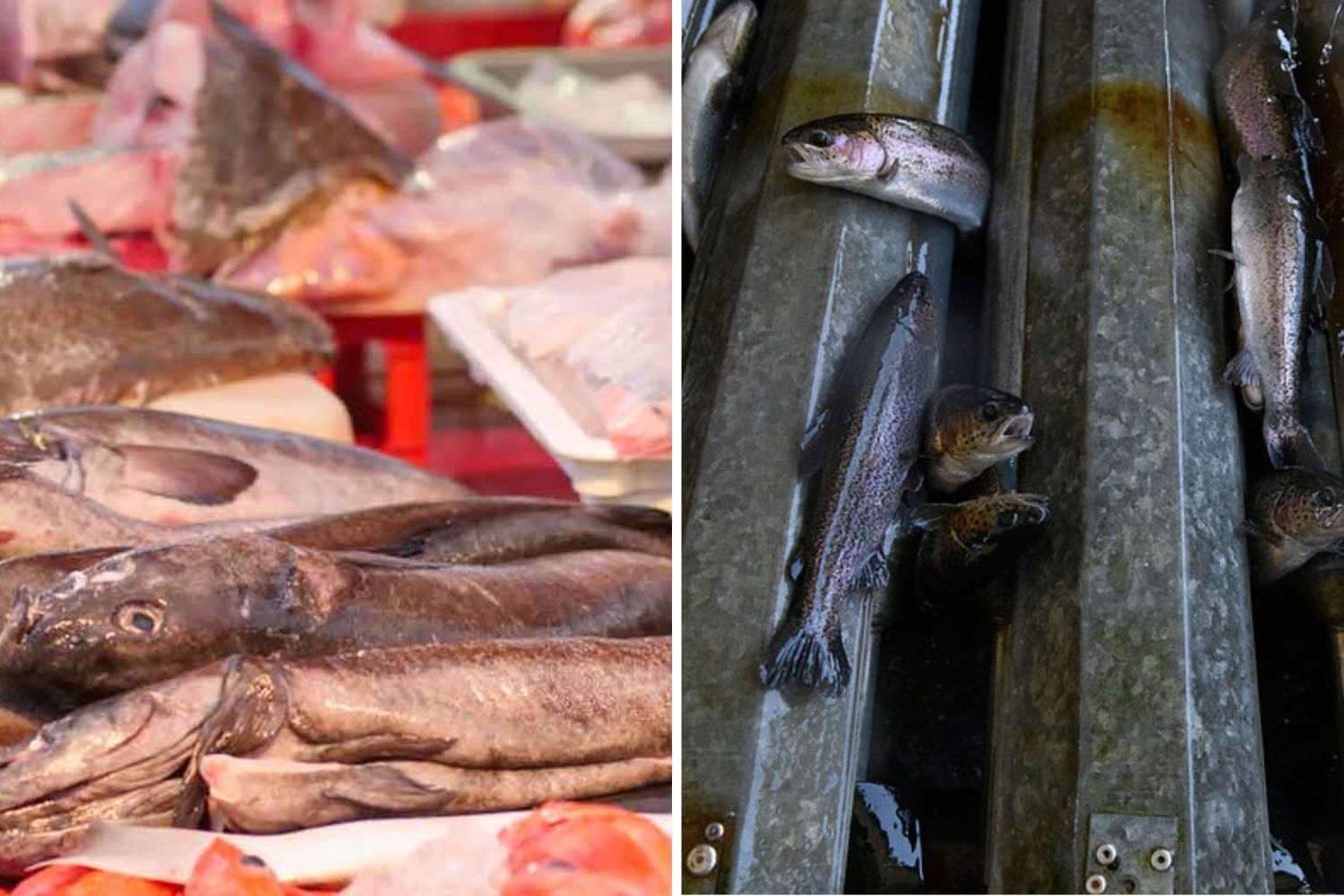
Grilled sea bream, spaghetti with clams, a baked salmon fillet, etc. in summer fish becomes the undisputed protagonist of our tables, thanks to its reputation as a light, healthy food and perfect for hot days. But how much do we really know about the fish we bring to the table? Where does it come from, how was it raised, in what conditions did it live before ending up in our cart or on the restaurant menu?
Being Animali brings attention back to this theme, which puts the spotlight on some of the species most loved and consumed by Italians, to tell the story of a world, that of aquaculture, which is increasingly central to our eating habits but still surrounded by too many gray areas.
But let’s start from the beginning. Italians are among the largest consumers of fish products in Europe. According to data reported by the association, we consume 30.4 kg of fish products per capita per year, compared to a European average of around 23 kg. Yet there is an apparent paradox: only 10% of Italian consumers say they prefer farmed fish over wild-caught fish.
Why paradox? In reality, an important part of the fish that reaches our tables comes from farms. According to European data cited byessereanimali, five of the six fresh species most consumed by Italian families – namely sea bream, mussels, salmon, sea bass and clams – come largely from aquaculture.
Where does the fish we eat come from?
It is precisely here that the picture becomes more interesting, because it is not only the share of farmed fish in general that is growing, but above all that of two species that have now become a summer classic: sea bream and sea bass. It is difficult not to find them on the menus of restaurants and beach establishments, and in fact their popularity continues to rise, consider that in the last ten years the consumption of sea bream has increased by 23%, that of sea bass by 11%.
The point is to understand where all these sea bream and sea bass that end up on our plates come from. And the answer, according to the data cited byessereanimali, is surprising: around 80% of those consumed in Italy are not made in Italy, but come from foreign farms, in particular in Greece and Turkey. In short, out of five sea bream or sea bass that we order, only one actually comes from an Italian farm.
A detail that rarely emerges when we sit at a restaurant table, where knowing where the fish really comes from is not as immediate as reading a label in the supermarket. Yet this is enough to understand how long and barely visible the supply chain behind an apparently simple dish is. Simply put, that grilled sea bream ordered on a summer evening could come from thousands of kilometers away.
Aquaculture versus fishing
Aquaculture is growing rapidly globally and might seem, at first glance, to be a response to the pressure that industrial fishing places on marine ecosystems. But Being Animals also invites us to look at what happens “upstream”: the farming of some species in turn depends on wild fish fishing, because the animals are fed with feed that may contain fish flour and oil.
This is also the case with sea bass and sea bream, carnivorous species. According to an article published in the magazine International Aquafeedto produce one kilo of sea bream you need between 1.8 and 2.2 kg of feed. Farming, therefore, cannot be considered automatically disconnected from fishing: for some species, part of the resources necessary for their growth derives from wild fish stocks.
Farms in Italy
And in Italy, how is it going? In our country there are around 700 fish farms, according to data from the Italian Fish Farmers Association, and they are “almost all intensive”. A system that produces around 50 thousand tons of fish a year, or over 100 million animals, numbers worthy of a real industry.
And it is precisely on the living conditions of these animals that the heart of the denunciation of Being Animals focuses. Overcrowding, often inadequate water quality, stressful transport, painful handling, the picture that emerges is that of a supply chain which, behind the reassuring image of “fresh fish”, hides practices that are anything but idyllic. Things that have been reported for some time, moreover, and of which many consumers are already aware.
But it is in the final moment, that of demolition, that the critical issues become more serious. A 2024 study, conducted on 21 Italian sea bass and sea bream farms, photographed a disturbing situation: in 20 out of 21 facilities the fish were killed through thermal shock in water and ice, in one through asphyxiation due to exposure to air. Two methods which, according to the association, can cause pain and prolonged suffering, and which both EFSA and the WHOSA guidelines consider inadequate from an animal welfare point of view.
The problem, however, is even further upstream: fish are simply not protected by any specific legislation that regulates the final stages of their life. A legislative void that leaves the field open to practices that, if applied to any other farm animal, would probably cause much more of a stir.
And don’t EU funds protect the welfare of fish?
Then there is the question of public funding. The data emerges from the report “New routes for aquaculture“, created byessereanimali in collaboration with The Good Lobby. According to the analysis, Italy has 987 million euros of European public funds available for fishing and aquaculture. But, based on the Ministry of Agriculture program analyzed in the report, only 1% of the resources are allocated to the protection of fish, while over half of the funds have yet to be allocated.
According to ÈAnimali, these still available resources could be used to finance systems capable of reducing animal suffering and to involve companies, universities, research institutes and civil society organizations in the definition of national guidelines on fish welfare.
View this post on Instagram
Simone Montuschi, president ofessereanimali, underlines the need to use available resources to improve breeding standards:
We have until 2027 to use these resources and we cannot afford to miss this opportunity: we need to invest in more sustainable and above all more animal-friendly aquaculture.
And then he adds:
Fish are also sentient beings and citizens ask that their ethological needs also be taken into consideration and the standards currently used be improved.
The institutions should therefore use the available European funds responsibly and guarantee consumers more information.
As you may have understood by now, behind a baked sea bream, a grilled sea bass or a steak of salmon there is a supply chain that we don’t always know about. The point raised by Being Animals is not to contrast caught fish with farmed fish, but to ask for greater attention to what happens on farms and to the use of public resources allocated to the sector.
The numbers show a significant consumption of fish products in Italy, a growing demand for some species and a strong presence of fish from aquaculture, especially from abroad. At the same time, the questions of farming conditions and how animals are managed at the end of their lives remain open.
This is, according toessereanimali, the bitter aftertaste that we risk not perceiving when we bring fish to the table thinking only of its nutritional qualities. In reality, behind what we eat there is also a supply chain made up of livestock, feed, imports, public funds and, above all, animals whose well-being deserves to be considered.
Source: Being Animals
