
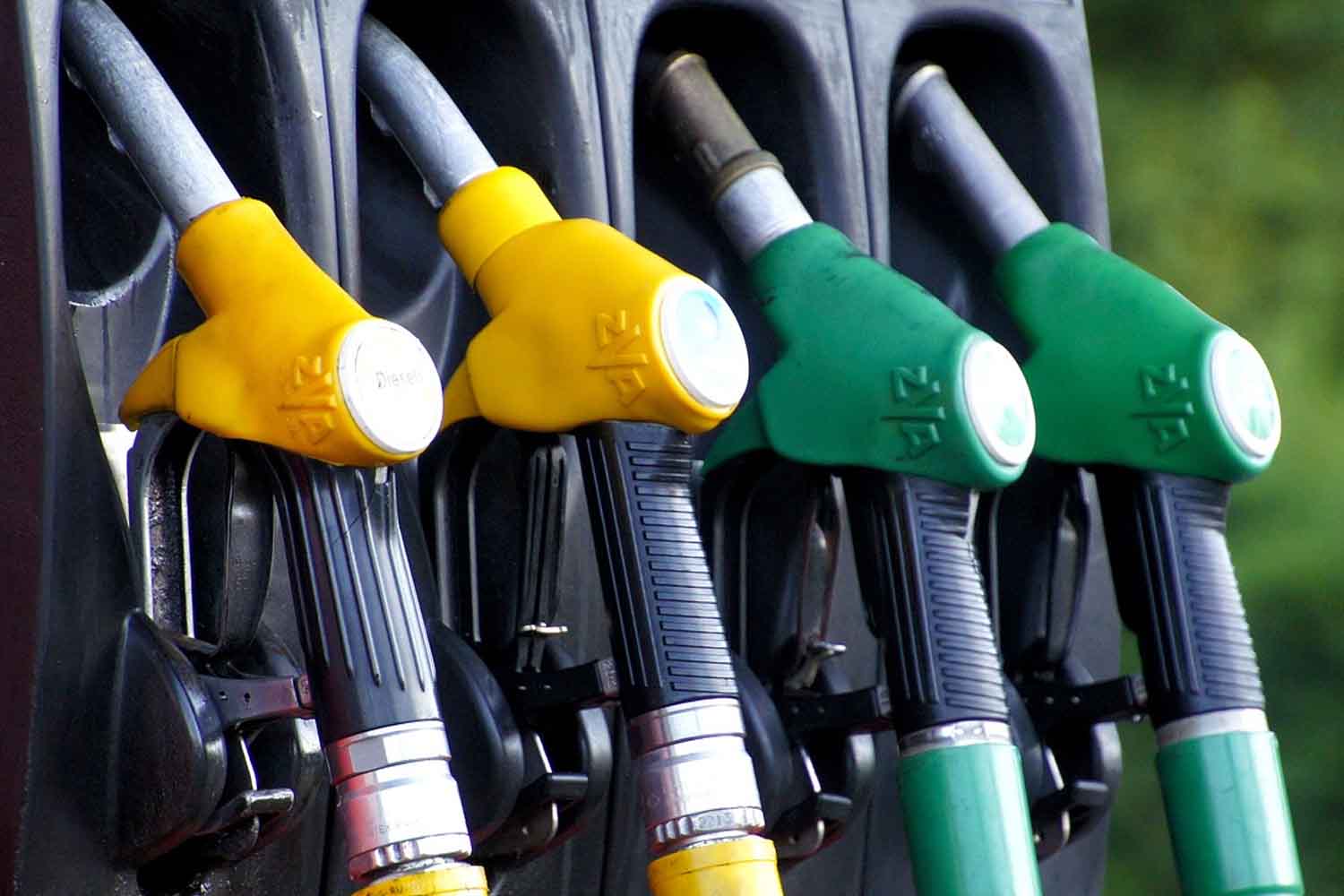
Inside a tank there may be diesel fuel declared as lubricating oil. Inside another depot, fuel with too much water. Elsewhere, petroleum products are manufactured and classified in such a way as to pass under the radar of excise duties. Then it all hits the newspapers under a much simpler label: “watered down fuel”.
Except that this story isn’t simple at all. Between 1 March and 31 July 2026, the Guardia di Finanza concluded 1,371 interventions regarding excise duties on energy products, reported 265 people and seized over 20 million kilograms of energy products. The confirmed fraudulent consumption exceeds 6.5 million kilograms.
These are huge numbers. However, they must be kept on a leash: those 20 million kilos include different phenomena along the entire supply chain, from clandestine deposits to subsidized fuels used illicitly, up to the so-called designer fuels. They are not equivalent to 20 thousand tons of “stretched” petrol that ended up in motorists’ tanks.
Designer Fuel has an elegant name. Much less fraud
“Designer fuel” almost sounds like the fuel from a very expensive concept car. Instead, it refers to petroleum products fraudulently prepared or classified to avoid tax obligations.
The mechanism can be quite concrete. In the checks carried out between Udine and Verona, for example, the Financial Police intercepted two containers coming from Eastern Europe with approximately 64 thousand liters of product declared as “lubricant oil”. The investigations established that it was automotive diesel intended for the Italian market.
In Nola, however, over 80 thousand liters of diesel fuel were seized, stored in a clandestine warehouse and indicated directly by the Fiamme Gialle as designer fuel. Water has little to do with it here. The convenience arises above all from the tax difference: a product is passed off as something else, avoiding or reducing the excise duties that would be due on automotive fuel.
Chemistry also serves to make the game less crude. A study published in 2024 on Talanta Openalso signed by researchers from the Customs and Monopolies Agency, tested portable Raman spectroscopy to quickly recognize fraudulent diesel blends containing heavier hydrocarbon fractions. Fraud, in short, has become sophisticated enough to require portable tools to unmask it. Other than a tank of water poured into the dispenser at night.
When there is really too much water in the diesel
Then there are the cases where water actually appears. At the end of May, in the province of Siena, the Guardia di Finanza and the Customs and Monopolies Agency seized approximately 105 thousand liters of diesel deemed non-compliant after checks carried out in two commercial depots and in a roadside distributor.
ADM analyzes found different problems in the samples. In one the water content exceeded the permitted limits and denaturing substances were present; in another the denaturation of agricultural diesel was anomalous; in a third the flash point was lower than the parameters required for safe storage and use.
This distinction matters. Designer fuel, contaminated fuel, out-of-spec product and diesel fuel with water indicate different problems, even when the result for the driver can be very similar: a vehicle that starts coughing as soon as it leaves the pump.
Water and contaminants can damage filters, pumps and injection systems. Compatible signals include starting difficulties, drops in power, irregular operation and shutdowns. Compatible, indeed. To establish what caused a failure, you need to analyze the fuel, because a jerking car can have many reasons to be angry.
“One in five illegal distributors” does not mean one in five sells adulterated fuel
Then there is a number that runs fast, especially on social media: in Rome, around one distributor in five of those checked was found to be irregular. The data can be corrected referring to the specific operation. It becomes much more elastic if it is transformed into “one in five Roman petrol stations sells adulterated fuel”. The irregularities found in the checks may in fact concern the quality of the product, but also the display of prices, the correspondence between the price communicated and the price charged or the quantity actually dispensed.
In the same national budget, the Guardia di Finanza reports 3,428 interventions on price transparency between March and July, with 2,279 violations reported to 937 operators. Much of it concerned prices that were missing, displayed poorly or different from those communicated. Putting everything under the heading “adulterated petrol” makes the title more muscular. It makes the data significantly less useful.
At the pump it is almost impossible to notice
Here comes the annoying part: while refueling, a motorist can hardly recognize irregular fuel by eye. A much lower price than nearby plants may invite caution, without proving any fraud in itself. Odor and color are not a pocket chemical laboratory and the logo above the shelter, however reassuring, does not enter the tank to control the composition. Protection therefore begins with something much less fascinating than forensic chemistry: the receipt.
Anyone who notices problems immediately after filling up should keep the receipt or proof of electronic payment and precisely document when and where they refueled. If the vehicle arrives at the workshop, it is useful to ask for a written diagnosis and, when possible, have a sample of the fuel in the tank taken and stored.
It is also the advice provided by Adiconsum in the cases of motorists left with their car broken down after refueling: keeping proof of payment, collecting the technical documentation and keeping tow truck and repair receipts can become decisive for a possible compensation request.
If the engine starts to lose power, jerks or stops shortly after filling up, continuing the journey hoping that it will digest everything on its own adds especially kilometers to the problem.
The 2026 checks therefore show a supply chain where tax frauds constructed with a certain precision, non-standard fuels and real contamination coexist. The designer fuel is just one of the pieces. Calling everything “watered down petrol” is more convenient. Even pouring water into a tank would be simpler than certain systems set up to avoid excise duties.
