
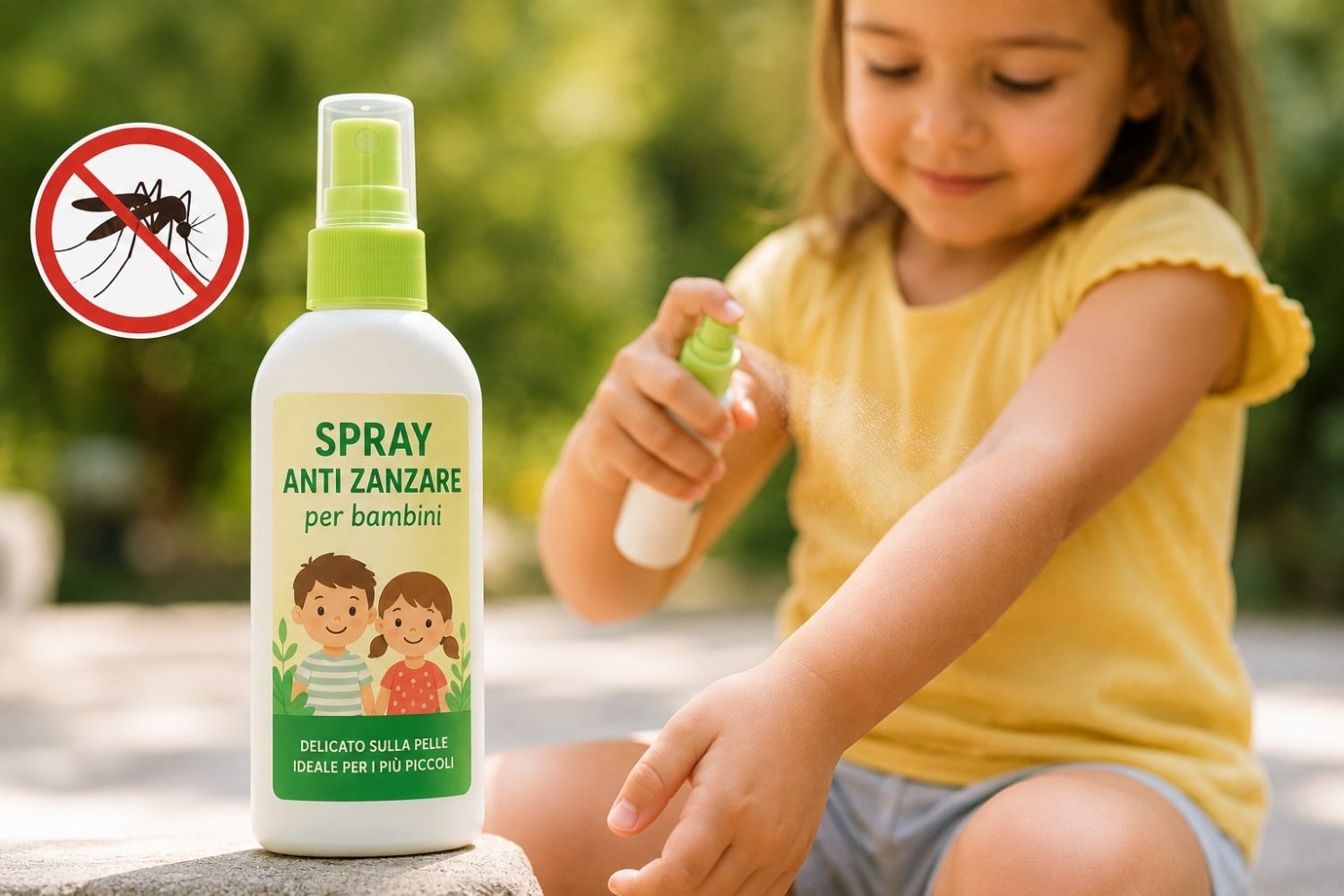
Forty products designed for children, and the words “for children” which alone are not enough to guarantee anything. This is what emerges from a survey by Altroconsumo, which sifted through over 90 mosquito repellents on the market, isolating those intended for children to understand if they really keep the promises printed on the packaging. The result is not very reassuring, given that a significant part of the “baby”, “kids”, “junior” or “family” products are not very effective, because they are actually cosmetics based on essential oils. Others, on the contrary, contain the diethyltoluamide (DEET), a substance that works, and even well, but which Altroconsumo does not recommend as a precaution for the sensitive skin of children.
The products promoted, group by age group
For children between 2 and 3 years old, the formats deemed suitable include the anti-sting Vape Derm Kids wipes, based on Cymbopogon winterianus oil (Citrepel) at 12.87%: medium protection, low risk, convenient because they are applied by an adult without the risk of inhalation. Orphea Bambini anti-puncture milk is positioned in the same range, a milky consistency to be spread with 15% Eucalyptus citridora oil (Citriodiol), also low risk for eyes and mouth.
Between 3 and 12 years old, Altroconsumo recommends Jungle Formula Famiglia spray, with 20% icaridin, a good compromise between efficacy and safety, always to be applied by an adult and no more than twice in 24 hours. Also promoted is Chicco NoZZZ insect repellent spray emulsion, no gas, with Eucalyptus citridora oil (Citriodiol) at 19.9%, usable up to three times a day.
Over 12 years of age, Deet comes into play: Prep Insect Repellent Lotion, at 19.5%, protects effectively with a no-gas format, to be applied once a day. Same concentration for Abat ZZZ Sport active repellent spray, pressurized spray to be dispensed for approximately 15 seconds, also in this case no more than once a day.
The problem is in the claim, not in the repellent
The crux, explain the association’s experts, lies in the absence of shared rules on who can write “for children” on a package. There are no uniform official guidelines, and each manufacturer decides at its own discretion when to affix the “kids” label or the “0+” indication. Two products with the same wording can have completely different compositions: one ineffective against mosquitoes but potentially allergenic to the skin, the other effective but with an active ingredient that experts believe is not very suitable under a certain age.
From what age can a repellent be used?
Under two years of age, according to the information collected by Altroconsumo, no chemical repellent should be used, regardless of whatever the label says, including formulas declared suitable “from birth”. The only defense recommended in this range remains the physical one, i.e. mosquito nets and covering clothing. From two years of age onwards, low concentration repellents can be introduced, preferring non-sprayed formats, such as wipes, roll-ons and spreads, to reduce the risk of inhalation and/or accidental contact with eyes and mouth. The tolerated concentration increases with age: around 10-15% between 2 and 3 years, up to 20% between 3 and 12. Deet, when it appears, is considered acceptable only from 12 years of age.
How to distinguish a real repellent from a scented cosmetic
The criterion that separates the two worlds is as simple as it is ignored by the majority of buyers: an authorized repellent bears the words medical, surgical or biocidal device on the label, together with the name of the active ingredient and its concentration expressed in grams per 100 grams of product. However, if the classic list of ingredients in INCI language appears on the back, typical of cosmetics, that product cannot boast any repellent efficacy (it perfumes, hydrates, caresses the skin, but does not keep mosquitoes away). Among the active ingredients considered a good compromise between effectiveness and safety for children are icaridin and extracts such as citrepel and citrodiol. Essential oils, on the other hand, are rejected across the board: in addition to not working as repellents, they may contain perfume allergens that are not suitable for skin that remains exposed for a long time, without rinsing, such as that of children on holiday.
