
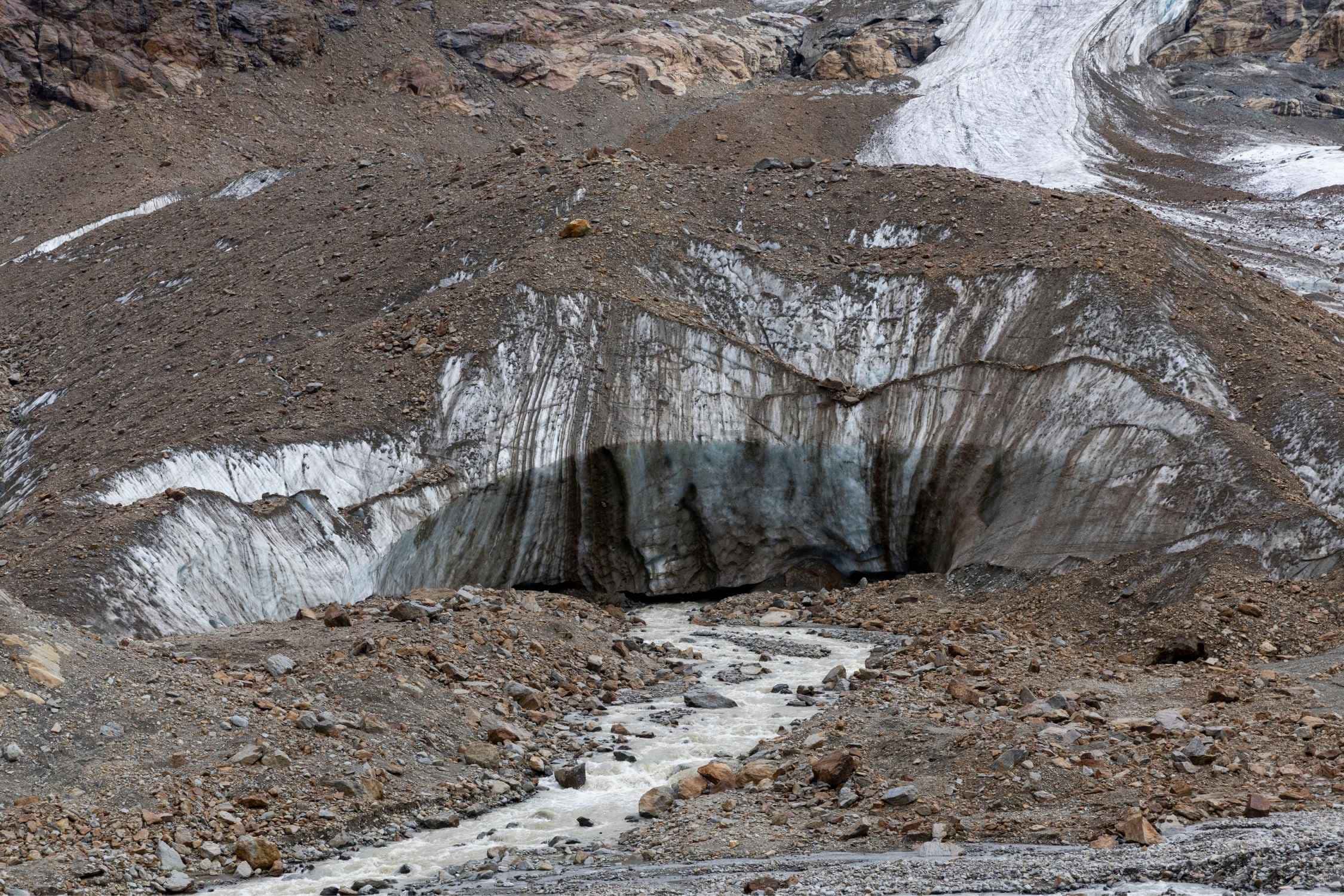
There is a point in the Italian Alps where the climate crisis can almost be measured in steps. It is the tongue of the Forni glacier, in Alta Valtellina, in the Ortles-Cevedale group, within the Stelvio National Park. It is the second largest glacier in Italy and today it is one of the most evident symbols of how quickly the high mountains are changing.
According to data from the Lombard Glaciological Service and the State University of Milan, the glacier has retreated by 3 kilometers since the beginning of the century. And on the hottest days it can lose up to 10 centimeters of thickness in just 24 hours. The surface blackens and the amount of debris covering it increases. Between 2014 and 2022, the Forni front retreated by over 400 metres, while in some places the thickness decreased by 70 metres, the equivalent of the height of a building of around twenty floors.
@Legambiente
Legambiente’s 2026 Glacier Caravan, which arrived in Alta Valtellina for its third stage together with the experts from the Lombard Glaciological Service, the State University of Milan and the Stelvio National Park, has recently narrated this transformation. But perhaps the most interesting fact is that it is not just the glacier that is changing. The entire mountain around him is changing.
The ice retreats, the rain comes harder and harder
High temperatures accelerate melting, but they’re not the only thing that’s putting pressure on glacial environments. Precipitation is also becoming a problem, especially when it arrives with exceptional intensity and at very high altitudes.
In recent days, 200 millimeters of rain has fallen in the Orobie Valtellinesi in just two days. In Valfurva 60 millimeters fell in 24 hours. The precipitation caused the partial flooding of the Frodolfo torrent and damaged a section of the path that leads from the Forni refuge to the glacier. It is one of the contradictions of the new Alpine summers: weeks of drought, then torrential rainfall, while the ice continues to retreat.
From January 1st to August 23rd 2026, 72 extreme weather events were recorded in the Alpine regions. Lombardy is the most affected region, with 23 events, followed by Veneto with 21 and Piedmont with 13. Among the most recurring phenomena are damage caused by wind, flooding linked to intense rain, drought and record temperatures.
Three kilometers which are not just a number
Looking at the glacier today, the transformation is also visible in the morphology of the territory. The lower tongue of the Forni is now crossed and “cut” by rocks that until a few years ago were covered by ice. Where before there was the glacial mass, today new moraines, rocks and portions of territory appear which are slowly being colonized with vegetation. It is as if the mountain was showing, in real time, the consequences of its retreat.
And the phenomenon also has a historical dimension. The Forni glacier was in fact the scene of the First World War: with the melting of the ice, some traces of the Great War that had remained buried for decades are also coming to light.
To try to understand this transformation, the Stoppani-Desio Glaciological Path was inaugurated last July, a route of approximately 4 kilometers with 13 informative stages that leads from the Forni Refuge to the front of the glacier. The goal is to explain what is happening and why. Today, delving into the mountains also means learning to recognize a different mountain.
Adamello also withdraws
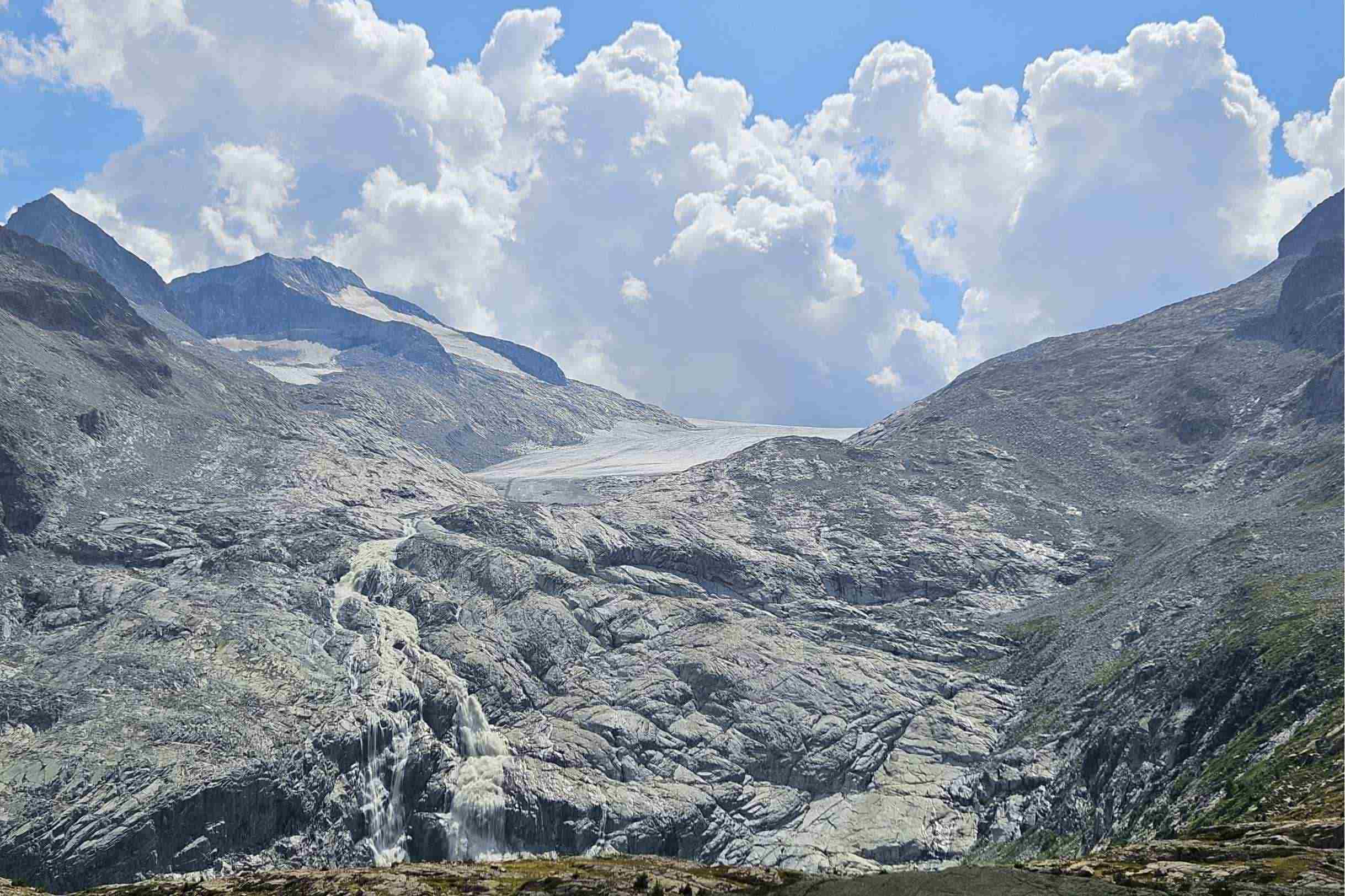
Even Adamello, the largest glacier in Italy, located between Lombardy and Trentino, is undergoing rapid retreat and we saw it with our own eyes this summer.
@Francesca Biagioli/greenMe
The comparison between images taken ten years later documents a retreat of over 500 meters and a loss of thickness of tens of metres. Here too the surface becomes increasingly darker as the underlying layers emerge: a darker layer absorbs more heat and further accelerates fusion. The risk concerns a fundamental water reserve not only for Alpine ecosystems, but also for agriculture and hydroelectric energy production downstream.
From the Alps to Nepal, when ice becomes a risk
And it is here that the story of Forni intersects with the dramatic one arriving in these hours from the other side of the world. Thousands of kilometers from the Alps, on the border between Nepal and Tibet, part of a glacier collapsed causing a devastating flash flood. The toll is still evolving: according to the latest available data, at least 165 people have died in Nepal and over 1000 are missing, while on the Tibetan side there are also victims and numerous missing.
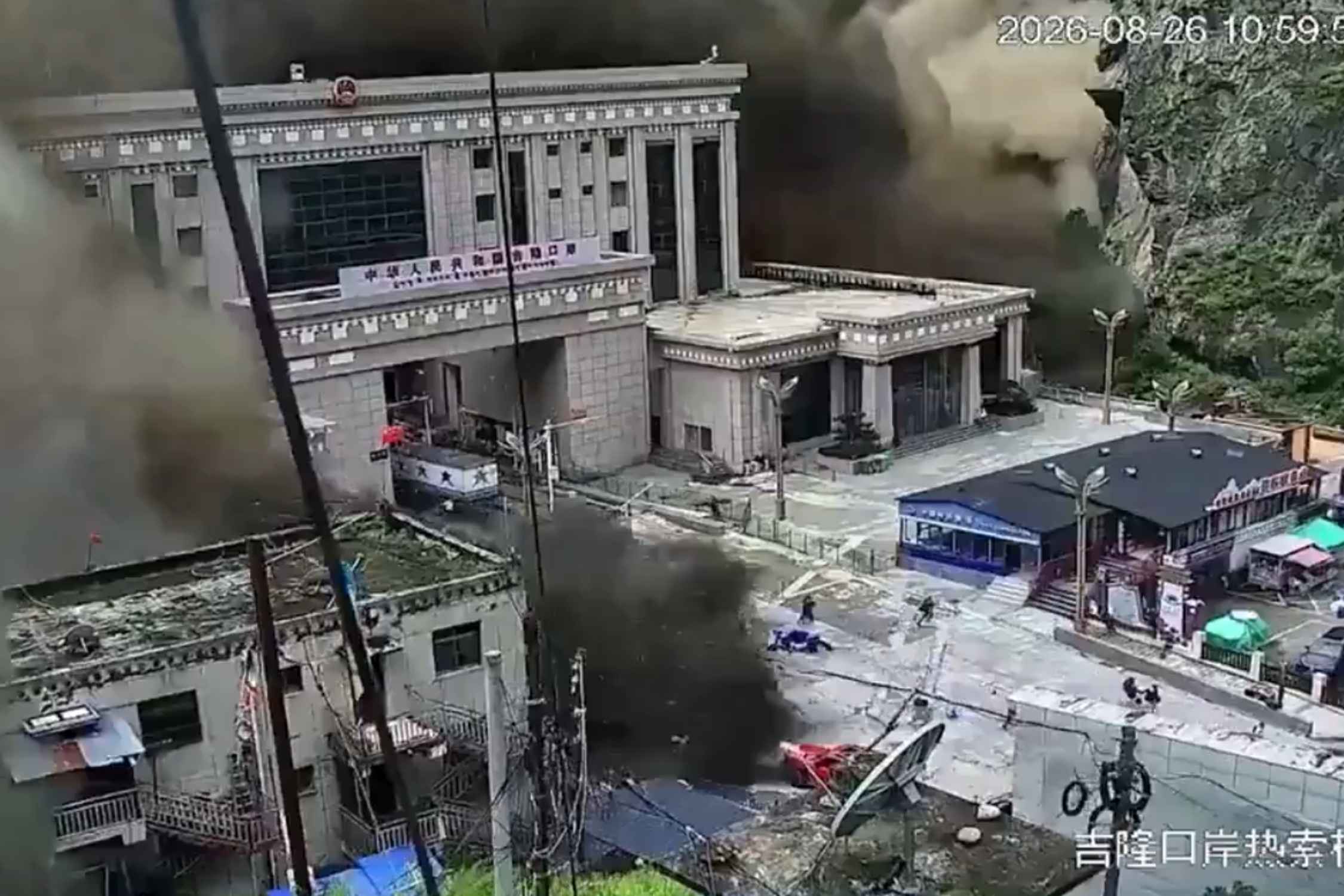
Photo by @ravipandey2643
Initially it was thought that the seismic event recorded in the area was an earthquake. The US Geological Survey later clarified that the signal was produced by the collapse of ice and rock and the resulting debris flow. The material falling from high altitude hit the watercourse and generated a flash flood, transforming a Himalayan valley into an enormous corridor of water, mud and debris. Roads and bridges have been destroyed and rescue operations are made even more difficult by damage to infrastructure.
Here too, however, an important clarification is needed: experts are still precisely reconstructing the chain of events that led to the disaster. However, initial analyzes indicate that the rapid warming of glacial regions may contribute to making ice, rocks and slopes more unstable. And this is precisely the most interesting connection with what is happening in the Alps.
A global problem
The Forni glacier losing centimeters of thickness and the Himalayan glacier collapsing into a valley are obviously not the same phenomenon. But they are two images of the same transformation: global warming is changing high-altitude environments and, with them, the way in which water, ice and rock interact.
In fact, when a glacier retreats, the availability of water, the ecosystems, the morphology of the slopes and, in certain conditions, also the risks for those who live or move downstream change.
This is what Valter Maggi, president of the Italian Glaciological Foundation and professor at the University of Milan-Bicocca, also underlines: the retreat of Alpine glaciers is already something that mountain communities have to deal with, from the availability of water to the security of the territory and the local economy. And so perhaps the most interesting way to talk about Forni is not just to ask how much ice we will lose. The question is: what mountains will we find ourselves living in when that ice is no longer there?
A mountain to learn again
The answer doesn’t just come from monitoring glaciers. It also involves the ability to observe what is changing and adapt. This is the meaning of the Stoppani-Desio Glaciological Path: to transform the glacier into a place where the climate crisis becomes observable, concrete, almost tangible. Its 13 stages tell the story and dynamics of the ice, but also the relationship between scientific research, risk management and territory. Because the problem is not just that the Forni glacier is dying. It’s that together with the ice, the landscape we knew is changing, and with it the rules with which we are used to frequenting the mountains.
From the Alps to Nepal, the lesson is similar: mountains are not still. And today they are changing at a speed that forces us to look at them with different eyes. The ice goes away. And before it’s too late, we must learn to read what it leaves behind.
