
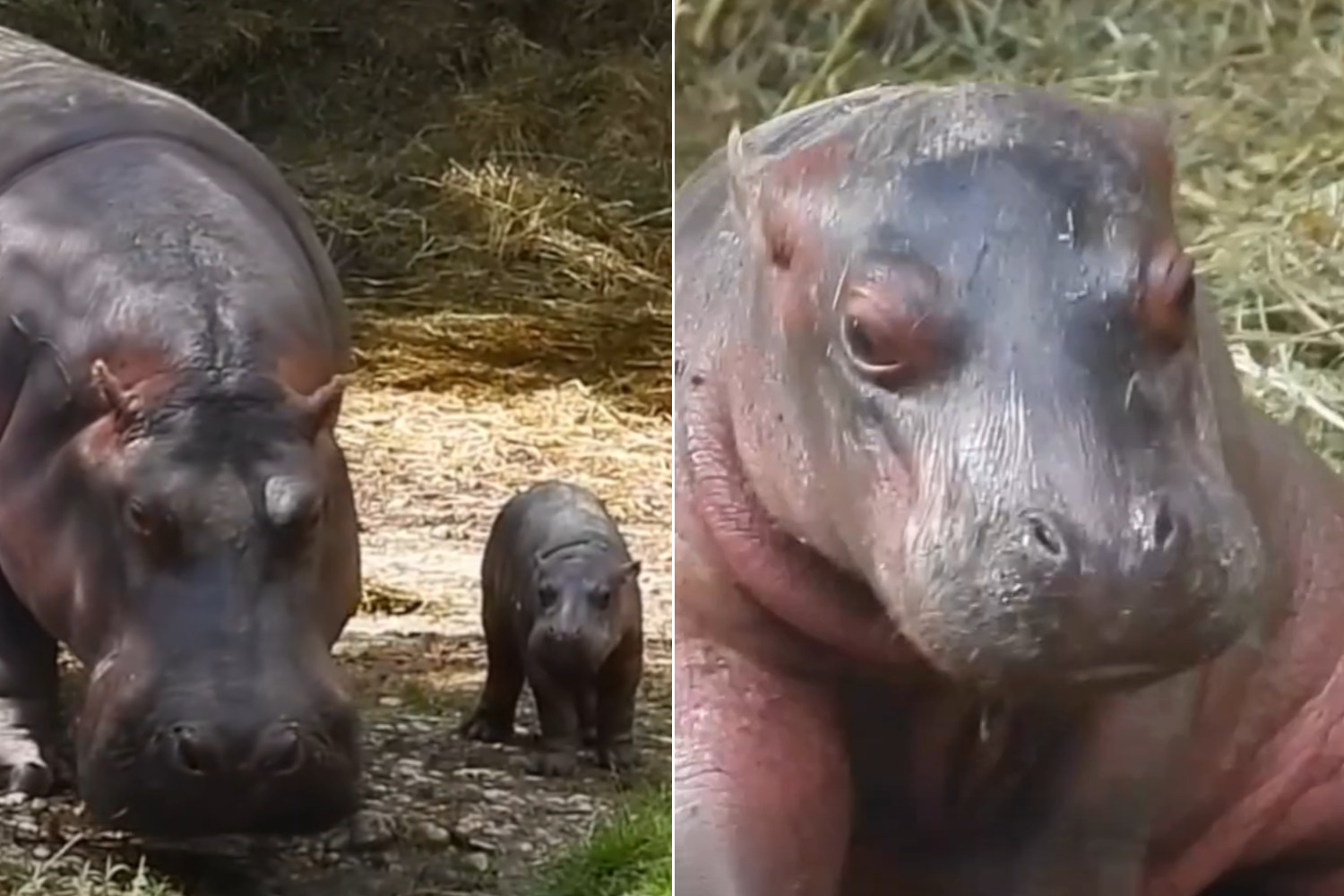
An exceptional biological event occurred at the Parco Natura Viva in Bussolengo which surprised the international scientific community. The hippopotamus Camilla, who arrived at the Venetian facility back in 1976, gave birth to her fifteenth puppy at the age of 55.
This is an absolute record, since the animal has become the exemplar of Hippopotamus amphibius oldest in Europe to successfully complete a gestation, far exceeding the average life expectancy of his species. After a pregnancy that lasted eight months, the birth took place in total autonomy within the structure’s water basin. Ten days after the event, the baby shows a body weight of around 50 kilograms, a fraction compared to the mother’s size which reaches 2.5 tons.
View this post on Instagram
The first birth since 2021
As confirmed by the zoological director of the park, Camillo Sandri, the event breaks a birth fast for this species which in Italy has lasted since 2021. In the first days following the birth, the mother remained almost constantly immersed in the pond together with the newborn, allowing it to breastfeed directly under water. When the little one shows signs of fatigue while swimming, Camilla offers her snout as an emerged support point, allowing him to rest and breathe without wasting precious energy.
Threats in nature and the ethical contradictions of captivity
The birth which took place in the municipality of Verona brings attention to the conservation status of large African mammals in their habitat of origin, where the species is classified as Vulnerable (VU) in the Red List drawn up by the IUCN. Despite their presence in 39 African countries, wild populations suffer from the shrinking of wetlands, water pollution and poaching. According to official CITES findings, between 2009 and 2018 the international trade in body parts involved derivatives attributable to approximately 13,900 hippos, whose large incisors and canines are used in clandestine markets as a substitute for elephant ivory.
While on the one hand zoological structures justify the presence of these animals by invoking educational and research purposes, the birth of a puppy in an artificial context inevitably raises ethical questions about captivity. Spending an entire life within fenced perimeters, however enriched or spacious, deprives these complex mammals of the ability to express their natural behaviors, such as migration across large river basins or wide-ranging social dynamics. The spectacularization of late-life motherhood thus risks overshadowing a bitter reality: the perpetual permanence of creatures born to dominate the wild spaces of Africa within enclosed contexts for public use.
