
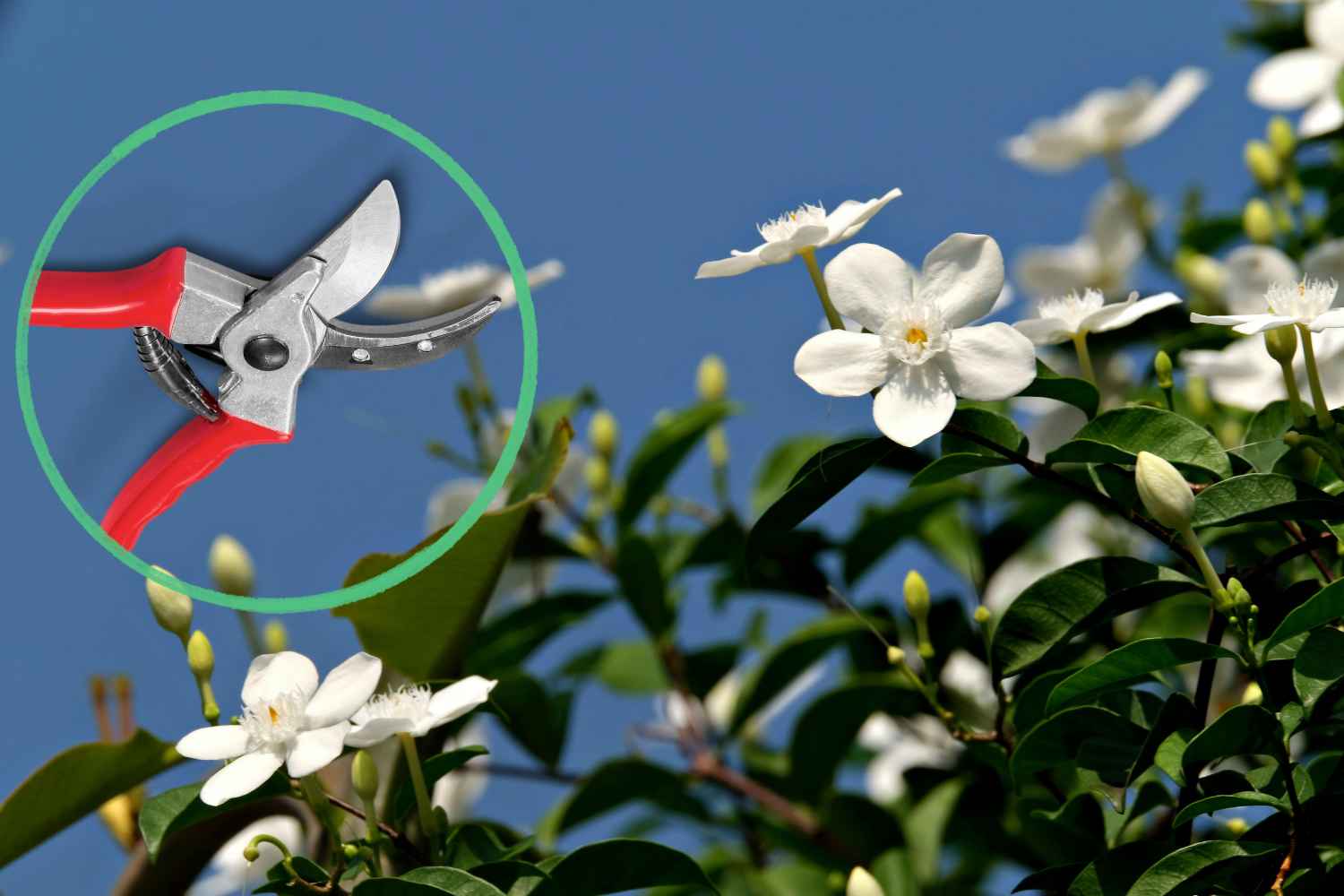
Jasmine is a plant particularly appreciated for its ability to enrich gardens and balconies with its very beautiful and fragrant flowers, and to guarantee healthy growth and abundant flowering you need to know how and when to proceed with pruning.
Pruning jasmine is not only a purely aesthetic operation, but is of great importance for protecting the health of the plant and promoting lush flowering. Choosing the ideal moment in which to operate, together with the application of the correct techniques, are essential to get the most out of the plant. We must underline the fact that each variety of jasmine has its own specific needs in relation to the flowering cycle, therefore knowing the appropriate pruning methods will allow you to enjoy a plant that is always healthy and in full bloom.
Pruning timing: when to intervene
The timing of jasmine pruning can mean the difference between a thriving plant and a disappointing bloom. There are two main categories of jasmine: summer and winter jasmine, each of which requires different attention.
Pruning techniques: how to proceed
Once the right time for pruning has been established, it is essential to adopt the correct techniques to perform a precise and effective cut. Jasmine pruning requires attention to detail, especially if the plant has woody or particularly old branches.
Start by working on one branch at a time to have greater control and reduce the risk of errors, use well-sharpened shears to make clean, crisp cuts. Remember that careful pruning helps keep the plant healthy and stimulates the growth of new branches.
In the case of a bushy jasmine, start pruning from the base and proceed slowly, tackling a single stem at a time. Remove overgrown or tangled branches to allow light and air to reach all parts of the plant, and if the branches appear very intertwined, it may be necessary to cut the smaller branches first to free the main ones.
Always eliminate dry or damaged branches right down to the base, as they can be harmful to the health of the plant: by removing the dead parts, the plant will be able to concentrate its resources on the healthy branches, promoting vigorous growth and more generous flowering.
©Greatandlittle/123rf
Shaping jasmine: how to maintain a neat shape
Pruning serves to stimulate flowering, but also to maintain a harmonious shape of the plant. It is important to avoid the branches becoming too heavy or the plant developing in a disordered way.
Shortening the longest branches is a recommended practice to prevent the jasmine from becoming too bulky. Pruned vines will generally regrow within a season or two, so there is no need to fear significant cuts, and also remember that jasmine is a hardy plant, capable of withstanding even more severe pruning without suffering damage.
If some branches grow in unwanted directions, you can direct the growth by tying the branches to the supports with string, rather than cutting them straight away. This approach will allow you to keep the plant well-formed and tidy without compromising future growth.
Continuous care keeps jasmine healthy all year round
Major pruning is essential, but consistent care throughout the year is also crucial to keeping the plant healthy. After flowering, it is advisable to carry out small prunings to remove dead or damaged leaves and branches.
Regular maintenance helps prevent problems such as disease or pest infestations and makes major pruning easier at the end of the season. Carrying out small prunings throughout the year keeps the plant vigorous and ready for a new explosion of flowers.
Key steps for effective pruning
To ensure your jasmine receives all the care it needs, follow these steps:
As already noted, pruning operations do not only concern the aesthetic aspect, but are of considerable importance, as they are fundamental elements for keeping the plant healthy and strong: by following these tips, you will be able to obtain jasmine that is always lush and flowering, season after season.
Mistakes to avoid when pruning jasmine
One of the most common mistakes is intervening at the wrong time, especially on varieties that flower on branches produced the previous year. Pruning too late or too drastically can eliminate the very shoots destined to bear flowers in the following season. It is also better to avoid indiscriminately shortening all the branches to the same height: first it is best to observe the structure of the plant, eliminate the dry, weak or crossing branches and only then contain the excessively long ones. Also be careful with tools: dirty or dull shears can cause irregular cuts and increase the risk of infections. Before starting, therefore, it is good practice to clean and disinfect the blades and preferably intervene on a dry day.
What to do after pruning jasmine
After pruning, jasmine enters a recovery phase and above all needs favorable conditions to produce new shoots. In the following days it is useful to check that the soil remains slightly moist, but avoiding water stagnation, which is particularly harmful to the roots. If the plant is grown in a pot, this is also a good time to check that the drainage holes are clear and that the container has not become too small. During vegetative growth, growth can also be supported with balanced fertilization, without excessive nitrogen, which would favor many leaves to the detriment of flowering. Finally, the new shoots can be gradually accompanied onto the supports, so as to keep the plant tidy without resorting to continuous cuts.
