
“Our mistake was being born in such a beautiful placeIn the words of lonko Lucas Melo, leader of one of the Mapuche communities that live on the splendid shores of Lake Nahuel Huapi, there is perhaps the most bitter synthesis of a battle for land that has now spanned several generations in Patagonia.
On the one hand there are territories of extraordinary landscape and economic value, woods, lakes, pastures and mountains. On the other, the indigenous communities who claim their ancestral presence on those same lands and a right that the Argentine Constitution recognizes. At least on paper.+
In the middle there are private property titles, judgments, companies, large owners and a State which in recent years has profoundly modified the protections enjoyed by the original communities.
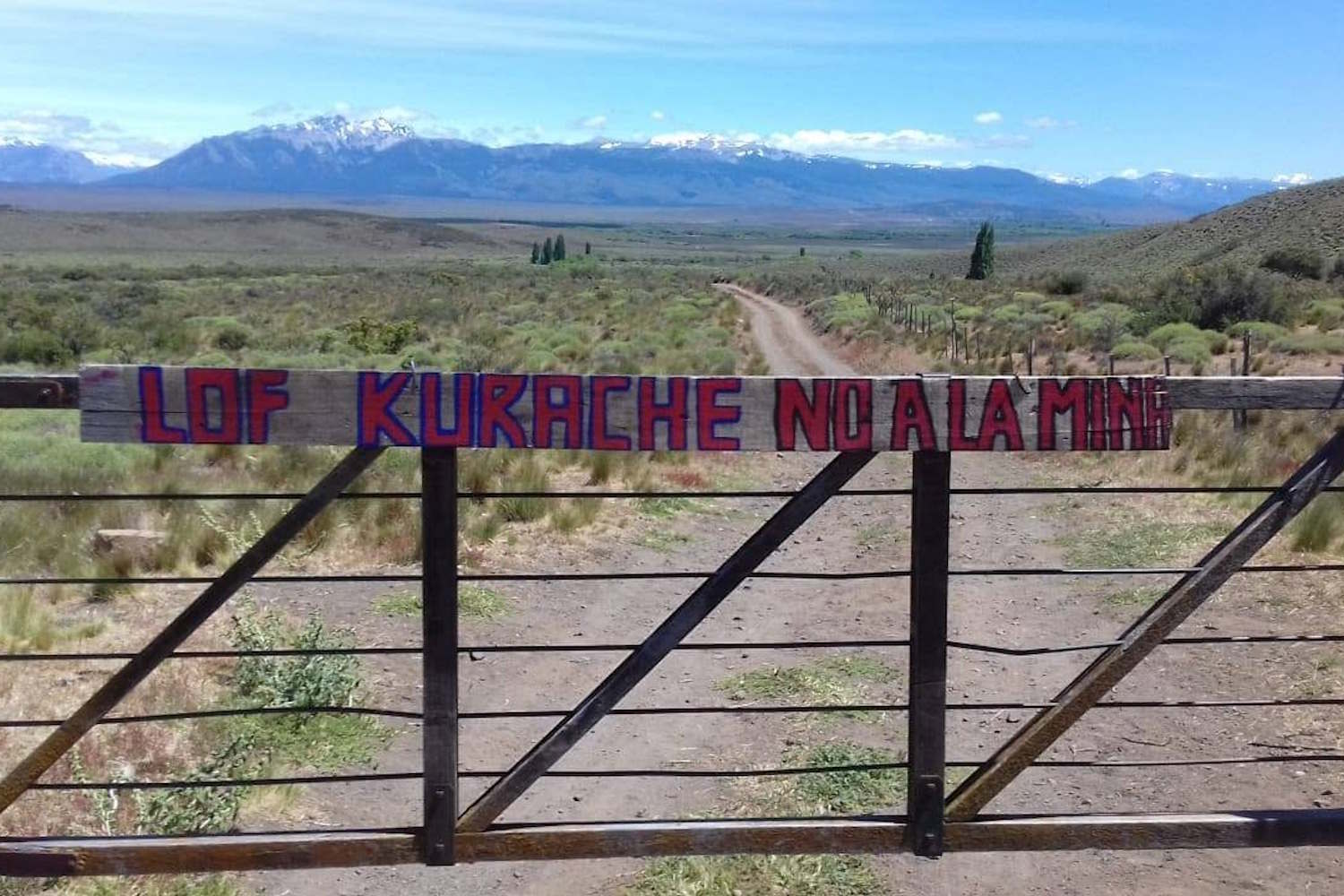
The last case concerns the Lof KuracheMapuche-Tehuelche community from the province of Chubut, which risks being removed from El Platero, a territory near El Maitén claimed since 2019 as part of what the community defines as a process of “territorial recoveryThe court of Lago Puelo in fact accepted the possessory action presented by the Compañía de Tierras Sud Argentino (CTSA), a company linked to the Benetton family, ordering the restitution of the land.
The Public Defense representing the community has already appealed the decision so, for the time being, Lof Kurache continues to remain on site.
The battle of Lof Kurache against Benetton
The story of El Platero dates back to Christmas 2019, when some families from Lof Kurache entered a portion of land belonging to theEstancia El Maiténowned by the Compañía de Tierras Sud Argentino. For the community it was not an occupation, but the recovery of a territory considered ancestral, necessary, its members explained at the time, for the cultural, spiritual, social and economic survival of the Mapuche-Tehuelche people.
The company’s version is diametrically opposed: Benetton Group claims that the entry on 25 December 2019 occurred illegally and reiterates its ownership rights over the area. The same company reported at the time of forced doors, blocked access and the subsequent filing of a police report.
Nearly seven years later, the litigation has come to a head and the Juzgado Único Letrado en lo Civil, Commercial, Laboral, Rural y de Minería di Lago Puelo upheld the possessory action brought by the company and ordered the return of the land.
The community, for its part, has announced that it does not intend to give up. The Public Defense has appealed and Lof continues to guard El Platero for now. In any case, the risk of an eviction is real.
Why Benetton owns so much land in Patagonia
The name Benetton has been around for decades when talking about Mapuche territorial claims in Argentina. In 1991, Edizione Holding, the Benetton family holding company, purchased the Compañía de Tierras Sud Argentino, a company founded at the end of the 19th century and owner of large extensions of Patagonian territory.
Benetton has always supported the full legitimacy of its titles and claims to have turned to the courts to defend duly acquired property rights. On the other hand, various Mapuche communities contest not so much the formal correctness of the most recent sales, but the historical origin of the ownership of those lands: territories that they consider stolen from the original populations during colonization and the formation of the Argentine state.
This is the crux that makes the issue much more complex than a normal real estate dispute. One of the best known precedents dates back to the early 2000s and concerns Atilio Curiñanco And Rosa Rúa NahuelquirMapuche family protagonist of a long conflict with the Compañía de Tierras Sud Argentino over land in Patagonia.
The case transformed Benetton into one of the international symbols of the clash between private property and indigenous territorial claims.
Lof Kurache is not an isolated case
That of Lof Kurache it is not an isolated case. Between Villa La Angostura and Bariloche, in the province of Neuquén, there are also Mapuche communities Kinxikew And Apple tree are involved in land disputes: in recent weeks, the former was evicted from disputed territories, while the latter continues to resist a similar measure.
The presence of these communities in the area has been recognized over time by various public documents. In 2023, for example, the National Institute for Indigenous Affairs had certified the occupation “current, traditional and public” of part of the territories, without however reaching the granting of real community property titles.
What made the situation even more delicate was, needless to say, the government’s decision to Javier Milei to put an end, in December 2024, to the indigenous territorial emergency provided for by Ley 26.160, thus eliminating the suspension of evictions. The paradox is that the Argentine Constitution itself recognizes indigenous peoples’ possession and community ownership of traditionally occupied lands. But when this recognition does not translate into actual titles and clashes with already registered private properties, the conflict ends up in the courts.
For Mapuche communities, however, land is not just an economic asset: it is part of collective identity, memory, spirituality and daily life. What value does constitutional recognition of ancestral lands have if, decades later, many communities have still not received the necessary titles to protect them from eviction?
