
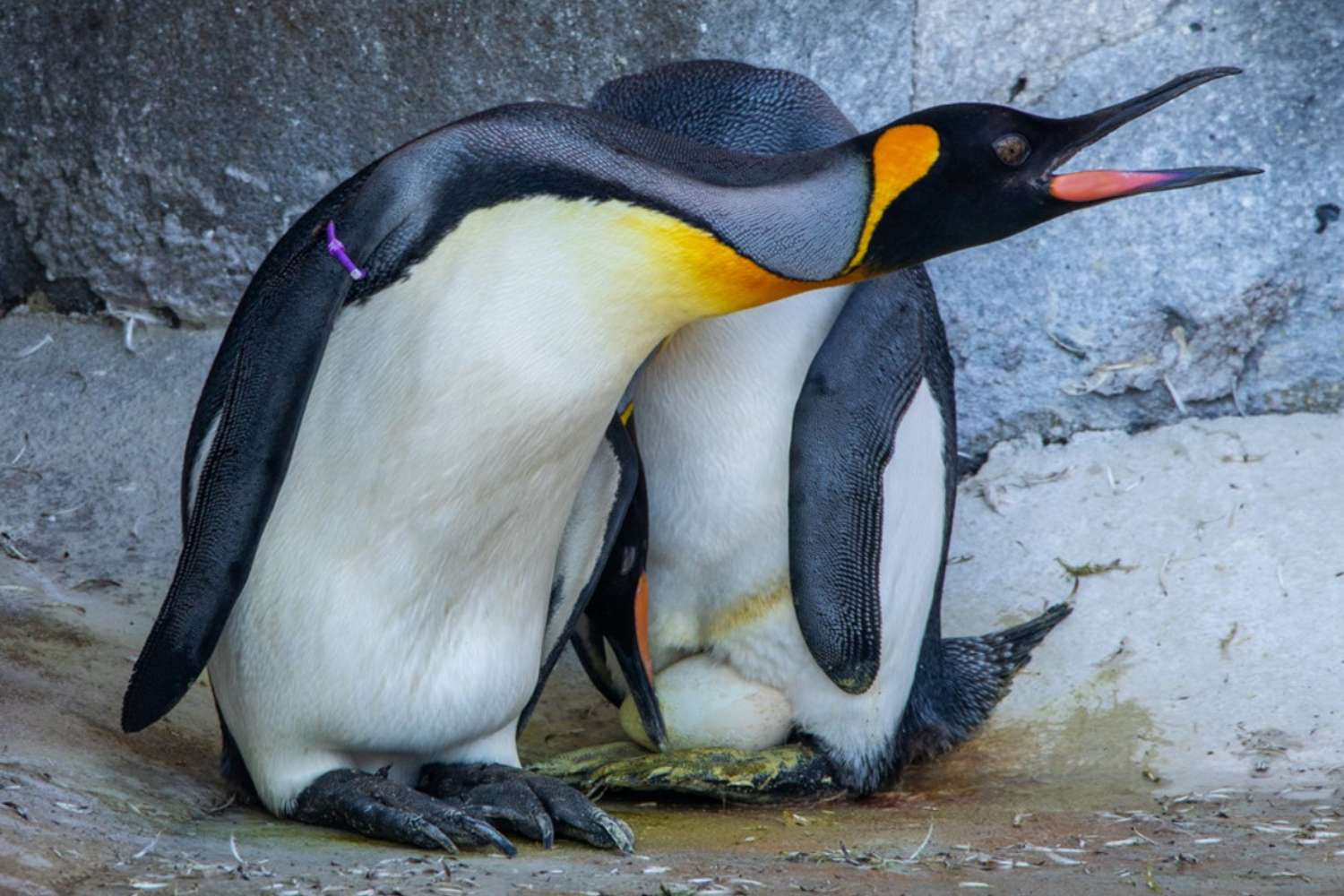
In the early hours of Friday 14 August 2026, staff at Edinburgh Zoo, managed by the Royal Zoological Society of Scotland, witnessed a historic event: the first king penguin egg being laid within the facility for 17 years. The mother is Connie, a female specimen who arrived in the Scottish capital only in January together with two other specimens.
Experts did not expect any deposition before 2027, assuming a long period of adaptation to the new environment. The father of the future offspring is Sir Nils Olav, known throughout the world for being the penguin with the highest military rank ever, that of Major General of the Norwegian Royal Guard. The speed with which the pair formed surprised the staff, who are now monitoring the hatching phases.
View this post on Instagram
The hatching ritual
Egg management in king penguins does not involve building a traditional nest. The parents constantly take turns to maintain the necessary heat, balancing the single egg over their feet and protecting it with a fold of skin on their abdomen. The incubation process lasts approximately 55 days.
Animal care manager Darren McGarry and senior keeper Michael Livingstone expressed great enthusiasm at the news, highlighting Connie and Sir Nils Olav’s strong instinctive response, while maintaining due caution as they were first-time parents. If the subsequent stages proceed without a hitch, hatching will give the colony the first chick born at the zoo since 2009.
A rising star between celebrity and captivity
The possible birth of the little one will represent a moment of great visibility for the Scottish structure. The unborn child is in fact destined to become a real media star even before coming into the world, thanks to the enormous popularity of his father Sir Nils Olav and the record he has been waiting for for almost twenty years.
This great attention, however, reflects a double reality: on the one hand the importance of conservation and scientific research programs managed by modern zoological structures, on the other the prospect of the chick spending its entire existence in a controlled environment, far from its natural sub-Antarctic habitat.
