
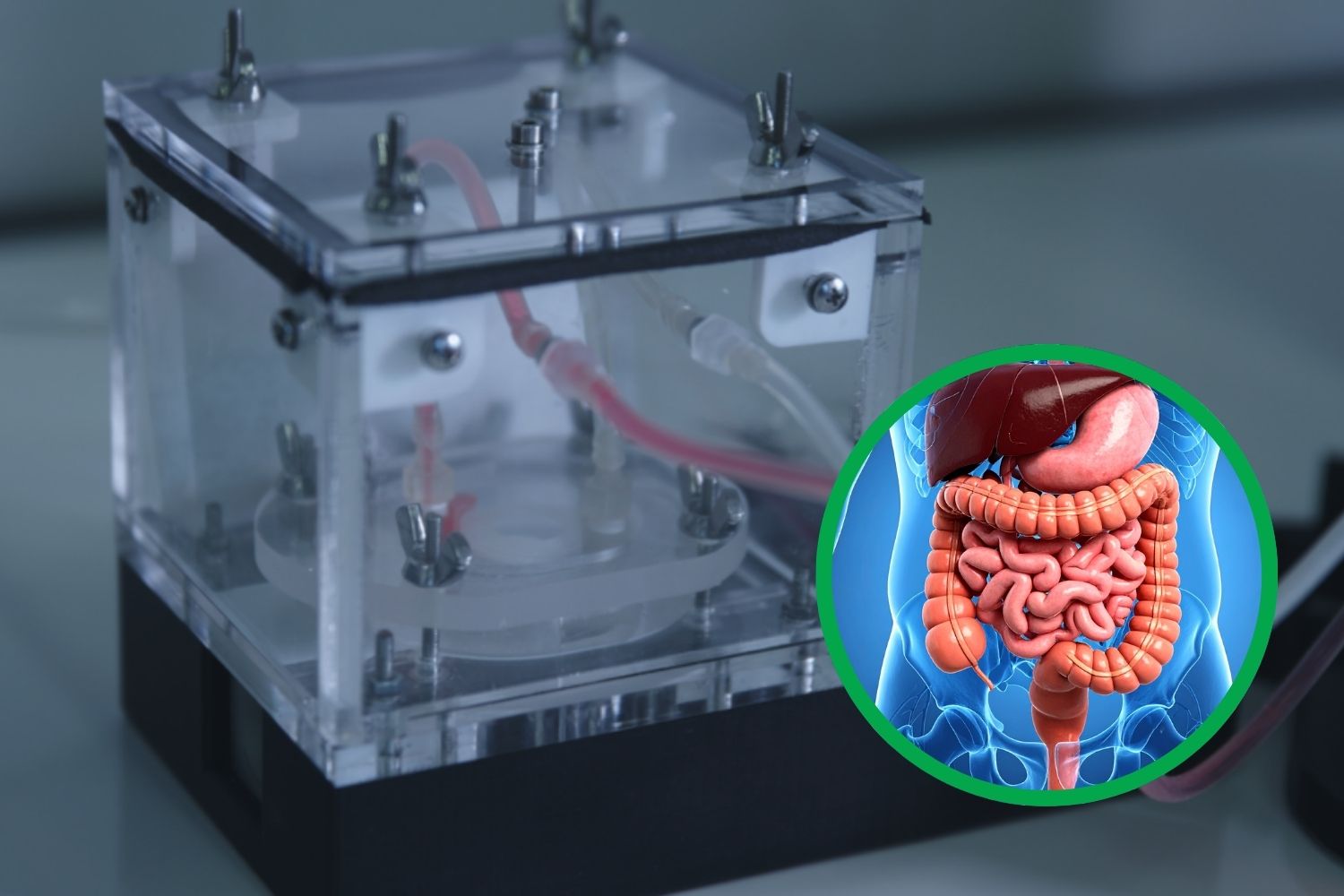
A model of the human intestine capable not only of hosting live cells, but also of reproducing the rhythmic movement of the real organ. This is the innovation developed by a group of researchers fromUniversity of Pisa together with the Brigham and Women’s Hospital and Harvard Medical School in Boston: a bioreactor that imitates intestinal peristalsis and the mechanical stresses to which cells are subjected daily in the human body.
The study, published in the journal Results in Engineering, opens up important perspectives not only for research on intestinal diseases and for the development of new drugs, but also for an increasingly central objective in contemporary science: progressively reducing the use of animals in testing.
The device was created by the biofabrication group coordinated by Professor Giovanni Vozzi, of the Department of Information Engineering and the “E. Piaggio” Research Center of the University of Pisa, in collaboration with Professor Yu Shrike Zhang of the Brigham and Women’s Hospital and Harvard Medical School.
How the new bioreactor works
Our goal was to overcome the limitations of the models available today, which only partially reproduce the intestinal environment – explains Professor Giovanni Vozzi – We have demonstrated that the mechanical movement of the intestine is not a simple physiological detail, but an essential factor to guide the development of a more realistic tissue. Having models that faithfully imitate the behavior of the human intestine means being able to study diseases more precisely, evaluate the effectiveness of new drugs and progressively reduce the use of animal testing.
@UNIPI
The device developed by researchers at the University of Pisa, together with the Brigham and Women’s Hospital and Harvard Medical School, is a bioreactor designed to recreate conditions in the laboratory that are much more similar to those ofreal human intestine.
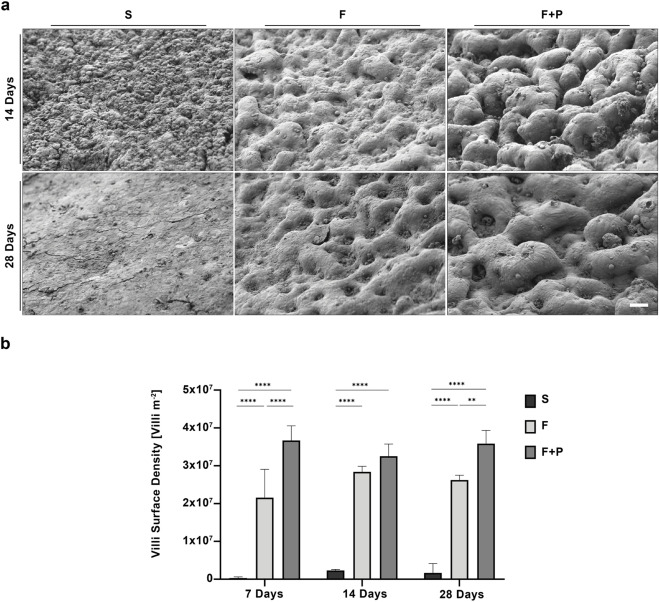
Unlike traditional static cell cultures, the system subjects the cells to rhythmic mechanical stresses that mimic peristalsis, i.e. the contractions that allow the intestine to move its contents. This stimulus is not secondary: researchers have observed that it favors the spontaneous organization of cells into three-dimensional structures similar to intestinal villi, making the tissue more realistic.
The system also manages to keep cells viable for at least 28 days, It has a modular architecture and relatively low construction costs. In perspective, it could be connected to other biological models, such as that of the intestinal microbiota, to reconstruct more complex systems capable of simulating the interactions between the intestine, heart and brain.
@Science Direct
The implications for a more ethical science
The most ethically relevant aspect is the possibility of using more advanced human models instead of animals in part of the experiments. Today, many studies on diseases, toxicity and new drugs still use animal models because simple cell cultures cannot reproduce the complexity of a living organ. A bioreactor capable of better imitating the physiology of the intestine can instead offer data more directly referable to humans and allow some tests to be carried out without using animals, or to reduce the number of animals in the subsequent phases of the research.
This perspective falls within the principle of “3R”: Replacement, i.e. replace animals when reliable alternative methods exist; Reductionreduce their number; And Refinement, limit pain and suffering when their use remains necessary. It is therefore not a question of immediately eliminating all forms of animal testing, but of progressively making tools available that allow research to be carried out depend less on animals and, at the same time, to work on models closer to human biology.
