
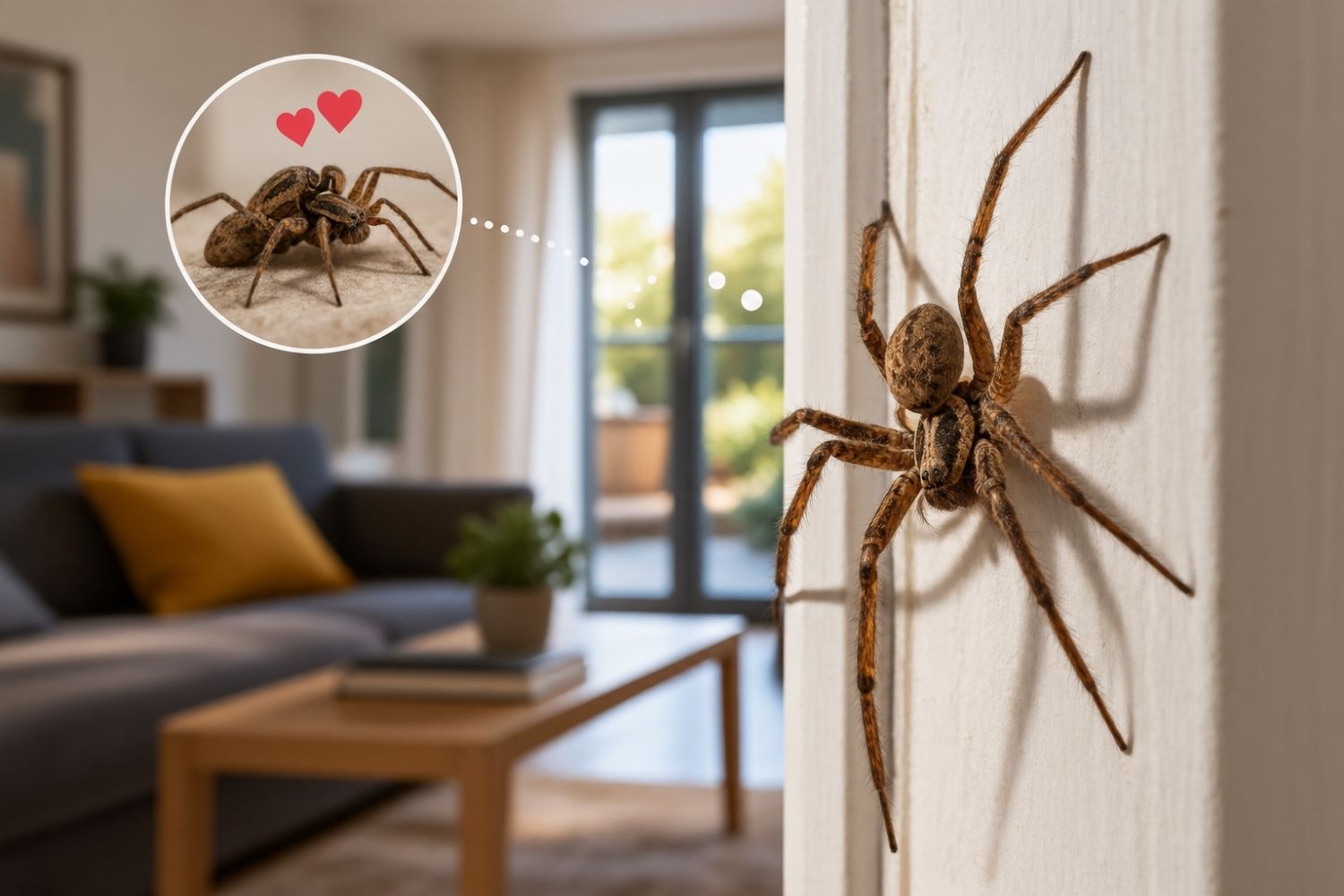
In the last few days have you come across a long-legged spider darting along the skirting board in your living room? Well, it is an encounter that has little to do with bad luck, because between the end of August and October, thanks to the dropping temperatures and the first rains, the male specimens leave the shelters to go in search of a female, and in doing so they cross domestic environments more often. It is, essentially, the reproductive calendar of these animals, which repeats itself almost identically every year.
Because precisely in September
This is confirmed with concrete numbers by a study by the University of Gloucestershire conducted together with the British Royal Society of Biology, published in the scientific journal Arachnology. Researchers Adam Hart, Rebecca Nesbit and Anne Goodenough analyzed over 10 thousand reports collected through a citizen science app, complete with date, time and sex of the specimen sighted. The results see the peaks of sightings concentrated around mid-September, with the “hottest” time slot around 7.30 pm, and over 80% of the specimens noticed at home are males. Females, the authors explain, tend to remain stuck in their own web; it is the males who move, driven by the need to find a mate before the season ends.
Are they dangerous?
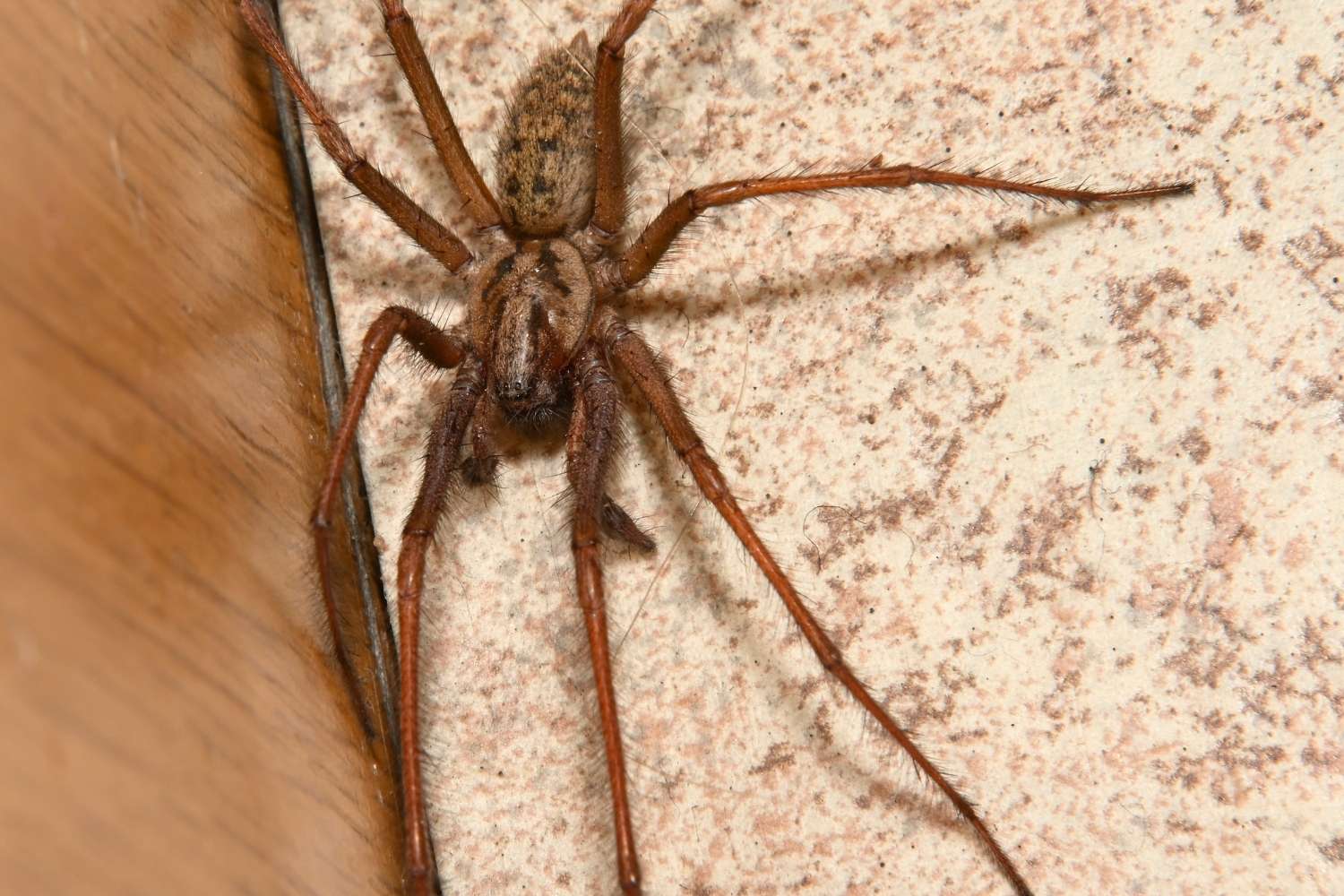
Fortunately, the answer, in the vast majority of cases, is negative. Italian house spiders avoid contact with humans and do not pose a threat, in fact, they feed on mosquitoes, flies and other small insects, functioning as a form of natural pest control. For this reason, those who take care of these animals advise not to kill them, but at most to remove them with some precautions. There are three species that appear most often in Italian homes, and each has a rather recognizable appearance. There Tegenaria domesticathe classic “house spider”, has an elongated body and robust legs: it is the protagonist of the nocturnal runs along the skirting board, and it is also the species with the widest leg span among those present in Italy.
We can mention the Eratigenica genus only recently separated from that of tegenaria, to which they closely resemble, as well as sharing the same habits and preferring the same dark and dusty shelters: cellars, garages, backs of furniture.
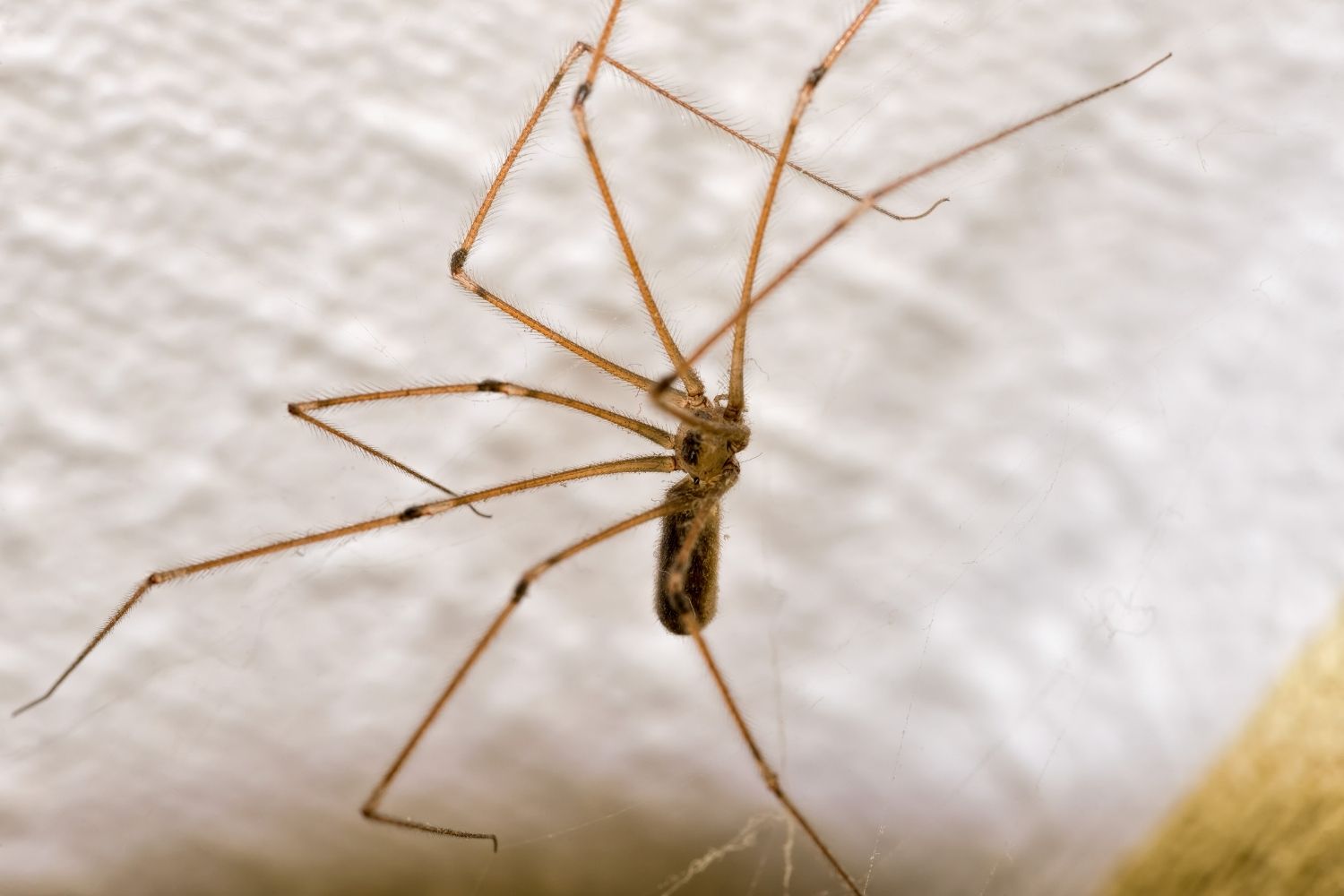
Finally we find the Pholcus phalangioidesthe so-called “dancing spider”, which instead has a completely different figure: very long thread-like legs, tiny body and that characteristic oscillation on the web when it feels threatened. It is probably the most widespread species of all in Italian homes, as well as the most harmless: it often feeds on other spiders and insects that end up in its irregular web, almost always stretched in high corners of bathrooms and cellars.
The exception worth paying attention to is the now well-known violin spider, whose scientific name is Loxosceles rufescensrecognizable by the dark violin-shaped spot on the cephalothorax and by its small size, between 7 and 13 millimetres. It is the only species, among those that can occur in the home, whose venom has a cytotoxic action capable of creating medical problems.
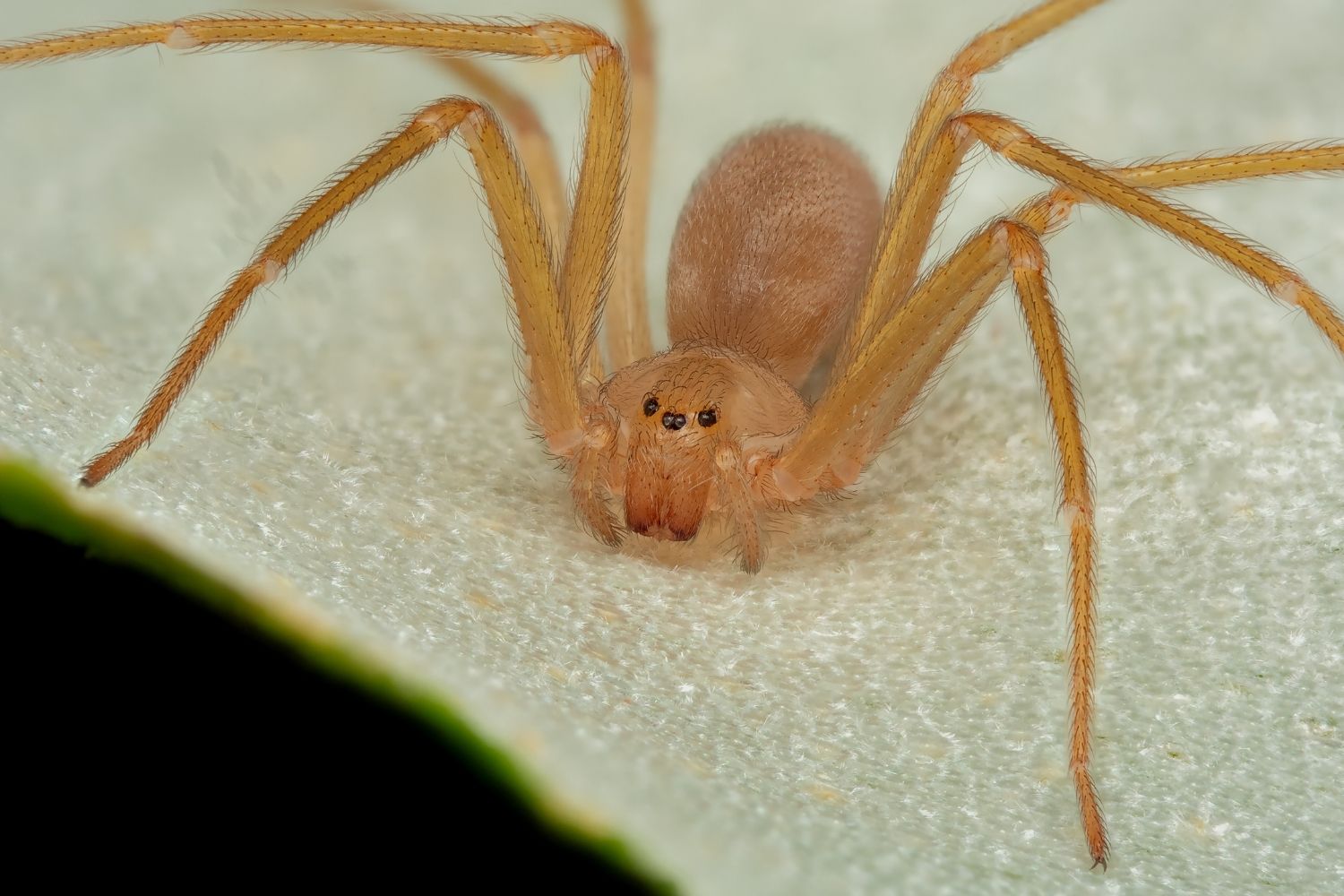
In most cases the bite, often painless, so much so that it goes unnoticed for hours, resolves with a simple local redness; in a minority of cases, however, it can cause loxoscelism, i.e. a necrotic lesion that requires specific care and heals slowly. The violin spider is not an aggressive specimen and only bites when it feels crushed, for example inside shoes and clothes left on the floor for a long time, or in a wardrobe. It prefers dark and little-frequented environments, the same cellars and closets where tegenaria and eratigens nest, which makes order as the first form of prevention even more sensible.
Natural remedies that really work (and those to take with a pinch of salt)
Intense odors are the most cited weapon. Citrus peels (lemon and orange above all) placed on windowsills and window frames exploit the particularly sensitive sense of smell of these animals and remain an economic deterrent, even if they do not guarantee absolute results. Same logic for vinegar: a solution of water and white vinegar in equal parts, vaporized along doors and windows, produces an unpleasant odor thanks to the acetic acid, and also serves to remove cobwebs that have already formed. Peppermint, diluted in water with a few drops of essential oil and sprayed in critical points, acts with the same principle: a pungent aroma that many arthropods tend to avoid. Cinnamon, star anise and the old chestnuts of the horse chestnut, pierced to let out the smell and placed near the entrances, complete the repertoire of grandmother’s remedies.
Alongside smells, practical interventions count, often more effective than any essence. Sealing cracks around doors and windows with putty or silicone reduces access routes; regularly eliminating cobwebs and clutter, such as boxes, accumulated newspapers, junk, removes spiders from the dark hiding places they seek. External lighting also plays an indirect role: the light does not attract the spiders itself, but attracts the insects they feed on, which in turn favors their presence. Reducing the night lights in the garden, along with a few meters of distance between pots and vegetation and the perimeter of the house, helps to break that little bridge to the inside.
Green yes, blue no? What’s true
The idea that spiders are attracted to green and repelled by blue has real scientific basis, even if applied incorrectly. At the basis is a series of research from the laboratory of George Uetz, a biologist at the University of Cincinnati, who studied the sight of wolf spiders (genus Schizo thing) and other species such as leafhoppers (Phidippus regius). The baseline study reconstructed, via visual models based on the spectral sensitivity of wolf spider eyes, how females perceive signals from males during courtship against complex plant backgrounds. From this and other research in the same vein, it emerged that these spiders have dichromatic vision: they perceive only two bands of the spectrum, green (around 530 nanometers) and ultraviolet, effectively remaining “blind” to the rest of the colors, including blue.
From here to “spiders hate blue and love green” the step taken by the general press was long and, in part, misleading. First: the research concerns specific species of wolf and jumping spiders, active hunters that rely heavily on sight, not the tegenarians or pholcids that populate Italian homes and which orient themselves mainly through vibrations and tactile perception. Second: not perceiving a color is not equivalent to being repelled by it, therefore a dichromatic spider does not “see” blue just as it does not see red, but this does not mean that that color scares it or pushes it away. To date, there is no study that demonstrates a repellent effect of blue on house spiders: paints and blue lights against spiders are mostly word-of-mouth solutions, which have little to do with scientific literature.
