
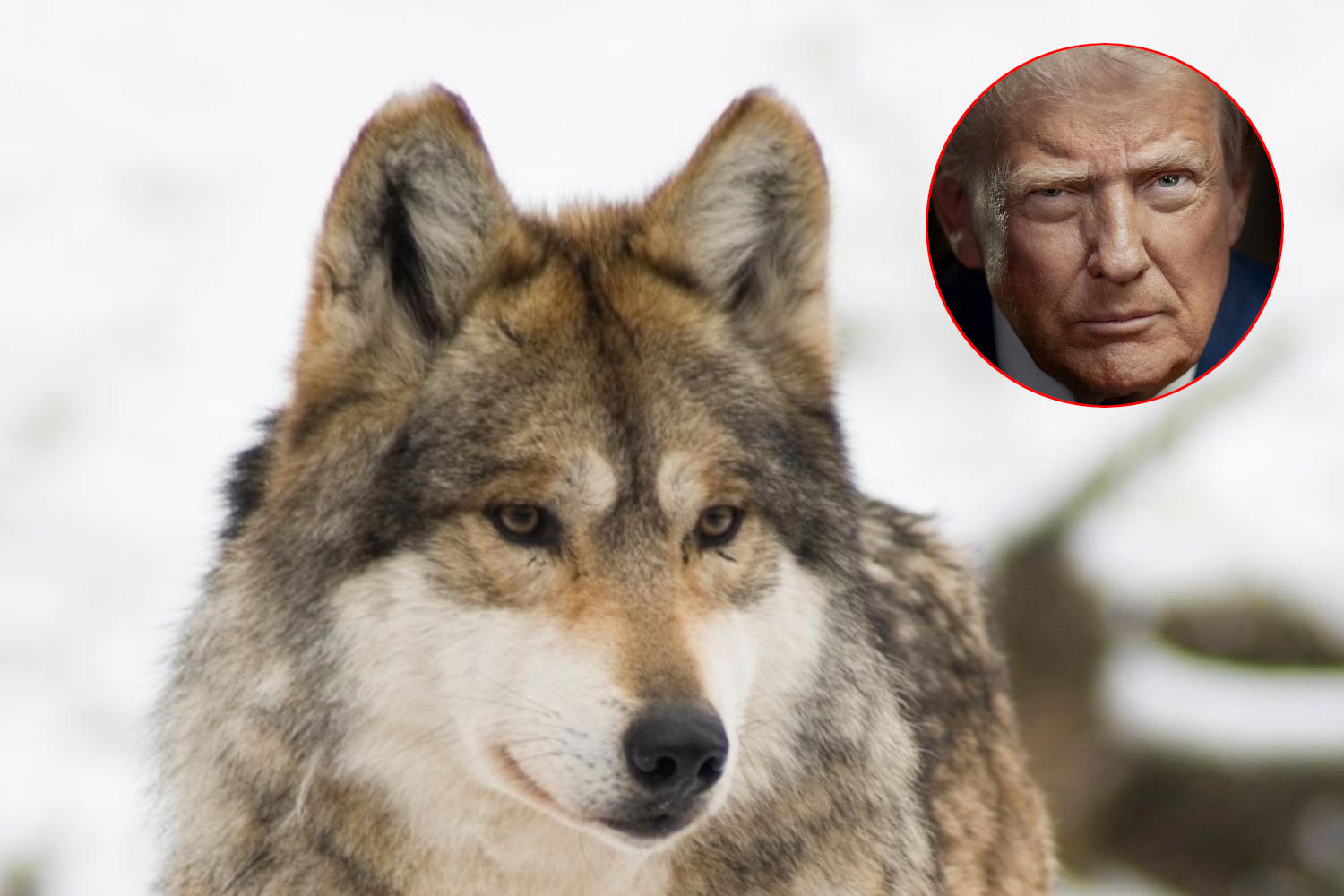
A new and heated political and environmental conflict has opened in the United States following the executive order signed by Donald Trump. The presidential measure mandates Secretary of the Interior Doug Burgum to evaluate within three months whether the populations of gray wolves and the Mexican wolf subspecies have reached a level of recovery that would justify delisting from the Endangered Species Act.
The decision was born with the declared intention of supporting the beef industry, penalized by herds at historic lows for 75 years, high production costs and an extensive drought. During the official ceremony, the president addressed the farmers suggesting the easing of restrictions on culling, accompanied by statements from Agriculture Secretary Brooke Rollins, who underlined the administration’s commitment to speeding up the bureaucratic process.
Data on wolf populations and legal restrictions in force
Despite the outcry caused by the president’s words, the measure does not immediately authorize the use of weapons against predators. In most of the 48 continental states, the killing of these specimens remains a federal crime, protected by the sentence issued by a court in 2022. There are currently around 18,000 gray wolves in the US, concentrated above all in areas where management has already passed to individual local governments such as Montana, Idaho and Wyoming, while in Minnesota the species is listed as threatened.
The situation of the Mexican wolf appears more complex, reintroduced between Arizona and New Mexico in 1998 starting from just four specimens: at the end of 2025 the census of the Fish and Wildlife Service (FWS) recorded 319 specimens in the wild, a figure close to the minimum threshold of 320 individuals needed for four consecutive years to start the legal review.
The reactions of environmental organizations and the legal battle
The reactions of the ecological associations were immediate and harshly condemning. Prominent representatives of environmental protection, including Greta Anderson of the Western Watersheds Project, Claire Musser of the Grand Canyon Wolf Recovery Project, Michael Robinson of the Center for Biological Diversity and Leia Barnett of the WildEarth Guardians organization, have denounced how the decision responds only to the logic of political influence.
View this post on Instagram
According to their analyses, attacks on livestock represent a marginal phenomenon and already covered by 100% financial compensation, promoted by specific state programs and recalled by the Wolf Conservation Center. Experts also highlight how poor genetic diversity threatens the long-term survival of the canid, predicting imminent legal challenges to block any attempt to weaken federal protections.
