
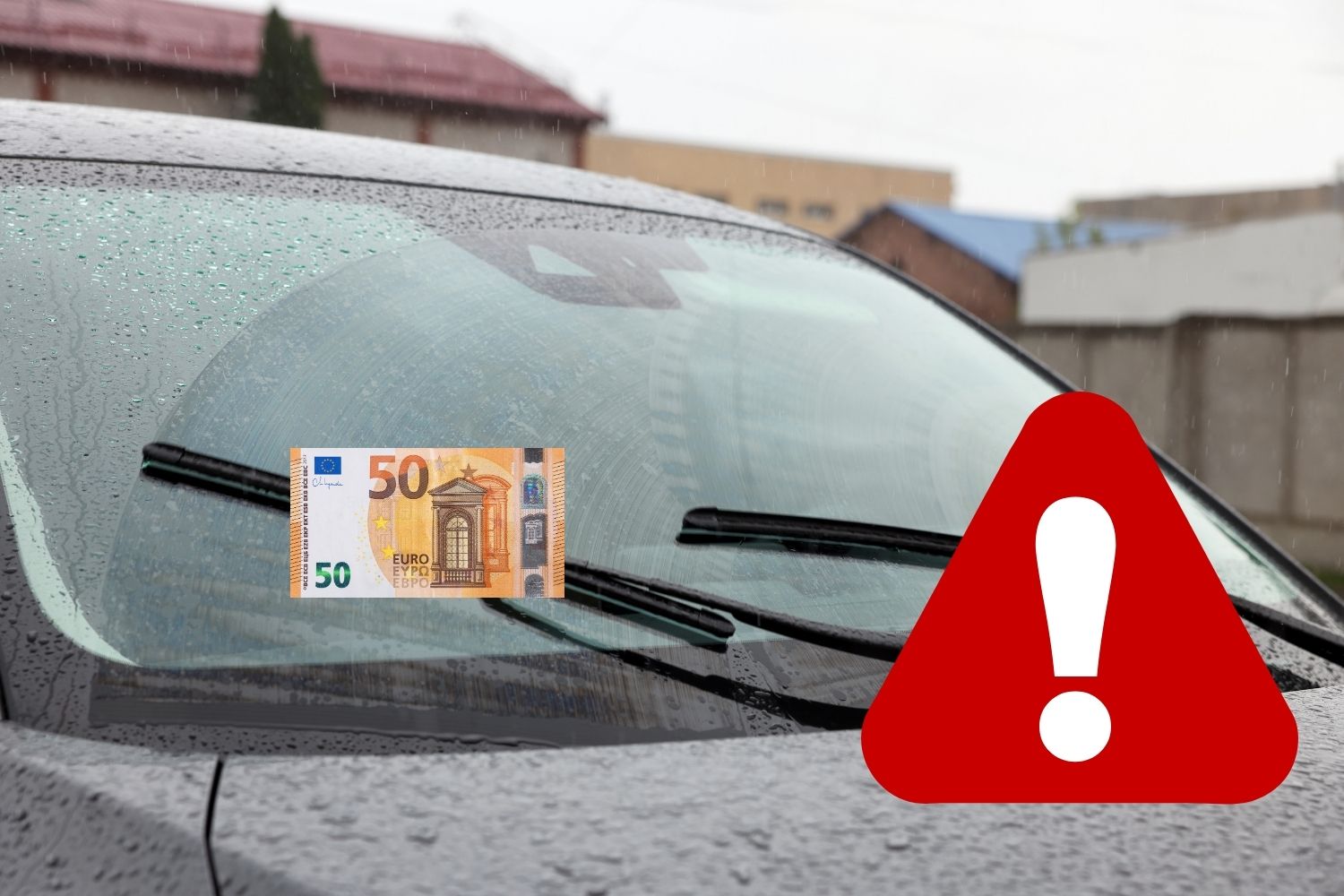
In a car park, faced with a 50 euro note appearing out of nowhere under the windshield wiper, almost no one would resist the temptation to pick it up. It is exactly on this automatism that a scam is aimed which in recent weeks has been making headlines in several European countries, Spain first and foremost, and which is now being reported more and more often in Italy too.
How the scam works
The mechanism is anything but sophisticated, which perhaps explains why it works: criminals choose the busiest car parks, especially those in shopping centers and supermarkets, where the comings and goings of cars make their presence less suspicious, and they stick a counterfeit banknote under the windscreen wiper, often on the passenger side, so as to force the driver to go around the car before realizing what has happened.
The moment the trap is sprung
The sequence, at that point, is almost automatic. The driver returns to the vehicle, opens the doors, places his bag or smartphone on the seat and starts the car. Only then does he notice the banknote stuck in the glass. The instinctive reaction is to get out and get it, perhaps leaving the engine running, the keys in the car, the door ajar. And it is precisely that brief interval, which lasts a few seconds, no more, that represents the opportunity that the accomplices, lurking nearby, were waiting for: one of them approaches, opens a door and takes away what he finds in the passenger compartment, or in the most serious cases tries to drive away with the car itself. Among the victims, according to the reconstructions circulated, there are not only private motorists but also couriers, often a favorite target because they transport valuable goods on board. The principle, it must be said, is not an absolute novelty, and both the Police and the Carabinieri have repeatedly documented thefts in car parks based on the distraction of the victim with money left in plain sight. What changes, this time, is the scope of the phenomenon and its spread across borders: the Spanish Policía Nacional had already raised the alarm last year with a video published on its social channels, defining the technique as “the 50 euro scam”
How to defend yourself without becoming paranoid
The first rule, the simplest, is also the most effective: if you notice the banknote after having already gotten into the car, it is better not to get out at all. Start the car and drive away to a safe place and only there stop, turn off the engine, lock the doors and calmly check what the problem is. You will almost certainly discover that the banknote is fake, but by then the risk will already be behind you. It is also worth remembering two habits that reduce opportunities for criminals, regardless of this specific scam: always lock the car even for a few minutes of absence, and avoid leaving bags, wallets and phones visible on the seats. Finally, if you have well-founded suspicions that you have been targeted, you would do well to report it to the police, because it is precisely the complaints, rather than generic alarms, that allow us to understand how widespread the phenomenon is in the area.
