
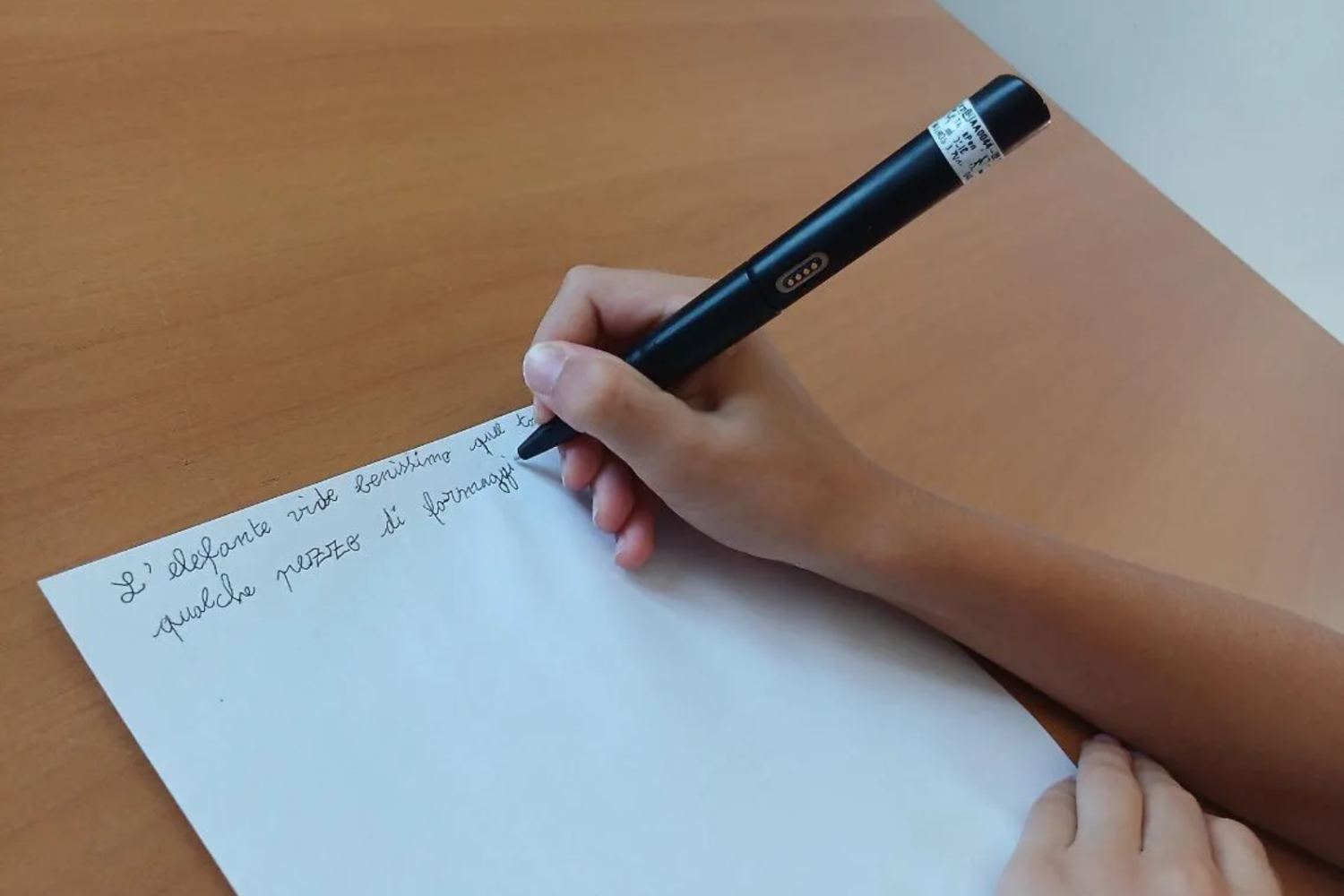
An incredible scientific and pedagogical innovation marks a fundamental step forward in the diagnosis of Specific Learning Disorders. From the synergy between Polytechnic of Milan And University of Insubria she was born THInkPen (Tele-Health Ink Pen), one sensorized ink pen and patented designed for early screening for dysgraphia.
Unlike common tablets, this tool allows students to write directly on regular paperpreserving the naturalness of the graphic gesture but collecting very precious data. The device, initially conceived for the study of neurodegenerative diseases with the collaboration of Alberto Borghese of the University of Milan and developed for neurodevelopment also thanks to the researcher Linda Greta Dui, acquires digital indicators such as the pressure on the sheet, the fluidity of the movement, the inclination and the frequency of the signals.
@University of Insubria
The test on 700 students and the role of artificial intelligence
The validity of the instrument has been widely demonstrated in a study published in the scientific journal Plos Digital Health. The experimentation involved 700 children of primary and lower secondary schools during the execution of two battery tests BVSCO-3created with the contribution of Cesare Cornoldi of the University of Padua. Artificial intelligence algorithms and Explainable AI analyzed the mass of data, managing to distinguish with great precision students with real grapho-motor difficulties and providing details on causes of insufficient performance. The ASST Sette Laghi and the Center for Neurosciences of the Los Madroños hospital in Madrid also cooperated in the research, within the PRIN project e-School 2.0.
Concrete help to reduce Neuropsychiatry waiting lists
The introduction of the THInkPen represents a truly praiseworthy initiative for which genuine applause goes to all researchers for a project that combines cutting-edge technology and profound social value. On the importance of innovation in schools, which could identify writing difficulties earlySimona Ferrante said:
The use of the THInkPen in the analysis not only of the final product, but of the entire writing process, could favor early identification of writing difficulties in the school environment, thus facilitating a timely and effective activation of clinical services.
He also spoke to highlight the positive impact on healthcare facilities Christian Termexplaining:
This aspect takes on particular relevance in light of the growing demand that Child and Adolescent Neuropsychiatry services have to face on a daily basis and the consequent long waiting lists. In fact, academic difficulties represent one of the main reasons for requesting evaluation from services, but not all difficulties encountered by students necessarily require in-depth specialist clinical analysis. It therefore becomes essential to have reliable observation and screening tools, capable of helping the school to better understand the nature of the difficulties and to identify more early the situations that actually require referral to Child and Adolescent Neuropsychiatry services.
