

Temperatures have dropped, but anomalous heat will continue to haunt us: a study led by Goddard Institute for Space Studies from the NASA showed that extreme heat events have become more frequent even in the months immediately preceding and following, making everything even more complicated to manage, even for our body.
©AGU Advances
How the study was conducted and what it highlighted
To reach these conclusions, the researchers analyzed 45 years of global climate data with the aim of determining what time of year extreme heat waves occur, verifying that the worst seasons have spread over about half of the Earth’s surface since the 1980s. Furthermore, unfortunately, the expansion appeared asymmetrical, going later in the spring in some regions and in the autumn in others.
The increase in average temperatures alone cannot explain this trend, the authors specify: it is instead likely that regional factors such as variations in precipitation or land use also come into play, the consumption of which – as we know – is anything but rational.
In other words, now, instead of being limited to the hot seasons, episodes of extreme heat have also become more frequent in the months immediately preceding and following.
In some locations, a greater spread of extreme heat is observed during spring, before the start of the traditional hot season – explains Catherine Ivanovich, lead author of the work – In others, there is a much more rapid extension of the hot season towards autumn. There are very clear asymmetries in the way extreme heat seasons are spreading across different areas of the world. In many of these regions, extreme heat is taking on new and different characteristics
Why this study is innovative
Of course, this is certainly not the first study on extreme heat events, nor the first on climate change in general. But research on seasonal warming has so far focused mainly on average temperatures and changes in the timing of the seasons.
For example, scientists have shown that since 1990, the duration of summer weather in mid-latitude regions has increased by about six days per decade.
Very few studies, however, have examined the timing of individual episodes of extreme heat, which may not follow the same trend as the seasonal average.
NASA researchers have now counted the episodes of extreme heat that occurred on the six inhabited continents between 1980 and 1989, defining as “extreme” the days in which temperatures fell within 5% of the highest daily values.
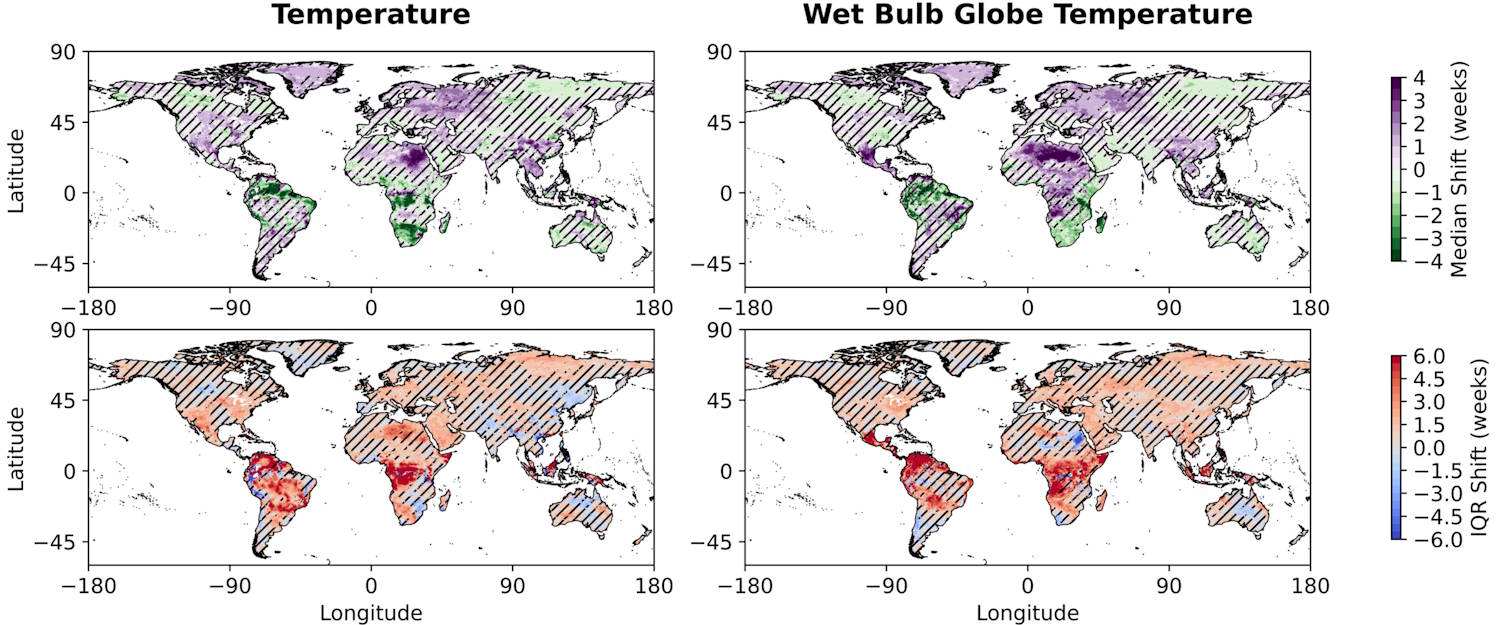
The analysis was conducted twice: once using standard thermometric readings (a measure of dry heat) and once using wet bulb temperature (wet-bulb globe temperatures), a parameter that quantifies moist heat by combining humidity, solar radiation and air temperature to measure the thermal stress perceived by the human body.
©AGU Advances
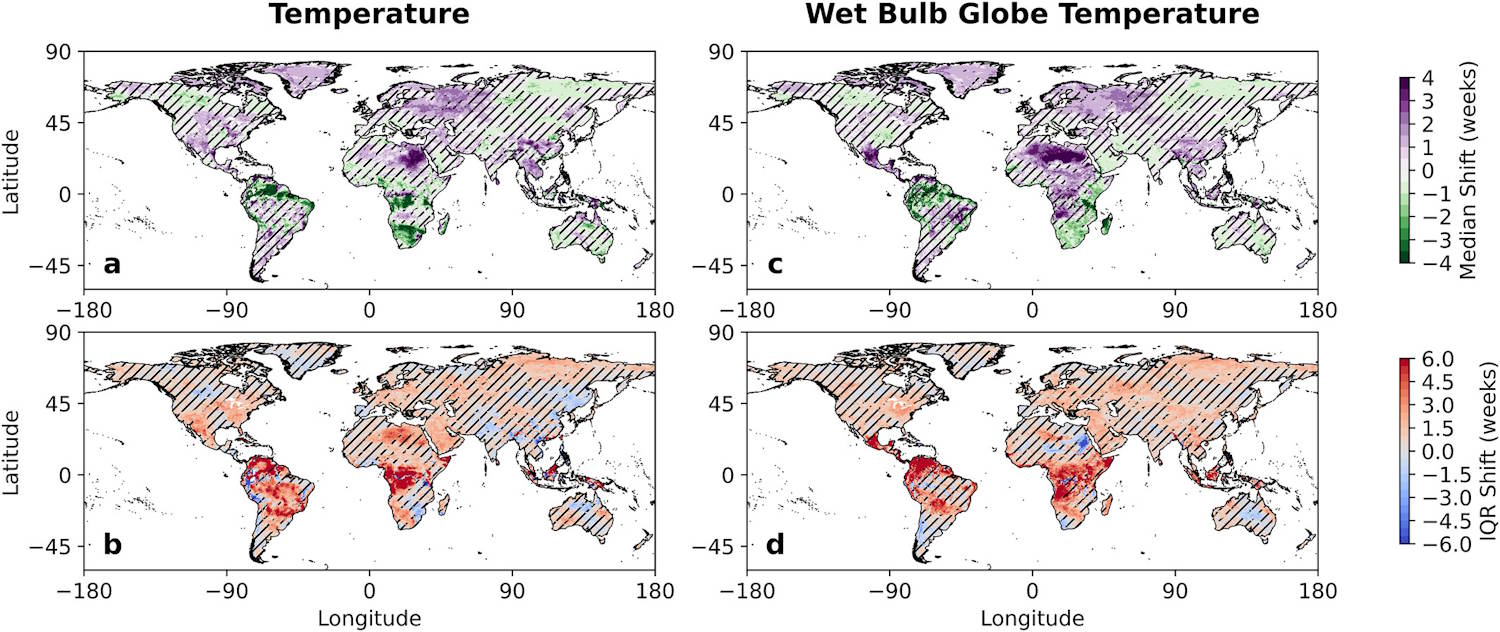
The authors then compared the reference data from the 1980s with those of the last available decade, i.e. the period between 2015 and 2024, highlighting a significant expansion of the extreme heat seasons on just over half of the emerged lands with regards to dry heat, and on just under half for humid heat.
They also showed that this extension occurred unevenly, extending later into the spring in some regions and into the autumn in others.
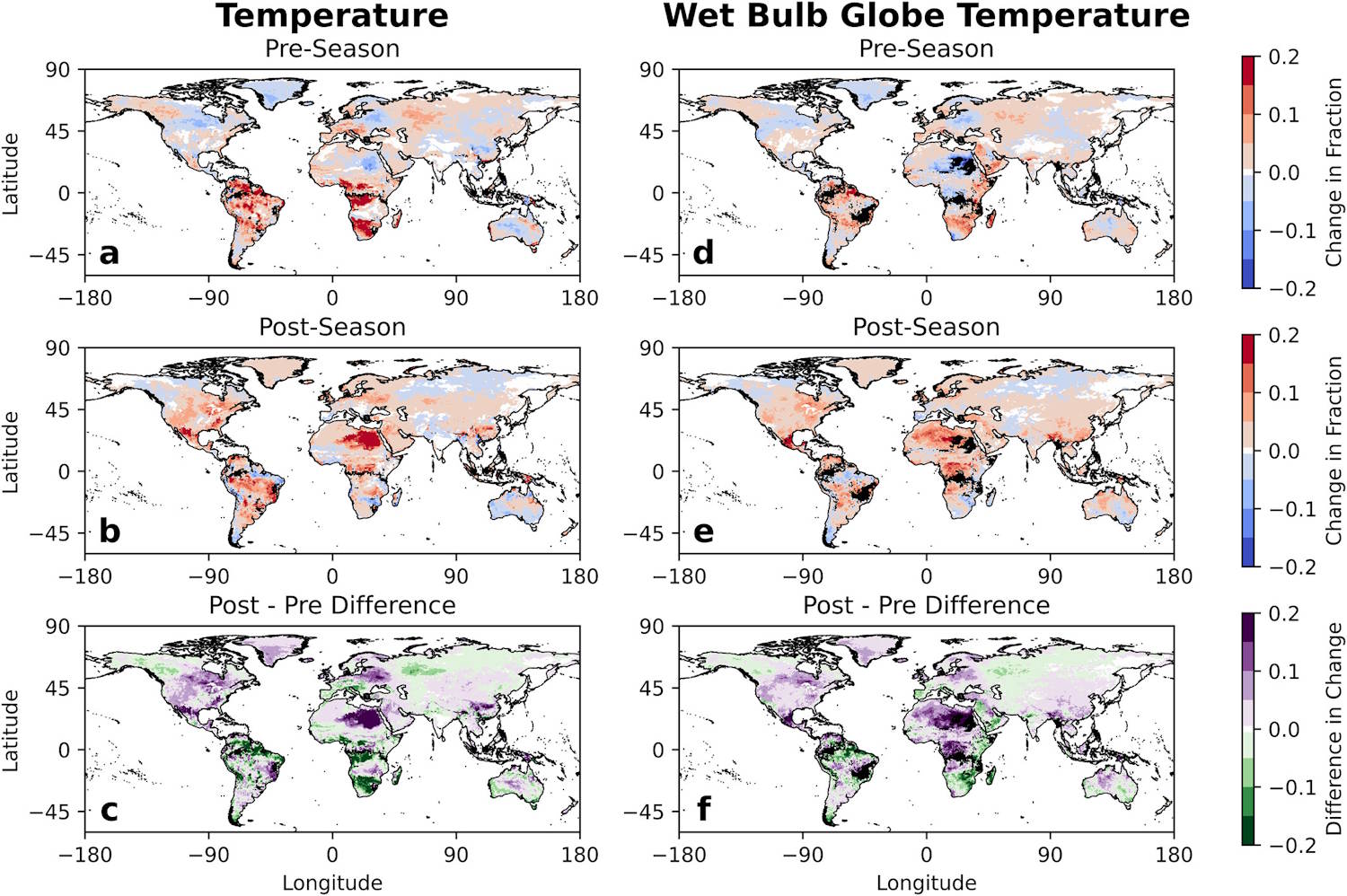
Analyzing the geography of our planet, the study revealed that in the western United States, eastern China, northern Africa and eastern Europe, episodes of extreme heat became more frequent especially in the two months following the traditional hot seasons, while the opposite situation occurred in western Europe, southern Africa and northwestern India, where extreme heat occurred predominantly in the previous two months.
©AGU Advances
To verify that this trend was confirmed, analyzes were conducted using both a dataset compiled by NASA and one from the European Center for Medium-Range Weather Forecasts (ECMWF). And, to a large extent, this was indeed the case.
Extreme heat is rare by definition, and even rarer when it occurs out of season, making such changes difficult to statistically detect. But above all it makes everything more complicated to manage: dry heat, in fact, puts a strain on crops and ecosystems, while humid heat is more dangerous for humans, as it limits the body’s ability to cool itself through sweating. It follows that adapting to one is not the same as adapting to the other.
Because the results are particularly worrying
Furthermore, in general, extreme heat events outside of their usual season are more harmful to the body and more difficult for cities to deal with: extreme heat, whether humid or dry, puts more strain on the body when it occurs before people have acclimatised to the season, or after they have already had to endure its effects for months. Furthermore, it is more difficult for communities to prepare for such events, as air-conditioned reception centers and weather warnings are often organized around the traditional summer calendar.
©AGU Advances
The last but not the leastvariations in the seasonal timing of extreme heat also increase the likelihood of overlap with other seasonal risks, such as the peak of the wildfire season in the western United States and the peak of the hurricane season in the Southeast.
And it is clear that when multiple risks occur simultaneously or in rapid succession, they are much more dangerous and have a greater impact than when they occur in isolation, as the authors reiterate.
The next step of the research will consist of repeating the comparison using climate simulations, capable of providing many more theoretical versions of reality (and therefore a larger sample of extreme events) under the same climatic conditions. If the models agree with the observations, there will be further confirmation that the changes detected do indeed constitute a new trend.
The work was published on AGU Advances.
Sources: Columbia Climate School / AGU Advances
