
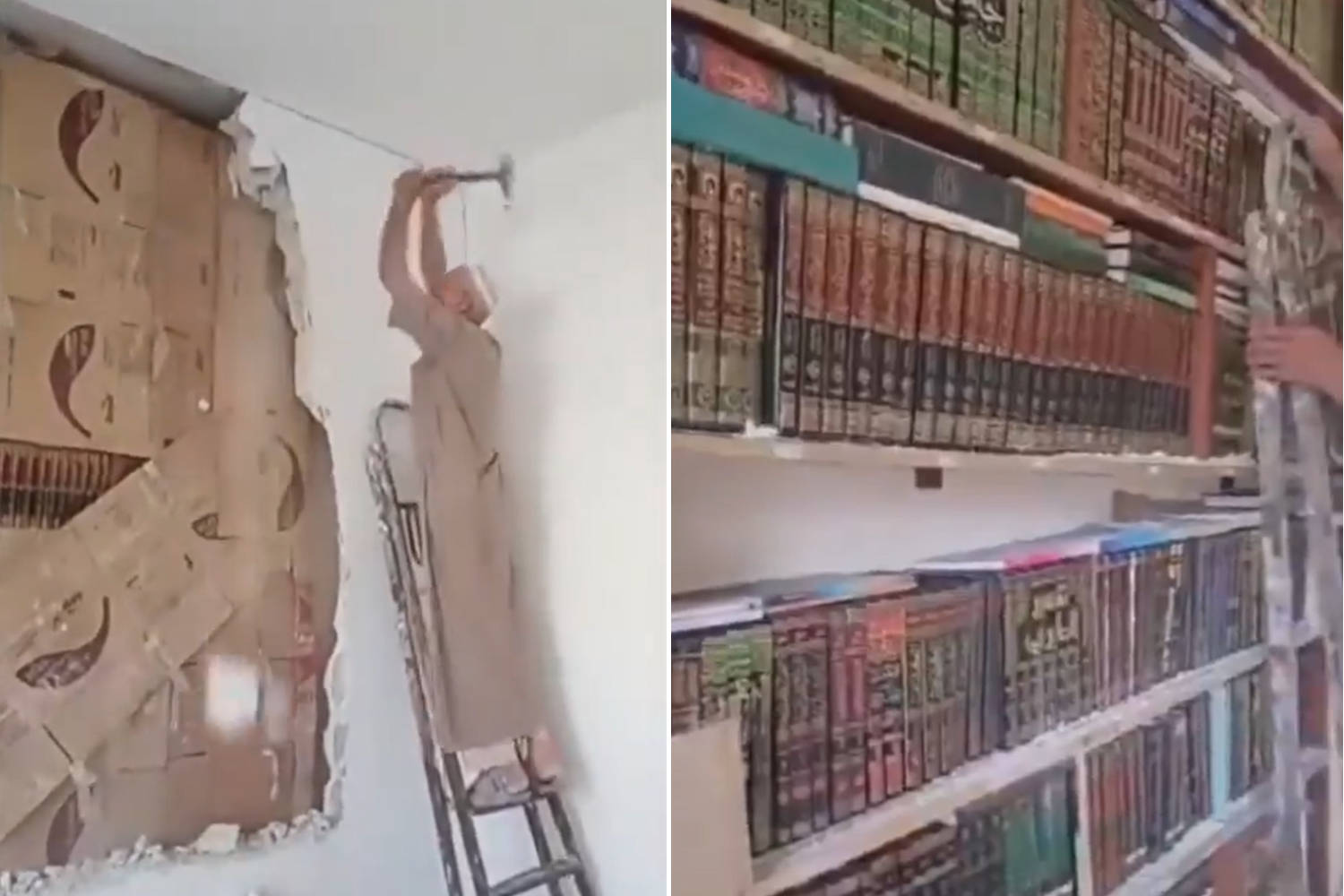
In the tumultuous scenario of 2011, mwhile Syria was hit by the wave of protests and the ferocious repression of the regime led by Bashar al-Assad, the Damascus house of Abu Bilal it transformed into the theater of a silent act of cultural resistance. To protect a precious and dangerous collection of volumes considered an expression of dissent, scientific works, religious texts and personal documents related to recitations of the Holy Quran, Abu Bilal took a drastic decision.
With his own hands, the man built a fake wall inside the house, hermetically sealing shelves full of culture to protect them from the controls, interrogations and persecutions of the political police. Soon after completing the cover-up, Abu Bilal was forced to leave the country at the end of 2011, spending about 15 years in exile in Kuwait and separated from his most cherished possessions as the war reshaped the face of the nation. That brick barrier thus became the only guardian of a collective memory that risked being swept away by the violence of the conflict, as the nation descended into a long and bloody civil war.
The demolition of the wall and the rediscovery of collective memory
A decade and a half later, following the fall of the regime, Assad’s flight to Russia and the start of the new political course led by Ahmad al-Shara, the family was finally able to return home, finding the rooms that the dictatorship had forced them to abandon. And now it was time to bring those precious books back to life too. The Syrian writer and activist Bilal Alloun, son of Abu Bilal, immortalized in an emotional video the moment in which his father held the tools to demolish that wall erected fifteen years earlier.
The images, shared on social media and immediately went viral, show the exact moment in which the shelves come back to light, revealing books that have remained miraculously intact despite the passage of time. The diffusion of the images has put the spotlight back on not only the drama of personal archives lost due to conflicts, but also on the resilience of those who have chosen to defend their cultural identity at the cost of enormous sacrifices. And this rediscovered library embodies the universal symbol of the survival of memory and knowledge against the horrors of censorship and political conflict.
He walled off his library in Damascus and left the country with it still inside
Abu Bilal sealed the shelves at the end of 2011, then went to Kuwait. Under Assad, the wrong title in a house search could end in a cell. Years later he came back, knocked the plaster out, and…
— Mario Nawfal (@MarioNawfal) September 17, 2026
