
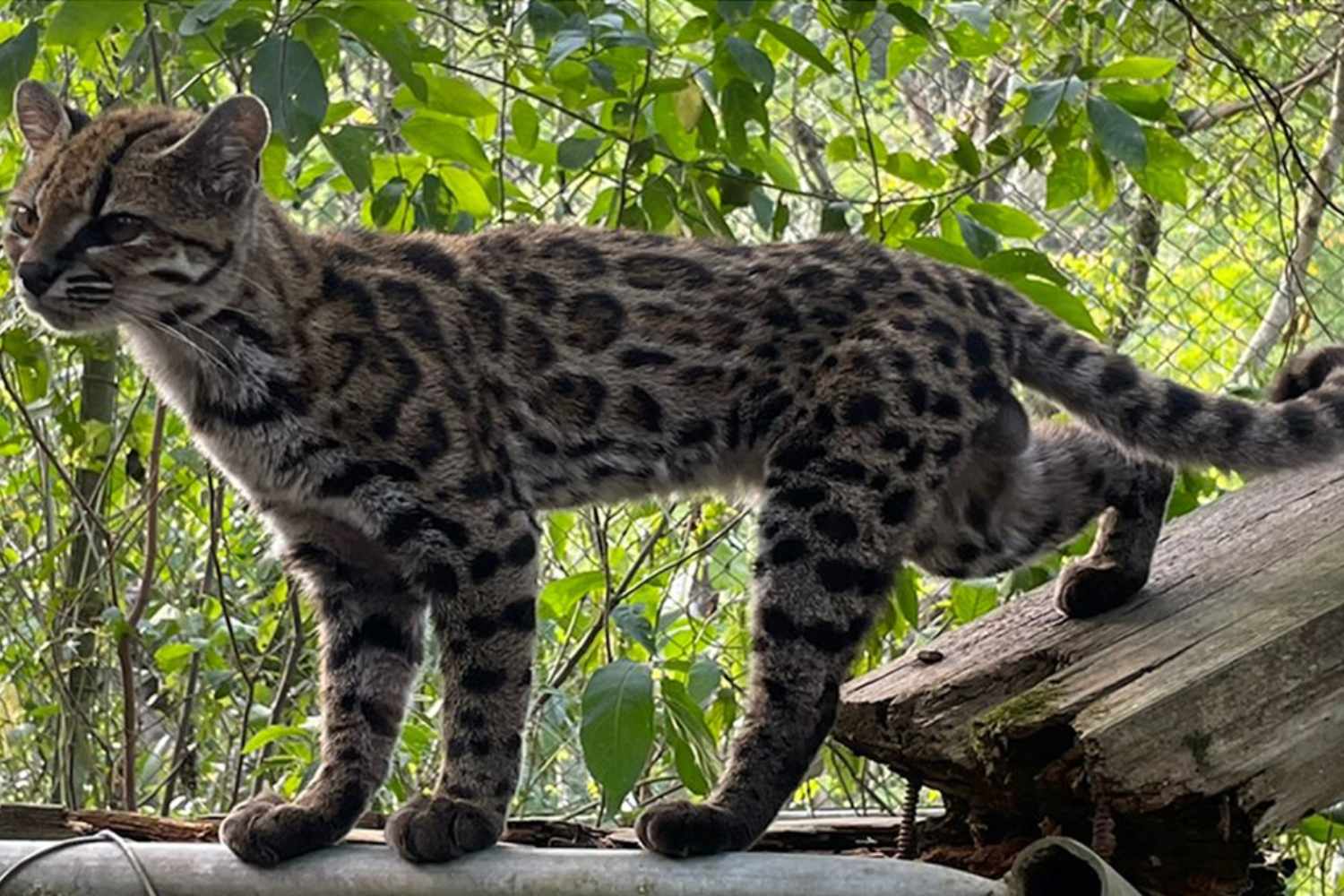
In the lush and foggy mountain forests of the Yungas region of Bolivia, an evolutionary secret was hidden that mainstream science had ignored for over a century. The story begins in 2016, when biologist Paola Nogales-Ascarrunz is called to a rescue center to examine a strange puppy found on the edge of the jungle and initially mistaken for a common domestic cat.
Subsequently housed at the Senda Verde Wildlife Sanctuary in Coroico, the male specimen showed completely unusual anatomical characteristics: a small and curled head, short and round ears, very long whiskers and a light brown coat decorated with irregular rosettes. Measuring 46 centimeters from head to base of tail, a thin 25 centimeter tail and weighing just 1.4 kilograms, this tiny nocturnal predator had long been known only to local communities, who had called it tilcayo for generations. For official zoology, however, the animal had remained confined for years under the generic category of the northern tiger cat, evading any formal recognition.
@PN-A
The genomic breakthrough and the revolution in the feline family tree
The real turning point came thanks to molecular genetics and an international team led by Paola Nogales-Ascarrunz together with experts Eduardo Eizirik and Jonas Lescroart. By analyzing the DNA of 38 felines from eight Latin American states, including live specimens and eight historical museum artifacts, the researchers rewrote the taxonomy of small South American felids. Genomic data have shown that the so-called tiger cats do not represent a single continental species, but are divided into five distinct and independent strains, including the new Leopardus tilcayo.
The evolutionary divergence of this felid dates back to approximately 1,400,000 years ago, isolated among the steep Andean slopes by climate change. This extraordinary discovery marks the first formal description of a new living species of felid since 1923, when the pampas cat was classified. Today the tilcayo lives in a fragile habitat threatened by deforestation, mining and wildlife trafficking, making it urgent to launch monitoring programs with camera traps and targeted protections to protect the new cloud cat before it disappears.
