
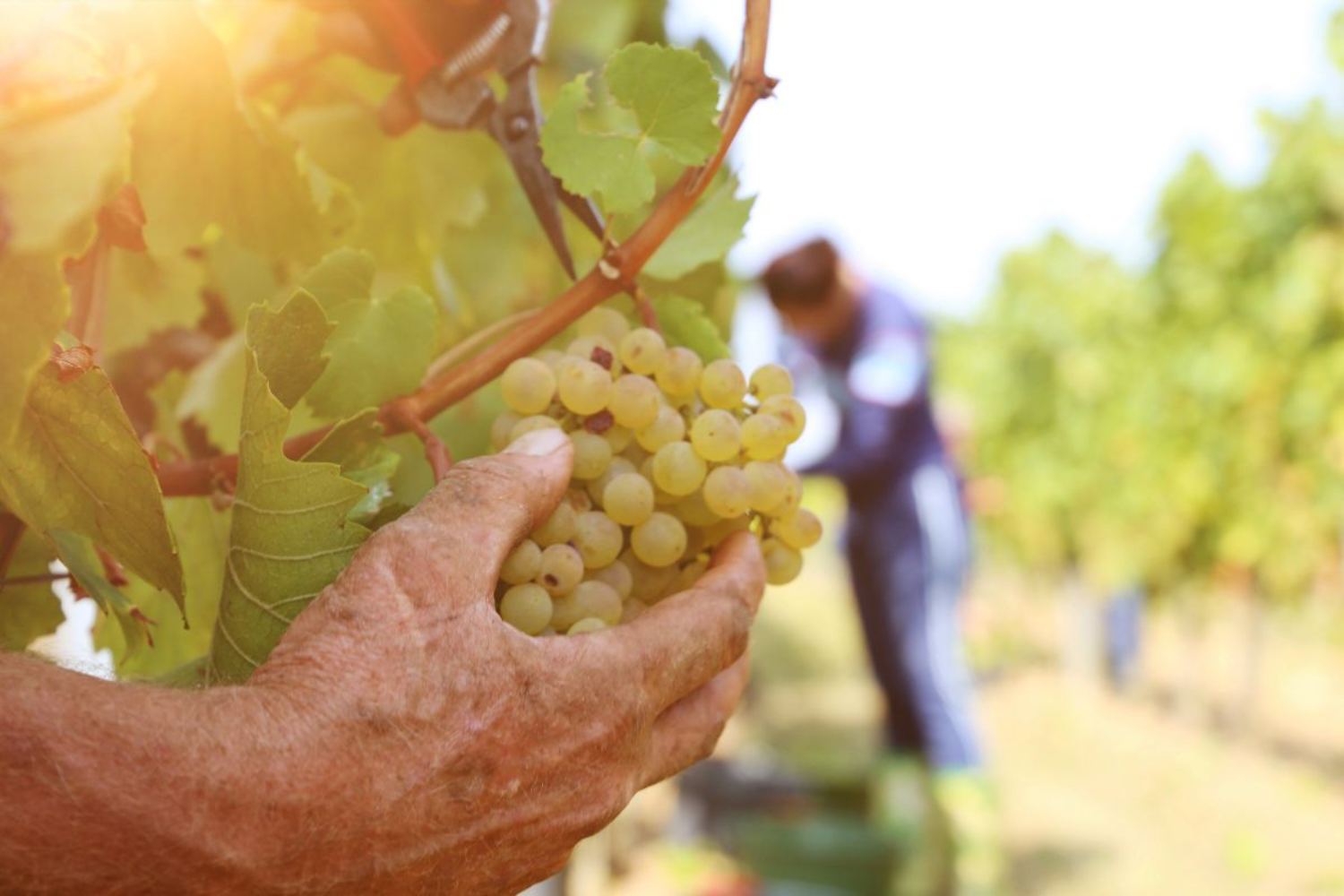
The 2026 harvest was marked by an unprecedented advance and extreme climatic conditions that put winemakers across Italy to the test, overturning every agricultural practice. From the hills of Franciacorta, where the harvest began at the end of July for the first time in the history of the area, up to Friuli Venezia Giulia and the areas of Pordenone and Udine, the heat waves and the lack of rain have literally turned the calendar upside down. A sample of four historic local companies managed over 350 hectares of vineyards between San Martino di Campagna, Porcia, Domanins, Sequals, Porcia and San Quirino, producing around ten different types of wine.
Despite the strong thermal stress and accelerated ripening of the bunches, the vineyards produced a finished product of the highest quality, with healthy bunches the likes of which had not been seen for years. However, the final yields have undergone significant variations, such as some cases which have recorded a 12% plus in overall production but a minus 10% in the grape-wine yield or those which have seen the harvest of some varieties drop by up to 5%.
To protect the grapes from sunburn, producers have adopted ingenious countermeasures: from less aggressive defoliation to ensure greater shade for the leaf wall, to the use of specific products used as a real sun cream for grapes.
Climate change and new strategies for the future
The impact of global warming imposes a structural and no longer postponable reflection on the entire national and international wine sector. As explained by industry experts, high temperatures and prolonged drought profoundly alter the delicate balance between sugars and acidity in the bunches, causing the alcohol content to soar and forcing wineries to manage enormous energy costs for managing the cold. This summer there were over twenty consecutive days with highs above 35 degrees and night lows around 22 or 23 degrees, preventing the plant from resting and accelerating ripening in an unnatural way.
In areas such as Chieti, production dropped from 25% to 40% due to over 120 days without rain, while Assoenologi, Ismea and Unione Italiana Vini decided not to publish preventive estimates due to total climatic instability. The general economic situation is also affected by inventories increasing by 7.5% in February 2026 and a decline in Italian exports by 3.7% in 2025, aggravated by the 9.2% collapse on the US market.
Faced with such drastic scenarios, simply anticipating the collection is no longer enough. We therefore look at cutting-edge solutions for the protection of vineyards: from agrivoltaics to shade the rows to treatments with kaolin, from emergency irrigation to moving crops to higher altitudes, the so-called heroic viticulture.
Other answers come from scientific research, such as the introduction of more resistant varieties, the modification of the specifications to include ancient native vines that ripen late and the use of Assisted Evolution Techniques (TEA). The challenge for the future will be to preserve the economic sustainability and identity of the territories in an environmental context that is moving too fast.
