
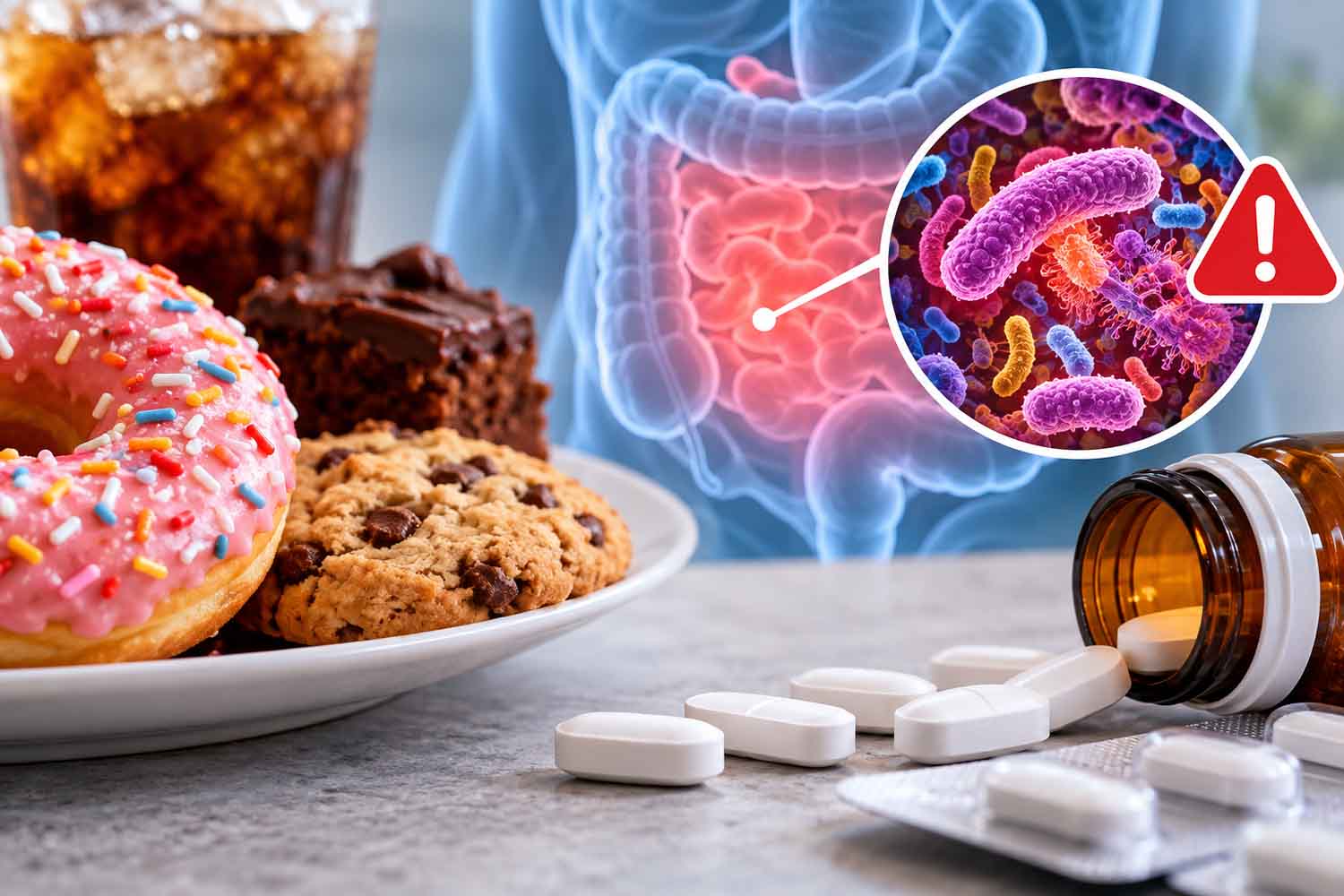
Eating lots of sweets while taking antibiotics could add another blow to an already stressed gut microbiome. This was reported on the same day by NYU Langone Health and City of Hope, two research centers involved in the same study, also conducted together with the Memorial Sloan Kettering Cancer Center.
The research, published on Naturefollowed what 173 blood cancer patients hospitalized for an allogeneic hematopoietic stem cell transplant ate. In all, 9,419 meals, over 40 thousand foods recorded and more than a thousand fecal samples analysed.
The common result is quite clear: during exposure to antibiotics, a greater consumption of sugar-rich foods was associated with a greater loss of microbiome diversity and the growth of some bacteria capable of taking advantage of the space left by others. But the two centers have chosen to emphasize slightly different aspects.
NYU Langone: More sugars, more damage to microbiome during antibiotics
In the NYU Langone Health press release the result is summarized very directly: a high consumption of sugars seems to accentuate the alteration of the microbiome already caused by antibiotics. It is on this interaction, rather than on sugar taken alone, that the data observed by the researchers focuses.
The team calculated that for every 100 grams of sugar consumed in the previous 48 hours, there was an additional 21% reduction in alpha diversity, a measure used to describe the bacterial variety present in the individual sample. The data gained weight especially when antibiotics came into play: the consumption of sugars alone did not produce the same signal.
NYU Langone also draws attention to Enterococcus faecium. During the combination of a higher sugar diet and antibiotic treatment, this bacterium tended to expand. In very fragile patients, like those involved in the study, its proliferation can become particularly problematic because it has been linked to infections that are difficult to treat.
William Jogia, one of the authors of the work, proposes an explanation yet to be verified: potentially harmful bacteria that survive antibiotics could exploit the available sugars to grow while much of the competition has been reduced by the treatment.
The precise mechanism, however, remains open. Sugar could directly benefit Enterococcuspenalize other bacteria or act through other changes to the intestinal environment.
City of Hope: watch out for sweets, but no universal bans
The City of Hope statement instead starts from the question that comes almost automatically when reading these results: should we therefore avoid sweets while taking antibiotics?
The center underlines the amount of data collected: 9,419 meals from 173 patients, more than 40 thousand foods recorded and over a thousand samples used to follow changes in the microbiome over time. A level of detail that is difficult to obtain in nutritional studies, because in this case the meals were recorded directly during hospitalization and not reconstructed months later by relying on the participants’ memory.
Here too the signal concerns above all the encounter between foods rich in sugars and broad-spectrum antibiotics. According to Marcel van den Brink, one of the senior authors of the study, many products normally also offered to hospitalized patients – from sugary drinks to smoothies to some nutritional supplements – therefore deserve to be evaluated more carefully when antibiotics are prescribed. City of Hope, however, also puts a rather important brake on the temptation to immediately transform the result into a new dietary rule.
So should we eliminate sugar while taking antibiotics?
No, at least not based on this study. The participants were patients with blood cancers undergoing stem cell transplants and very intensive therapies. Their microbiome faced very different conditions than an otherwise healthy person who takes an antibiotic for a few days.
Clinical conditions can also simultaneously change both the type of antibiotic prescribed and what a person is able to eat. To establish whether temporarily reducing sugars really protects the microbiome, prospective studies designed specifically to verify this are needed.
Van den Brink himself says it in the City of Hope press release:
It is premature to recommend that all people taking antibiotics avoid sugar.
For now the two centers agree on something more limited: sugars seem to be able to amplify the alteration of the microbiome during some antibiotic therapies, at least in the population studied. The teaspoon of sugar has not become a contraindication. It just attracted a lot of attention in the lab.
