
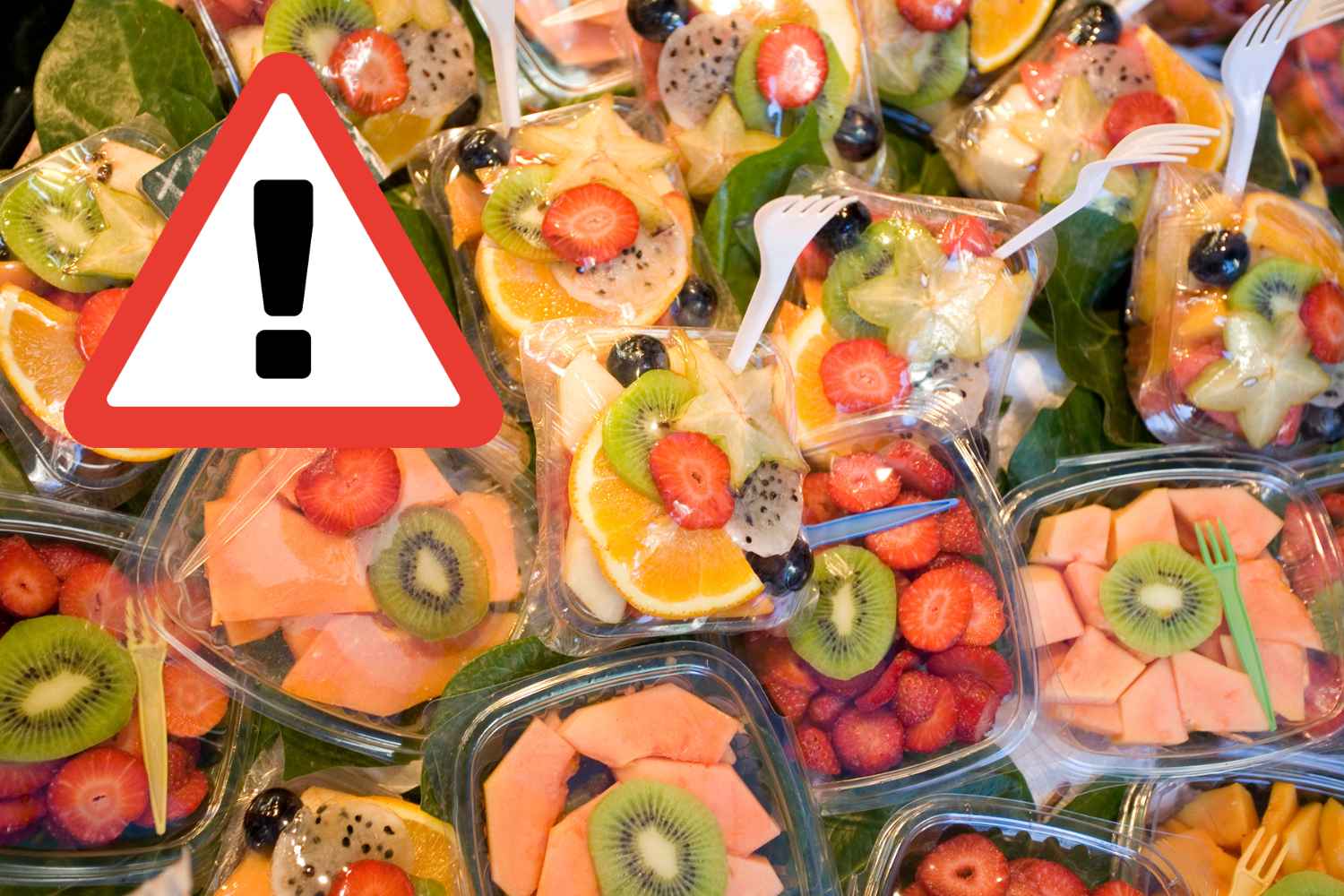
They are practical and save time, but in addition to being very heavy on the environmental front due to the amount of packaging they require, already cut fruit and vegetables can also have another problem. Once cut, in fact, these foods become more perishable and can encourage the proliferation of microorganisms.
The Bundesinstitut für Risikobewertung (BfR), the German Federal Institute for Risk Assessment, is warning consumers, having published a new communication dedicated to fresh and ready-to-eat products.
The problem is what happens when fruits and vegetables are cut. These foods can be contaminated with pathogenic bacteria already during cultivation and harvesting, for example through contaminated water or organic fertilizers, but also subsequently during transportation, storage and processing.
When the product is cut, however, its natural protective barriers are partly damaged and microorganisms can find more favorable conditions to multiply. It is particularly evident in the case of leafy vegetables: intact lettuce and cabbage leaves offer some natural protection, which is lost when they are cut. In fact, cell sap comes out from the cut surfaces, which can promote the growth of germs.
Added to this is another factor: the high humidity created inside plastic packages, which can further contribute to the proliferation of microorganisms. Freshly cut products therefore quickly become perishable and require particular attention to conservation.
The case of already cut melons
Among the products that deserve particular attention are melons sold already cut and ready to eat, often present in trays together with other fruit. The BfR especially reports so-called netted or reticulated melons, such as cantaloupe, whose rough surface can facilitate the adhesion of microorganisms.
The risk increases if any pathogenic bacteria land on the pulp, which is not very acidic, and if the melon is left without refrigeration, they can multiply within a few hours. The BfR also recalls that the consumption of melons has occasionally been associated with disease outbreaks caused by Salmonella, Listeria and enterohemorrhagic Escherichia coli (EHEC).
This does not mean that an already cut melon is automatically dangerous, but it highlights how important it is to maintain the cold chain correctly and not unnecessarily prolong storage.
How to reduce the risk
If you really have to buy ready-made fruit and vegetables, the BfR recommends first of all following the manufacturer’s instructions on storage and expiry dates. Already cut fruit, such as melon, should be eaten quickly or continuously stored in the refrigerator, preferably between +4 and +6 °C.
For salads and other products based on fresh cut leaves, the temperature should instead be maintained at a maximum of +7 °C and even in this case consumption should occur quickly.
Even when the words “ready to eat” appear on the package, the BfR also recommends rinsing the salad thoroughly with cold water before consumption, to reduce the microbial load.
You must then pay attention at the time of purchase: the packaging must appear intact and the product must be visibly fresh and well refrigerated. A swollen package can indicate gas formation due to fermentation, while noticeable discoloration or heavy liquid buildup can be a sign of loss of freshness. In these situations it is better not to consume the product.
Who should avoid these products
Attention must be even greater for those most vulnerable to foodborne infections. The BfR refers in particular to children, pregnant women and people with weakened immune systems, for example due to advanced age, pre-existing diseases or the taking of certain medications.
For these categories, the German authority suggests, as a precautionary measure, avoiding salads and fruit that have already been cut and packaged. The preferable solution is to buy fresh ingredients, wash them carefully and prepare them just before consumption.
One more reason to prefer whole fruit and vegetables
The warning comes from Germany, but concerns a consumption habit that is now widespread in Italy too. In our supermarkets we increasingly find trays of melon, pineapple and other pre-portioned fruit, as well as ready-to-eat salads and vegetables. The BfR indications are therefore also useful for those who shop in our country.
And if convenience may seem like a good reason to choose ready-made products, there are at least two aspects to weigh. On the one hand there is the microbiological risk, which requires greater attention to temperature, freshness and consumption times; on the other there is the environmental impact linked to the processing and above all to the packaging used.
When possible, buying whole fruit and vegetables and cutting them just before eating them allows you to avoid unnecessary packaging and directly manage washing, preparation and storage. A small sacrifice of convenience that can make sense both to reduce packaging and to have greater control over what we bring to the table.
