
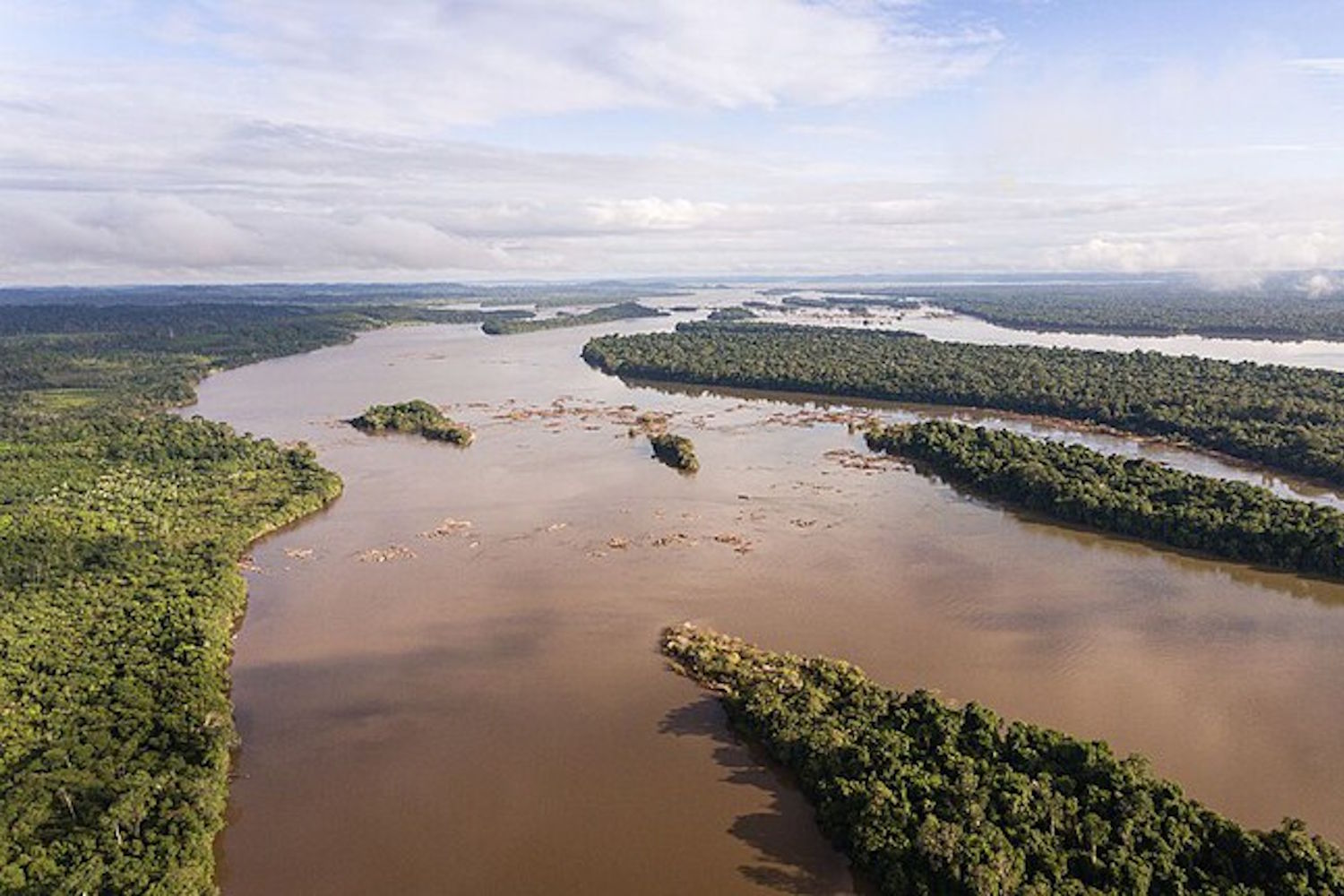
A new gold mine in the heart of the Brazilian Amazon, in a region already marked by the effects of one of the largest hydroelectric plants in the country. And indigenous communities who risk suffering the consequences without having been adequately consulted.
It is in this scenario that the Federal Supreme Court of Brazil (STF) intervened, reinstating the suspension of the license necessary to carry out the Volta Grande mining project, of the Belo Sun Mineração company, in the State of Pará.
The decision blocks for the moment the possibility of proceeding with the installation of the open-pit gold mine in the municipality of Senador José Porfírioalong the river Xingu. At the basis of the provision there are serious questions about the environmental impacts and respect for the rights of indigenous populations, starting from the failure to demonstrate full compliance with the conditions imposed to authorize the works.
A gold mine in an area already damaged by the Belo Monte dam
The Volta Grande project concerns one of the most delicate areas of the Brazilian Amazon, in the region crossed by the Xingu river, already profoundly transformed by the construction of the Belo Monte hydroelectric plant.
According to the judge, the presence of an infrastructure of this size requires a particularly rigorous evaluation of the possible effects of a new extraction activity and it is necessary to understand what could happen by adding the consequences of gold extraction to those already produced by the hydroelectric plant. The Court recognized that, given the exceptional scale of the project, the continuation of installation activities could pose a risk of serious damage to public order and the environment.
The principle referred to is that of precaution: when there are significant uncertainties about potential environmental damage, we cannot proceed by ignoring them.
The Brazilian Federal Public Ministry (MPF), which for years has contested some aspects of the mine authorization procedure, requested the intervention of the Supreme Court.
At the center of the controversy is the Estudo do Componente Indígena (ECI), the study that must evaluate the consequences of the project on the potentially affected indigenous populations.
After a new technical evaluation, the Fundação Nacional dos Povos Indígenas (Funai), the Brazilian federal body responsible for protecting the rights of indigenous peoples, deemed the document presented by the company still insufficient. The critical issues mainly concern:
Added to these issues is that of preventive, free and informed consultation of indigenous communities, provided for by Convention 169 of the International Labor Organisation. A simple bureaucratic formality? Not exactly. Here it means guaranteeing the people potentially involved adequate information and the possibility of participating in decisions that could affect their territories and their living conditions.
A legal battle that has been going on since 2014
Already in June 2014 the Brazilian federal justice had accepted an appeal by the Public Ministry against the State of Pará and Belo Sun, contesting the environmental authorization procedure. Then, the Federal Regional Court of the First Region (TRF-1) reinstated the preliminary license, but made the issuing of the installation license conditional on the carrying out of adequate studies and consultation with indigenous populations.
The company had attempted to obtain the green light for the works, claiming that it had satisfied the required conditions. After an initial denial, a subsequent decision by TRF-1 allowed the project to continue. On 24 June 2026, during a conciliation attempt, a partial agreement was reached between the parties, despite the opposition of the Federal Public Ministry. But the agreement had not yet received judicial approval and, above all, fundamental questions regarding the protection of indigenous communities remained open.
Hence the new intervention of the Supreme Court, which reinstated the suspension of the installation license.
What happens to the Belo Sun mine now?
The Supreme Court’s decision does not represent a definitive rejection of the mining project, but is a provisional measure intended to operate until the possible judicial approval of the agreement reached in the proceedings before the TRF-1.
In a statement, Belo Sun said it had already made a commitment not to carry out physical interventions in the project area during the negotiations and that it wanted to continue the dialogue with Funai and indigenous communities. The company also clarified that the provision does not constitute a final decision on the feasibility of the mine and announced that it is evaluating possible legal initiatives.
However, a central point remains: before authorizing a work of this size, it would be necessary to demonstrate that the risks have been correctly assessed and that the rights of the populations affected are respected. In the Amazon, where the exploitation of natural resources continues to exert enormous pressure on territories and communities, environmental protection cannot only arrive after the damage has occurred. And the right of indigenous peoples to be heard cannot be considered an obstacle to be overcome to accelerate an investment.
Sources: Supremo Tribunal Federal / Brazilian Federal Public Ministry (MPF) / Belo Sun
