
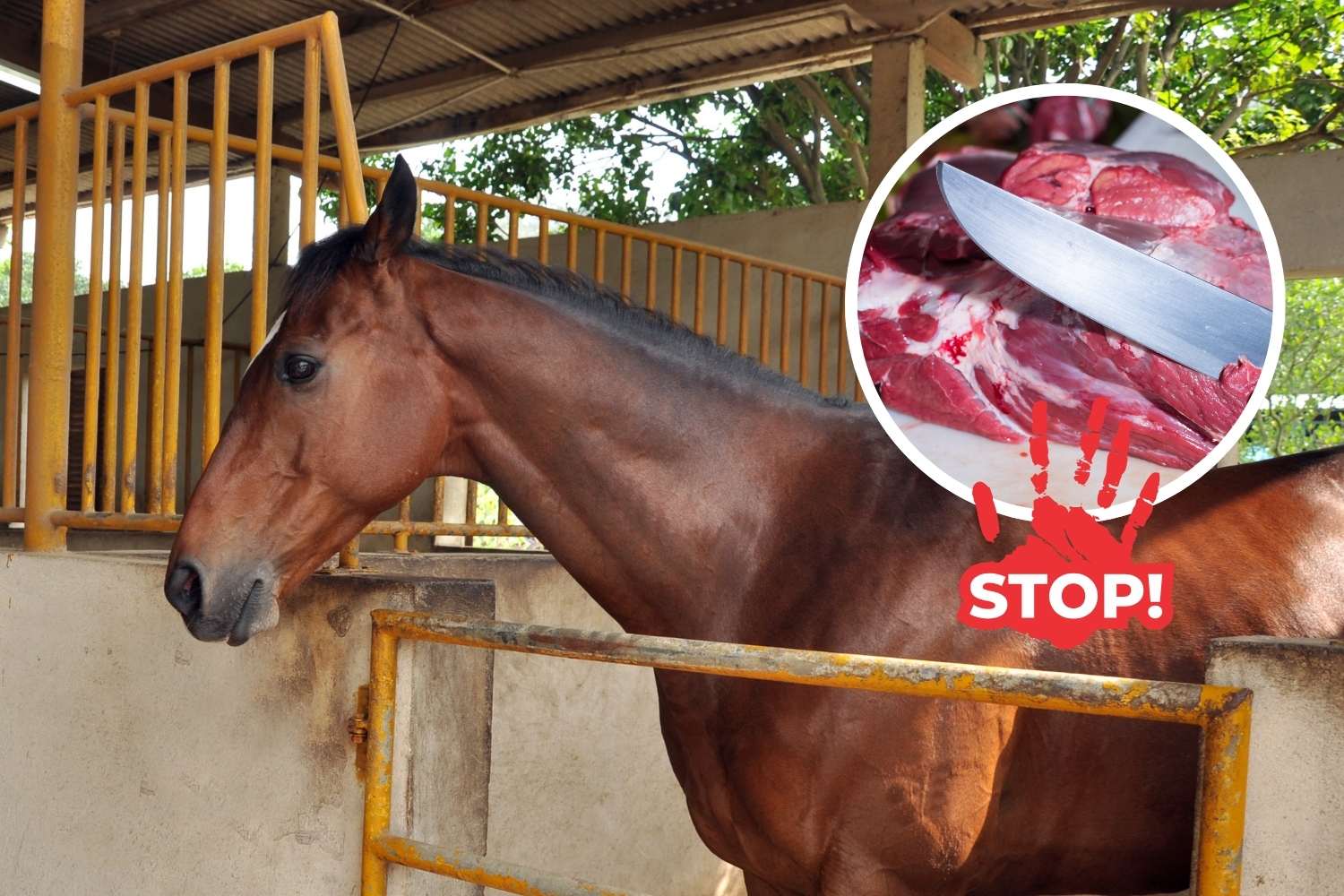
One signature after another, until we reach an important milestone for the future of thousands of animals. Over 50 thousand people have supported the bill to ban the slaughter of horses, donkeys and other equids in Italy, promoted by Animal Equality together with the Islander Foundation. A result achieved in just four months, which brings an increasingly felt question back to the center of the political debate: why do we continue to send animals to the slaughterhouse that many Italians now consider life companions, like dogs and cats?
The initiative, filed with the Court of Cassation on 2 July 2026, has reached the threshold established by Article 71 of the Constitution for popular initiative laws. Now the associations are asking Parliament to transform this mobilization into concrete change.
View this post on Instagram
Over 50 thousand signatures to recognize horses and donkeys as pets
The proposal supported by Animal Equality and the Islander Foundation aims to recognize equids as pets, preventing their slaughter for food purposes. A request that comes alongside other legislative initiatives already presented by the 5 Star Movement, We Moderates, the Democratic Party and the Green and Left Alliance, which are the subject of discussion in the Agriculture Commission of the Chamber. The habits of Italians also ask for the need for change. According to an Ipsos survey cited by the associations, only 17% of meat consumers say they eat horse meat at least once a month, while 83% of those interviewed say they do not consume it. Furthermore, 73% feel empathy for horses and consider them on a par with dogs and cats.
Yet, slaughter numbers remain significant. According to data from the Veterinary Information System of the Ministry of Health reported by Animal Equality, 22,854 equids were slaughtered in Italy in 2025, especially in Puglia (34.3%), Emilia-Romagna (20.3%) and Veneto (13.7%). In 2026, according to the latest available data, the number has already reached at least 14,670 animals.
A substantial part of the equids destined for Italian slaughterhouses also arrives from abroad: in 2025, imported animals represented approximately half of those slaughtered in Emilia-Romagna, 25% in Puglia and 23% in Veneto. A market which, according to Animal Equality, concerns a relatively narrow range of consumers, but continues to depend to a significant extent on imports.
«The voice of 50 thousand people cannot be ignored»: what happens now
Reaching the necessary signatures represents a victory for animal rights associations, but it does not mean that the ban has already become law. The text will have to go through the parliamentary process and the Chambers will decide whether to approve it. Matteo Cupi, executive director of Animal Equality Italia and vice-president for Europe, underlines the importance of the result: The voice of over 50,000 people cannot be ignored: it represents a request for change that the institutions have a duty to listen to.
For Cupi, the objective is to arrive at the recognition of equids as sentient beings to be protected, overcoming a concept that considers them mainly as animals intended for food production. The path, however, is not without obstacles. The parliamentary debate on the proposals already presented has encountered slowdowns and political divergences. On 20 October, in particular, the work in the Agriculture Commission suffered a setback, as reported by Animal Equality. The 50 thousand signatures are therefore a starting point, not an arrival point. But what they are asking for is clear: to rethink the relationship with animals that have accompanied people’s lives for centuries, from work in the fields to sporting activities and animal-assisted interventions. Now the responsibility passes to the institutions. Because it is no longer enough for those thousands of citizens who asked to stop the slaughter of equines to express their sensitivity: they are asking for it to finally be translated into law.
