
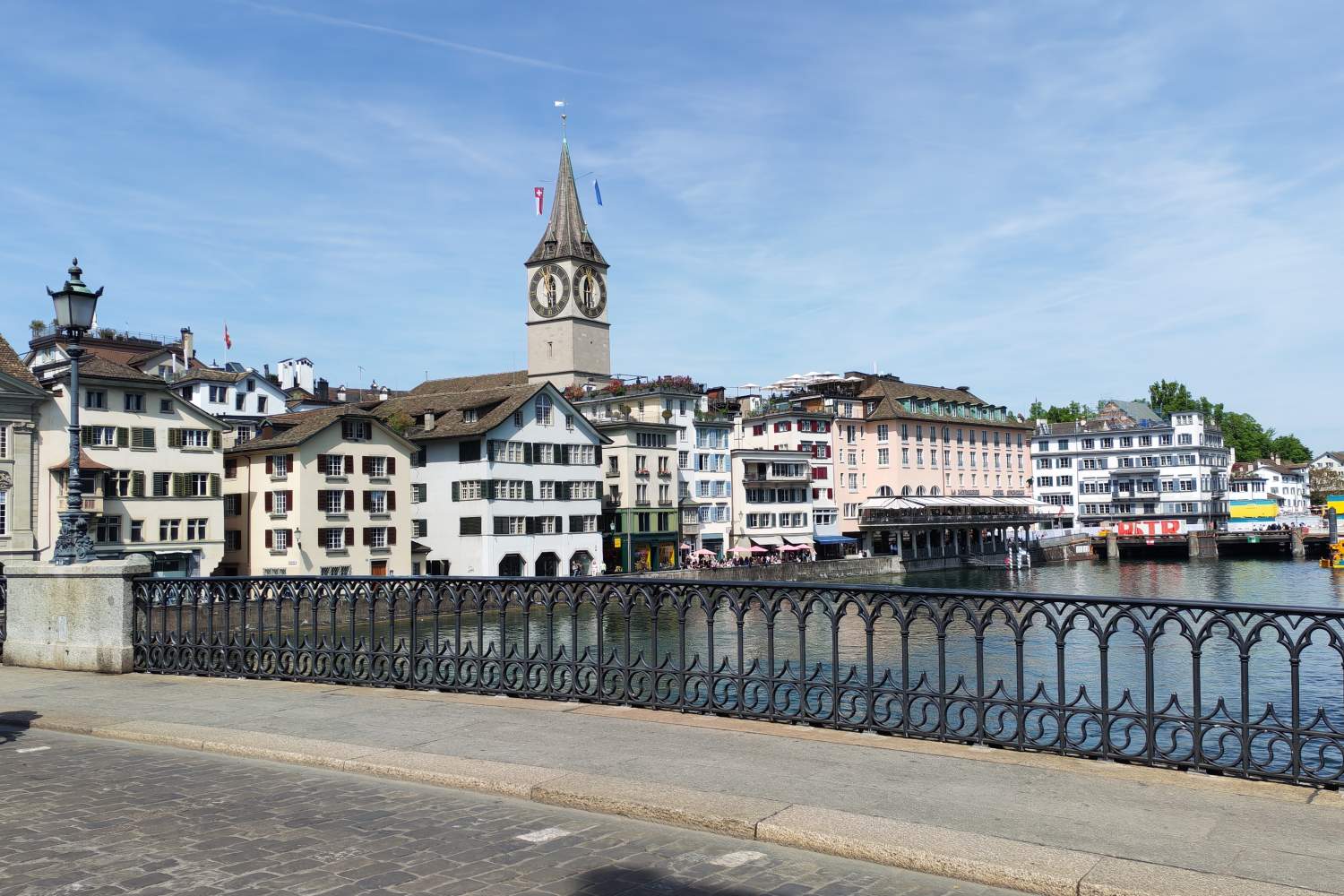
When we arrived in Zurich, in north-eastern Switzerland, I admit that we were a little afraid of finding the usual impeccable but cold metropolis. Instead, right at the point where the Limmat river originates from Lake Zurich and then embraces the Sihl, we discovered a lively, romantic and surprisingly eclectic city.
The magic of the Zürichhorn Park and the charm of the lake
To begin our visit we decided not to start directly from the chaos of the centre, but from the greenery of the Zürichhorn Park (officially Panlage Zürichhorn). Located along the eastern shore of the lake basin, within the elegant Seefeld district, this free-access public space stands on an ancient alluvial fan formed by the Hornbach stream.
@RebeccaManzi/GreenMe
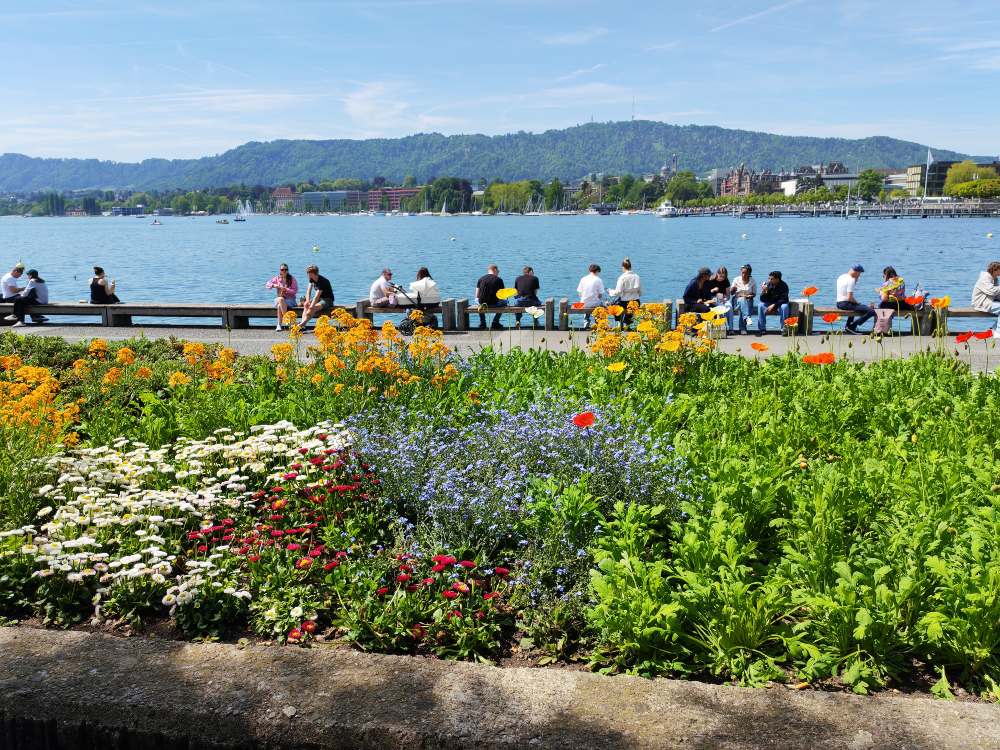
It is from this promontory immersed in nature, born from the redevelopment of the Victorian era and linked to the 1964 Expo, that we moved to experience the city, however first enjoying a walk along the tree-lined paths of the park and among the artificial lakes inside until reaching the flowerbeds that characterize the centre.
@RebeccaManzi/GreenMe
The impressive Opera House Zürich: our welcome to the city
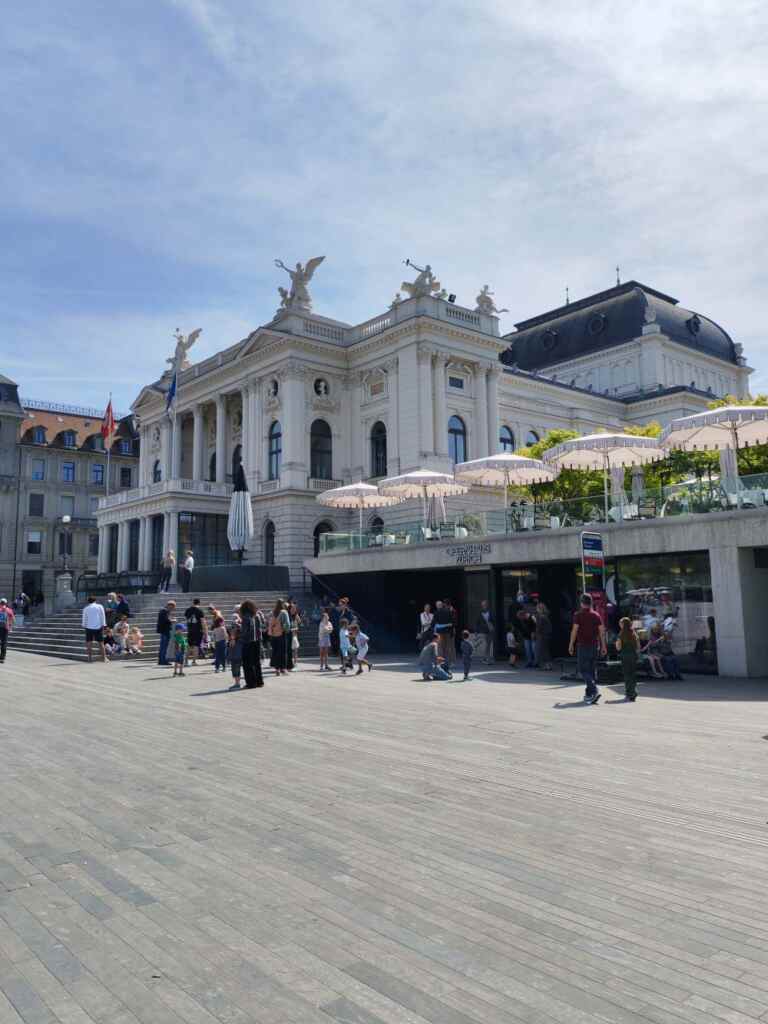
Our walk along the lake took us straight to the cultural heart of the city: the grandiose Sechseläutenplatz. Here we stopped to admire the imposing Opernhaus Zürich, the Opera House inaugurated in 1891. We were left speechless in front of its neo-Renaissance architecture which, with the façade embellished with twin columns and busts of the great composers, made us immediately perceive the profound artistic tradition of Zurich, home of the Ballett Zürich and the Bernhard-Theater.
@RebeccaManzi/GreenMe
Where Lake Zurich turns into the Limmat
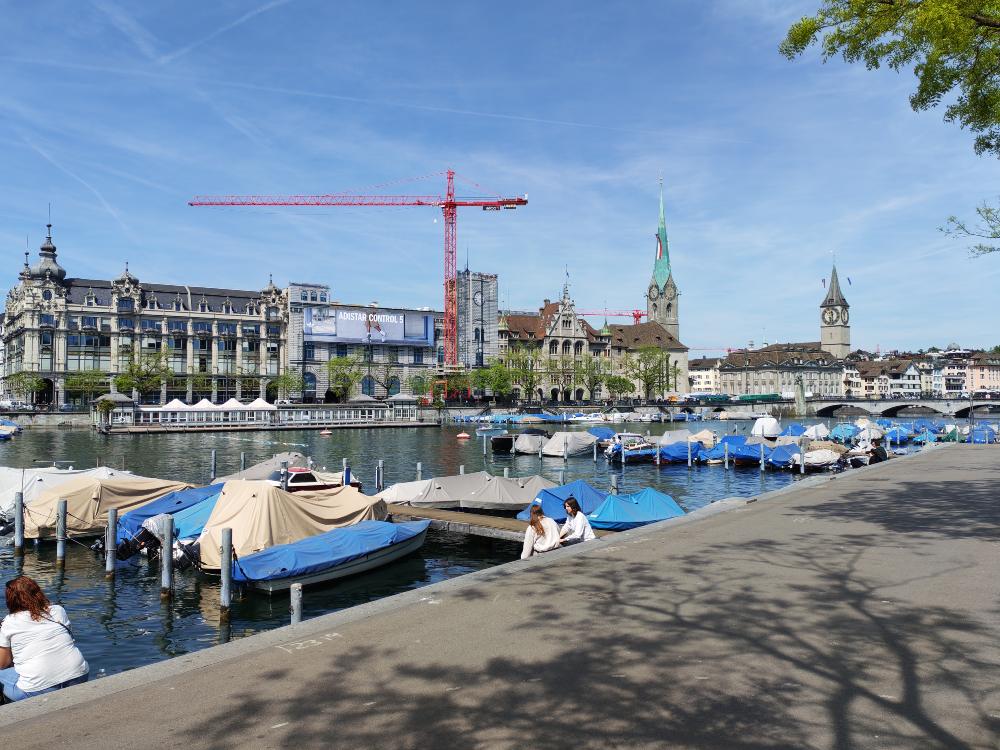
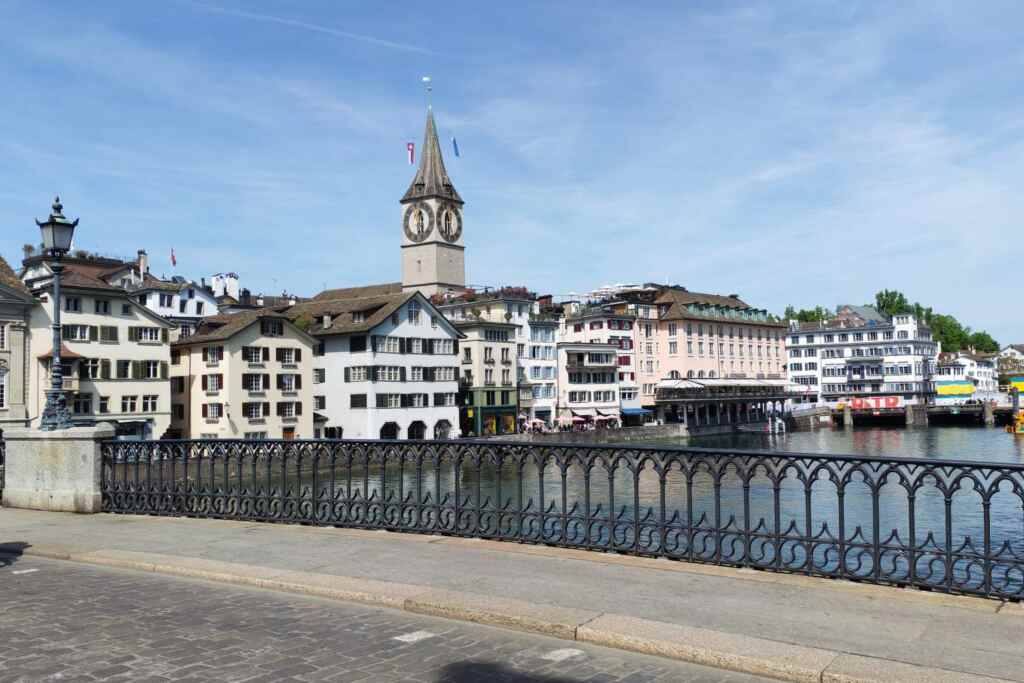
Leaving behind the elegance of Sechseläutenplatz square and the Bellevue area, we headed towards one of the most poetic views of the entire city. Precisely where Lake Zurich emerges and transforms into the Limmat River, the panorama opens up in a perfect composition: the characteristic boats and boats moored along the banks gently rock on the water, while in the background the sharp profile of the bell tower of the Fraumünster church and the unmistakable bell tower of the Church of St. Peter stand out imposingly.
@RebeccaManzi/GreenMe
The wonder of the Fraumünster church with its windows painted by Chagall
To pass to the western bank we crossed the historic Münsterbrücke bridge, which offers another postcard view, and emerged in the beautiful Münsterhof square, framed by the buildings of the ancient guilds such as the Zunfthaus zur Meisen from 1757.
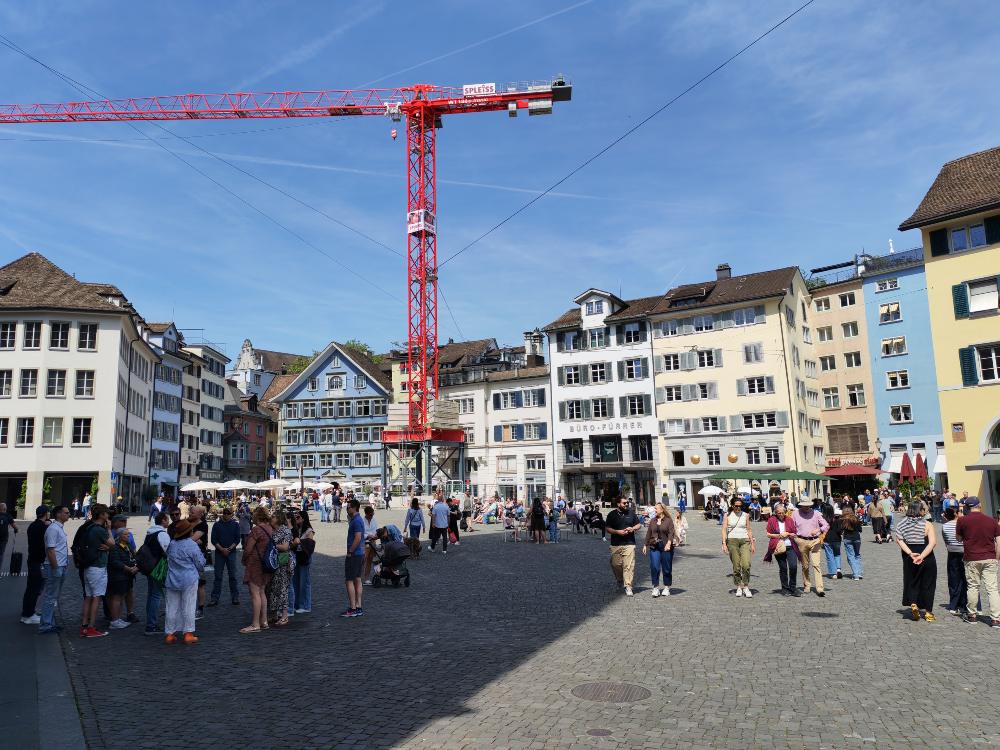
@RebeccaManzi/GreenMe
But we experienced the real emotion of the day when entering the Fraumünster church, founded in 853. Here we remained silent in front of the five stained glass windows and the rose window painted by Marc Chagall, letting ourselves be enveloped by the colored light that filtered into the choir: it is a moment that we still remember with wonder.
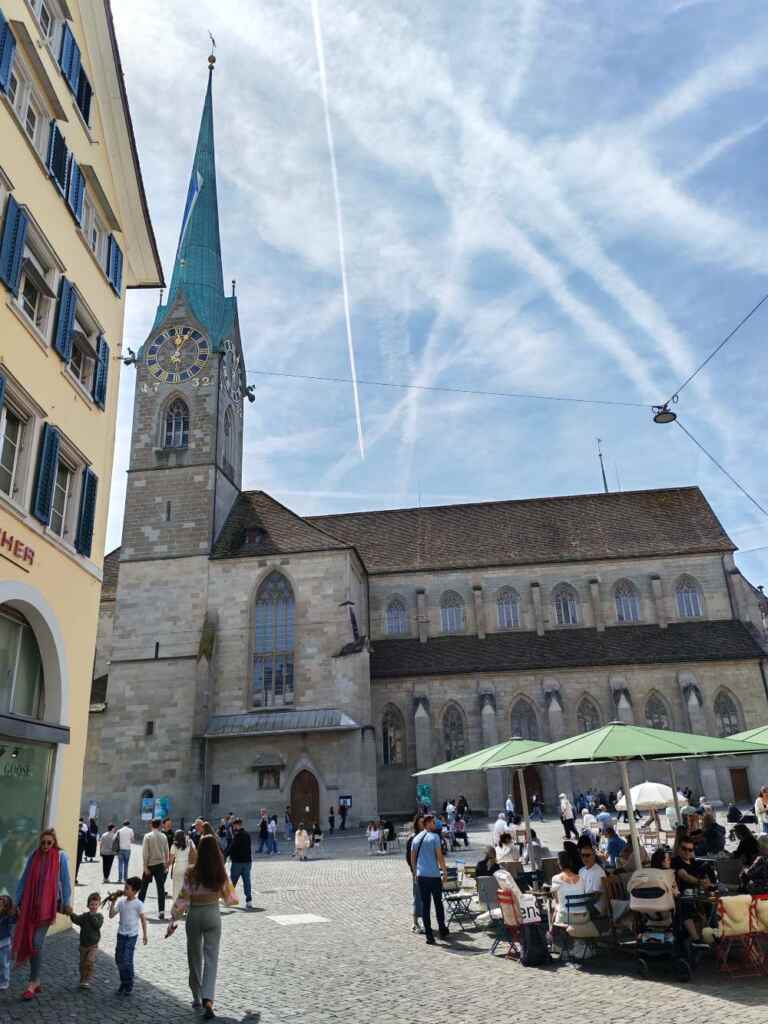
@RebeccaManzi/GreenMe
In the heart of Niederdorf is the record clock of St. Peter
We then got lost among the cobbled alleys of Niederdorf, the pedestrian area of the old town. Walking here means breathing a special air: we took a break in front of the Central Library before reaching number 1 via Spiegelgasse, where the legendary Cabaret Voltaire stands, the place where the Dadaist movement was born in 1916.
Going up the road towards the ancient city, we found ourselves in front of the Church of San Pietro (Peterskirche), the oldest parish in Zurich. Standing upside down admiring its bell tower was crazy: it boasts the largest clock dial in Europe, with an extraordinary diameter of 8.7 meters, clearly visible even from the various bridges in the city. After a stop in the nearby Napfplatz square, we reached the Grossmünster cathedral which unfortunately for us was closed and surrounded by scaffolding for renovation work.
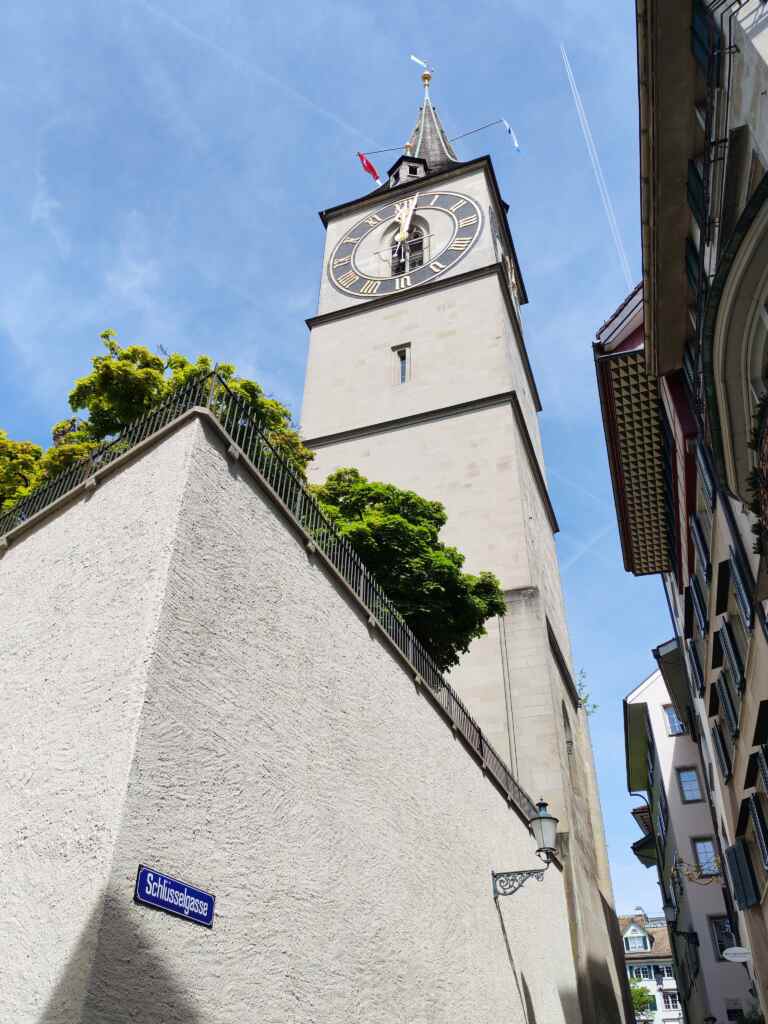
@RebeccaManzi/GreenMe
Among the bay windows of Augustinergasse: the magic of Zurich’s historic center
Leaving the refinement of Bahnhofstrasse behind, we entered the picturesque view of Augustinergasse, one of the most fascinating pedestrian streets in the historic center of Zurich where time seems to have stopped. This alley is famous for its colorful facades and characteristic bay windows (or bay window): typical protruding windows in carved wood that ancient merchants used to capture more light and observe people walking on the street.
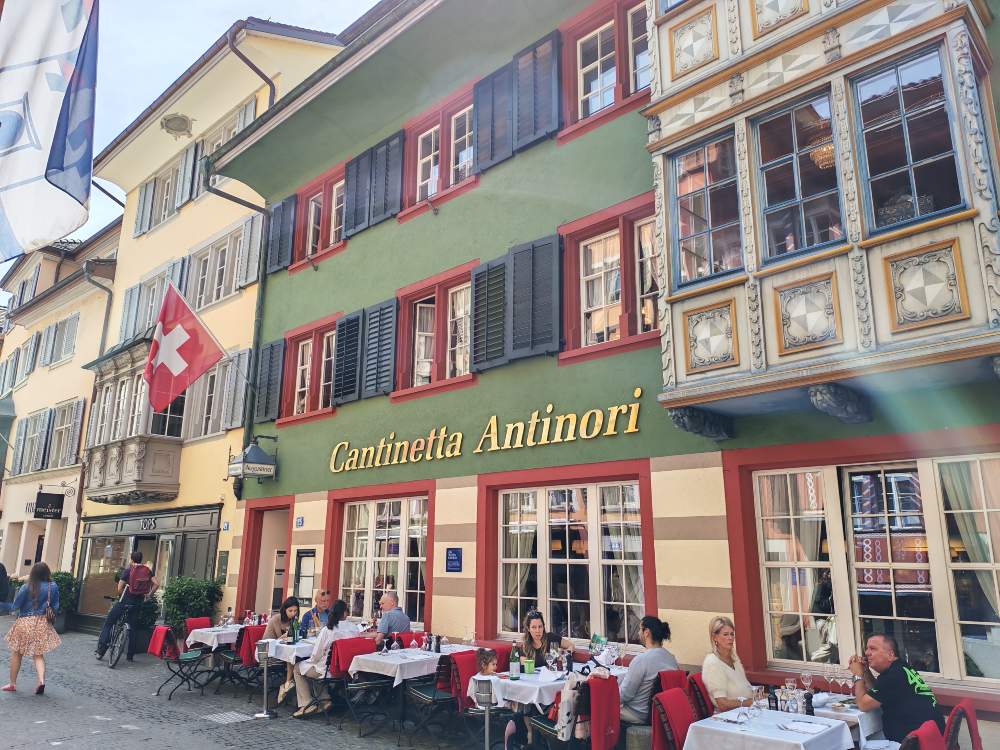
@RebeccaManzi/GreenMe
Even though our day among the wonders of Zurich has ended, the feeling we take home is that of having lived an intense and multi-faceted experience. Between the quiet of nature above the water, the majesty of sacred art and the timeless charm of its medieval alleys, this city has been able to reveal a warm and welcoming soul. Zurich is not only rigor and precision, but a mosaic of emotions to be discovered at a slow pace, a corner of Switzerland that can offer unforgettable views and that will make you want to return.
@RebeccaManzi/GreenMe
