
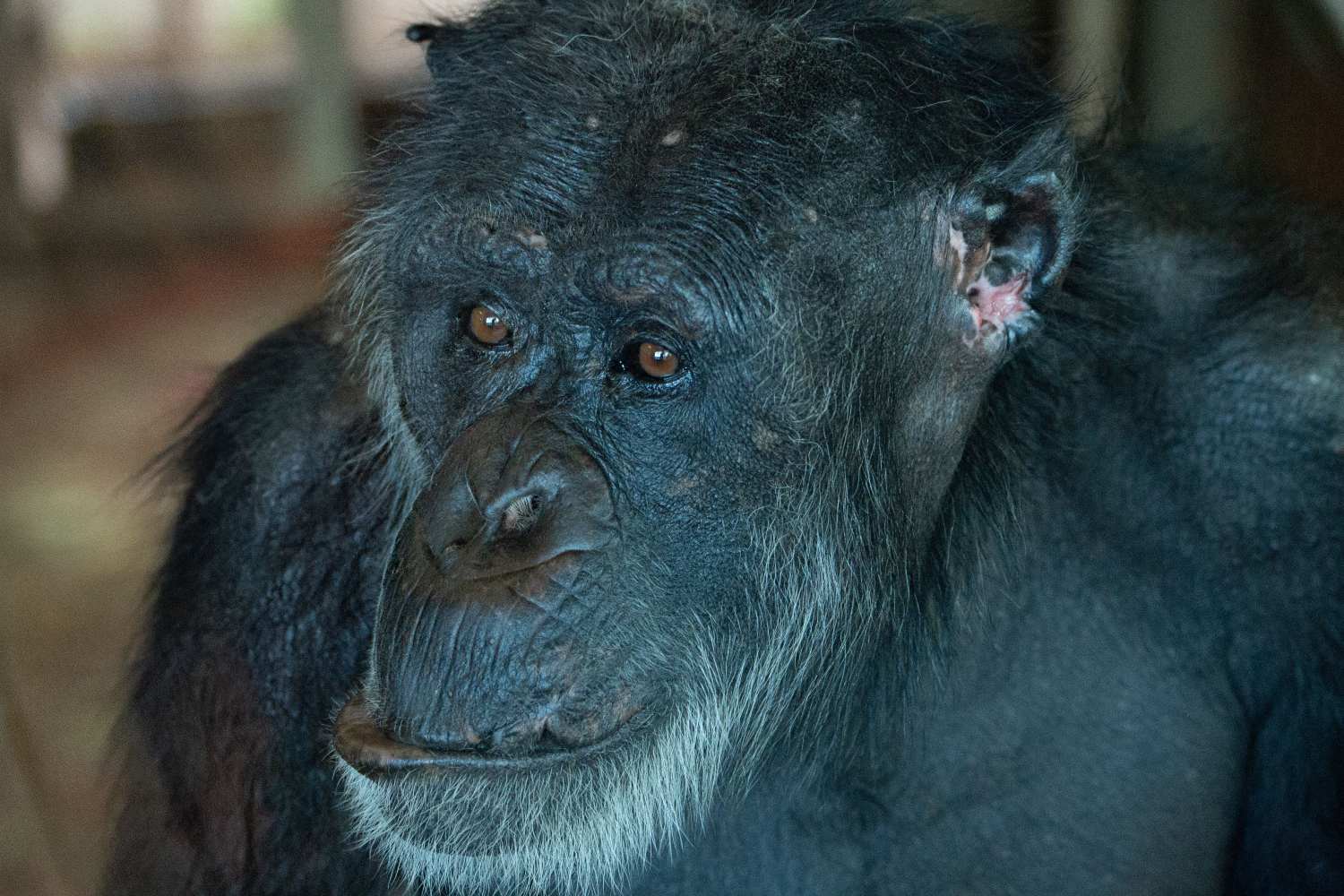
The United States is finally and definitively closing a decades-long chapter in animal testing: on November 18, 2026, the National Institutes of Health (NIH), led by director Jay Bhattacharya, announced that the last 34 federally owned chimpanzees still housed in a laboratory will be transferred from the Keeling Center for Comparative Medicine and Research in Bastrop, Texas, to the Chimp Haven National Sanctuary in Keithville, Louisiana, a 200-acre forested area where they already live over 200 examples withdrawn in the past.
Operations will launch in early 2027, with trips planned as early as January based on each individual’s health, well-being and social connections. As Bhattacharya pointed out, completing these moves finally fulfills the commitment the agency made in November 2015, closing the presence of government records in American research facilities.
From the CHIMP Act of 2000 to the Alamogordo case to the unblocking after 26 years of battles
The path towards this goal began in 2000 with the Chimpanzee Health Improvement, Maintenance and Protection (CHIMP) Act (Public Law 106-551), strengthened in 2007 by the Chimp Haven is Home Act (Public Law 110-170) to prevent re-entry into laboratories, and consolidated in 2015 by the inclusion of all chimpanzees among the protected species of the Endangered Species Act by the Fish and Wildlife Service. Wildlife of the United States, when the NIH promised to withdraw all of the approximately 300 specimens then in its possession.
In 2019 and 2021, however, a veterinary panel blocked the transfer of the 44 animals from the Alamogordo Primate Facility in New Mexico, the 51 from the Keeling Center and the 11 from the Southwest National Primate Research Center in San Antonio, judging them to be too old or sick. The lawsuit filed in 2021 by Humane World for Animals, Humane World Action and Animal Protection New Mexico led to the 2022 federal ruling that declared the blockade in Alamogordo illegitimate, allowing the closure of that center and the move to Chimp Haven in 2025: despite the death of an elderly specimen during the trip, the excellent adaptation of the others convinced the NIH leaders to also give the green light for the Texas survivors.
The enthusiasm of Humane World for Animals and Chimp Haven and the reserves of biomedical research
For Kitty Block, president and CEO of Humane World for Animals, many of these primates were captured from the wild as hatchlings and now deserve to explore open spaces and build new social bonds, while Sara Amundson, president of Humane World Action Fund, and vice president Kathleen Conlee celebrate the end of government confinement in laboratories. Along the same lines, Rana Smith, president and CEO of Chimp Haven, sees the arrival of the last specimen from the Keeling Center as a truly happy ending by the end of 2027. On the opposite side is the position of groups linked to biomedical research, represented by Cindy Buckmaster, former president of Americans for Medical Progress, according to whom elderly animals with strong human bonds and already large enclosures in Texas should be left in the facility they know without making the journey.
