
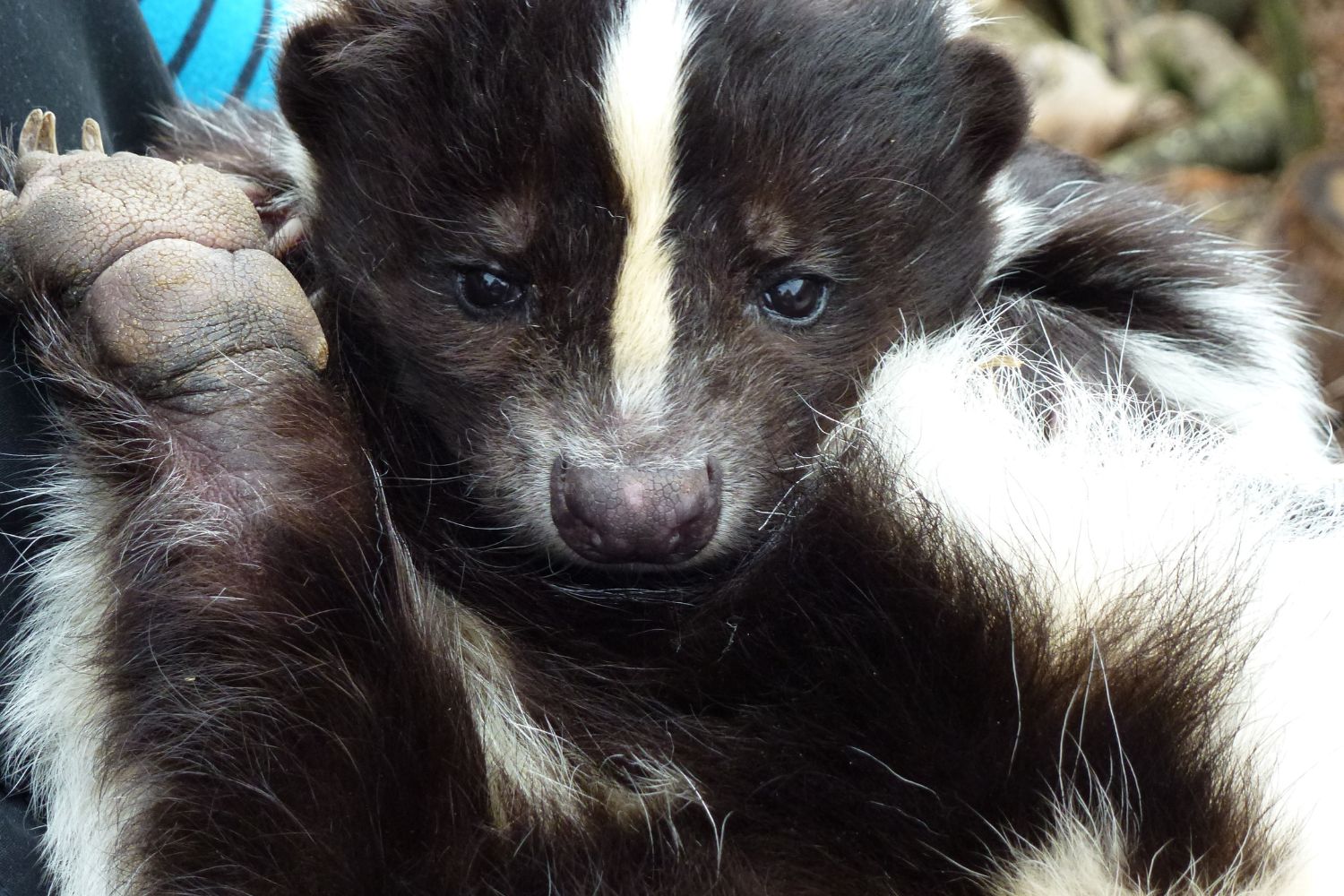
In the landscapes of North America, the Striate stinking (Mephitis mephitis) are experiencing an unexpected transformation: some are progressively recording one reduction in the intensity of their classic white and black stripes. A recent study published on Evolution From an international team of researchers has revealed the reason: the decrease in the number of predators is altering the need for a highly defined warning signal.
The role of strips: a natural warning
The strips of the stinking are not a simple distinctive trait, but a evolutionary signal that communicates danger to predators. This mechanism, known as aposthematismserves to avoid attacks thanks to a visual message that associates the chromatic pattern with the chemical defense of the foul -smelling spray, for which the stinks are famous .
Scientists have discovered that in the areas with less presence of predators, stinking shows greater variability in fur models, with some individuals who have irregular or almost absent stripes. This phenomenon is the result of the “Relaxed selection“, A process in which, reducing the pressure of the predators, diversity is amplified in the genetic traits transmitted to future generations.
Predators and uniformity of the signal
Analyzing 749 specimens preserved in museums, the researchers discovered that The stinking of the most dangerous areas have more symmetrical and marked stripesas evidence of the fact that a greater predatory threat pushes evolution to maintain a clear and uniform message. On the contrary, in safer environments, the need for a uniform signal is reduced and chromatic variability increases.
An observed phenomenon also in other species
This principle does not only concern stinking. Also other animals, when they live in conditions of less danger, tend to lose or change their defensive characteristics. For example, some Birds on islands without predators have stopped flyingWhile Molluscs in quiet waters develop thinner shells.
The role of the environment in the variation of the color
In addition to the predatory pressure, The climate and the territory also affect the coloring of the stinking. The study highlighted that specimens in more humid areas have darker fur, in line with the “Goger rule”, according to which animals tend to be darker in humid environments for better protection or camouflage. In snow -covered areas, however, white fur is reduced, adapting to the context to balance the visibility of the signal.
Evolution in action
This study on stinking shows how evolution is a dynamic process that responds to environmental and biological changes. The reduction of predatory pressure is allowing the stink to explore new chromatic variations, once again highlighting the bond between adaptation and survival.
While their appearance could change, this transformation does not represent a risk for the species. On the contrary, it is proof of an effective adaptation mechanism, which allows the stinking of thrive in constantly evolving ecosystems.
