
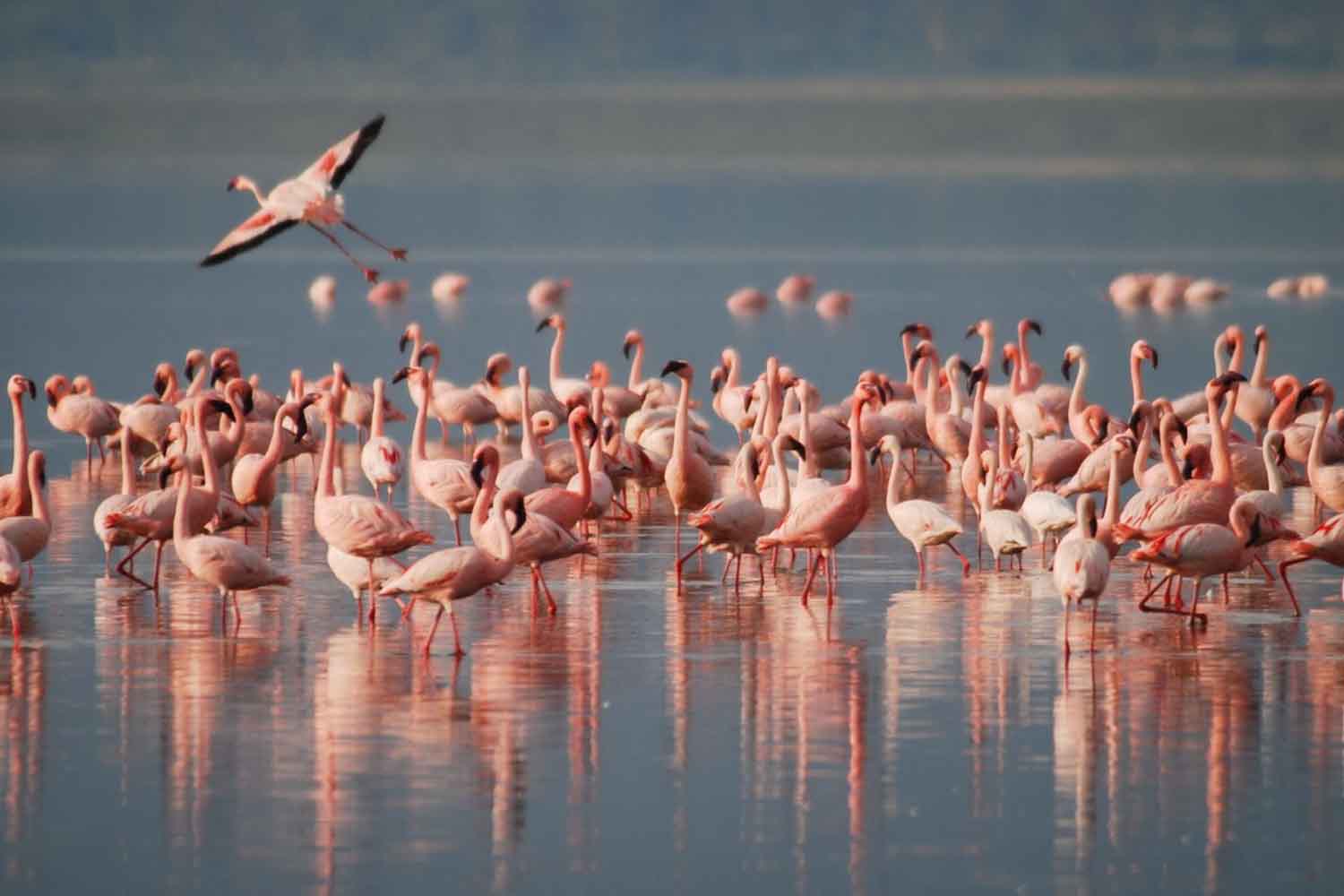
The color, from a distance, seems almost stationary on the surface of the salt. Then it moves. Thousands of small flamingos advance in groups, low, still clumsy, under the gaze of the adults. They were born in Lake Tuz, one of the most important humid ecosystems in central Türkiye, within that large salt flat that crosses the provinces of Ankara, Aksaray and Konya. Initial estimates speak of around 5,000 chicks hatching from eggs in two colonies, with a third still expected. The images taken on June 10 show the little ones in the most delicate period: they learn to feed themselves, to move, to recognize dangers, while their parents remain close.
The data is significant because it comes from a place that in recent years has become a sort of thermometer of the changing climate. Lake Tuz, Tuz Gölü in Turkish, literally means “salt lake”. It is located on the central Anatolian plateau, about 150 kilometers south-southeast of Ankara, in a closed basin, fed by groundwater, two main streams and rainfall concentrated mainly in spring. Natural exits, however, zero. This makes it beautiful and vulnerable at the same time: when the water drops, the lake shows it immediately, without many turns.
The lake that had emptied
By 2021 Lake Tuz had almost lost its pink postcard image. Drought, high temperatures and pressure on water resources had transformed large areas of the basin into a dry expanse, with thousands of young flamingos dead on the cracked bottom. The Landsat satellite images analyzed by NASA had described a clear decline: before 2000 the lake retained water even in the summer months, while between 2001 and 2016 the surface covered by water in August remained below 20% almost every year; in 2008 and 2016 the lake dried up completely.
The climatic explanation lies within a broader framework. The Mediterranean basin, including Turkey, is considered a hotspot of the climate crisis: it has warmed more than the global average compared to the pre-industrial era and has already seen an increase in the frequency and intensity of droughts. In Lake Tuz this means less water in crucial periods, less algae and bacteria available for birds to feed on, and fewer safe areas for nests and natural nurseries for chicks.
The lake also remains a very particular place from an ecological point of view. The protected area, included in the UNESCO proactive list, includes brackish environments, halophilous steppes, wetlands and habitats used by many species of migratory birds. Flamingos especially choose the more isolated southern parts of the lake, where they can nest on small mounds of sand and salt. When the water holds, the system works. When it disappears too soon, the young are cut off from food and the natural protection of the pelvis.
The good news hangs in the water
After the 2021 crisis, the Turkish authorities have started interventions to bring water to the breeding areas and reduce the risk of new deaths. The measures included supplies with tankers and then a more stable system with pipes to convey water to the areas where the small flamingos grow. In 2022, the Turkish Ministry of the Environment spoke of approximately 10 thousand chicks having completed their development thanks to these interventions.
The 2026 season, therefore, is read as an encouraging sign, even if the triumphal tone here must be handled slowly. Fahri Tunç, president of the Doğaya Kuş Bakışı ve Ekoloji association, explained that the number of chicks appears higher than that of the previous season and that the increase will require more protection and more water. The full count will be able to grow with the third colony, while fledging should begin towards the end of August and continue until October.
The problem, however, remained there. By 2025, around 2,000 chicks had been reported to have died due to lack of water, with the role of uncontrolled agricultural irrigation and declining wells listed as among the critical factors. This does not cancel the birth of new flamingos, on the contrary it makes it more important. It shows how the reproductive success of Lake Tuz is linked to a very strict balance: rainfall, canal management, groundwater, summer heat, emergency interventions. It doesn’t take much to move everything to the wrong side.
Lake Tuz has attracted nature photographers, visitors and enthusiasts for years for its seasonal changes, for the white salt surface, for the waters which in some periods turn towards pink shades. But behind the spectacular image remains a very practical ecosystem, made up of fairly shallow water, available nutrients, distance from humans and the right times. For flamingos, that landscape is not a backdrop. It’s the place to be born, grow up, line up with others and prepare for your first flight.
You might also be interested in:
