
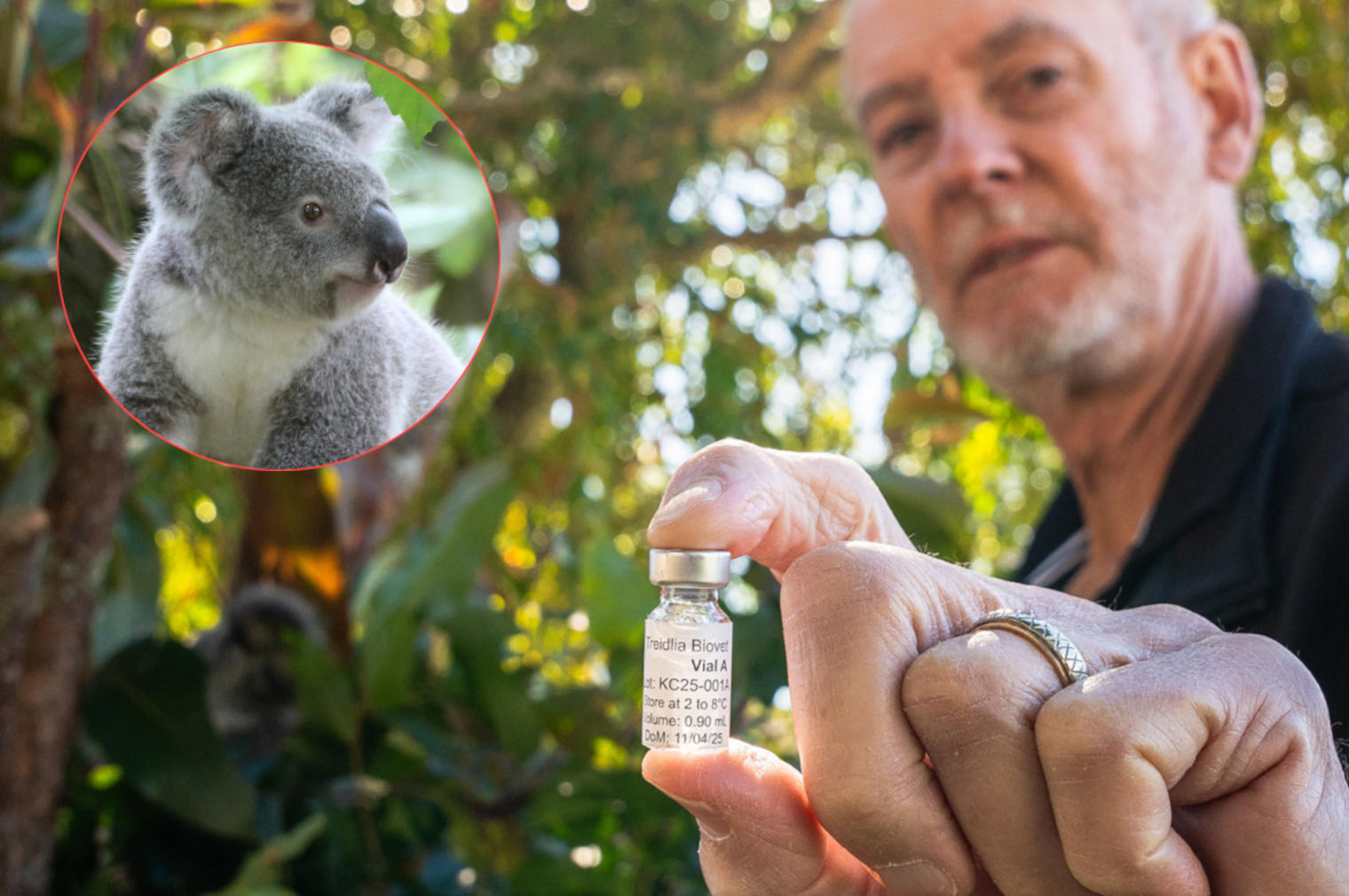
For the first time the federal authorities approved in Australia a vaccine for the Koala against chlamydia, one of the most dangerous diseases for the survival of the species. The drug, developed by the University of Sunshine Coast, requires only one dose and can reduce mortality in the wild colonies up to 65%. A result that represents a turning point in the protection of an animal symbol of the Australian continent.
Because clamidia is a danger
Clamidia in the Koala is caused by a bacterial strain different from that which affects human beings. The effects on animals, however, are devastating: urinary infections, blindness, conjunctivitis and infertility. Many also die due to the difficulty of digesting eucalyptus leaves after antibiotic treatments, the only treatment so far available so far. This prompted scientists to look for a more sustainable solution, capable of protecting the Koala without compromising their diet.
A contagion widespread in the colonies
According to Professor Peter Timms, who guided the project, in many areas of Queensland and the new South Wales, the infection rate reaches 50%, with peaks close to 80% in some colonies. The greatest difficulty, however, remains logistics: identifying, capturing and vaccinating wild animals is complex and requires consistent investments. For this reason, scholars aim to obtain funds for a national vaccination campaign.
A species at risk
In 2022 the Australian government included the Koala in the list of species at risk of extinction in most of their natural habitat, from Queensland to Act. In the last twenty years the population has collapsed drastically due to climate change, drought, forest fires, road accidents and diseases. Csiro estimates indicate that in 2023 they lived in Australia between 224 thousand and 524 thousand specimens, against 331 thousand-605 thousand of 2012.
A concrete hope for the future
The new vaccine for the Koala therefore represents a concrete hope to preserve the species. Although not a simple or immediate solution, it could drastically reduce cases of chlamydia and give breath to the populations already proven by the loss of habitat. A scientific and logistical challenge that appears more urgent today than ever to guarantee a future for one of the most loved and iconic animals of Australia.
Don’t you want to lose our news?
You may also be interested in:
