
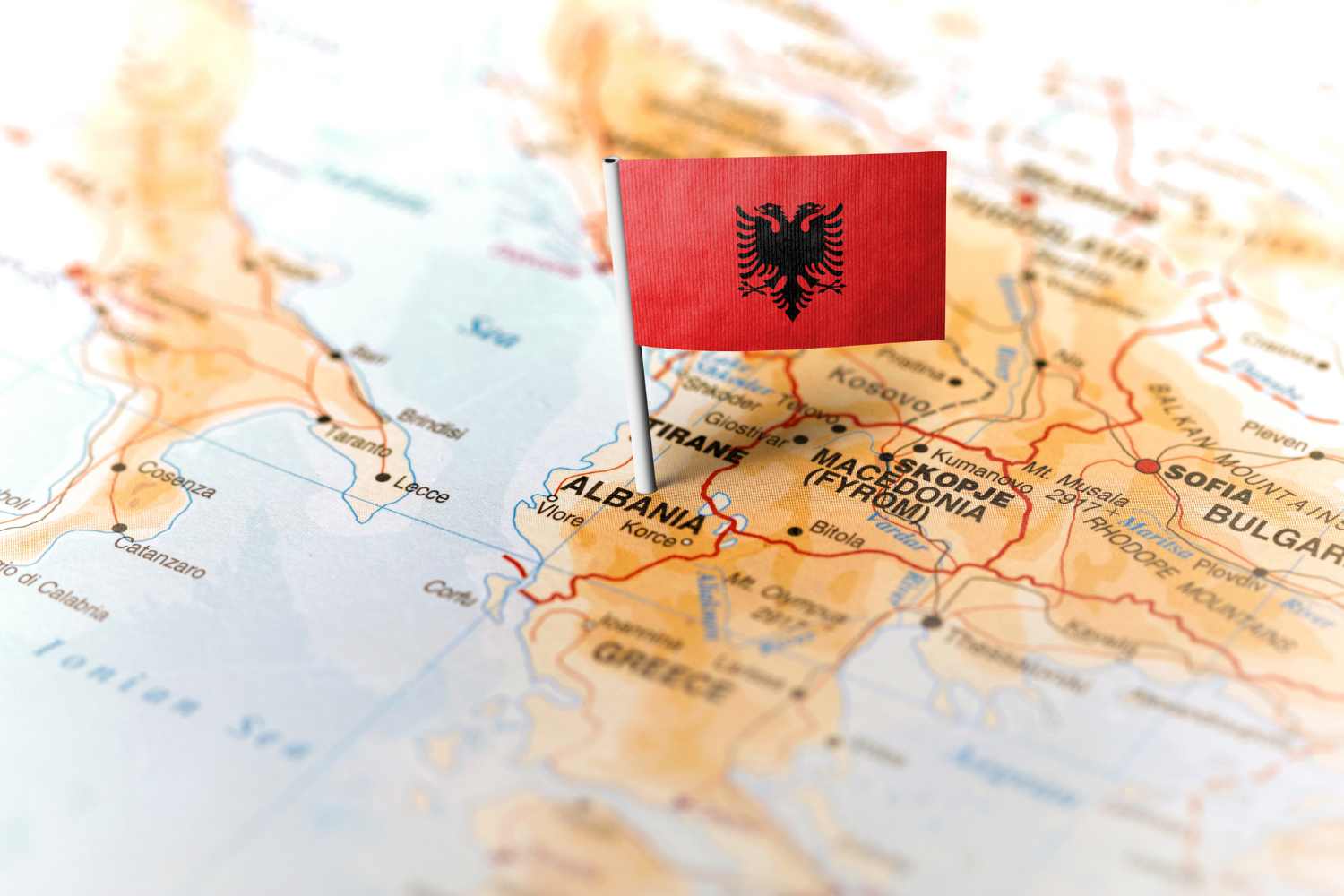
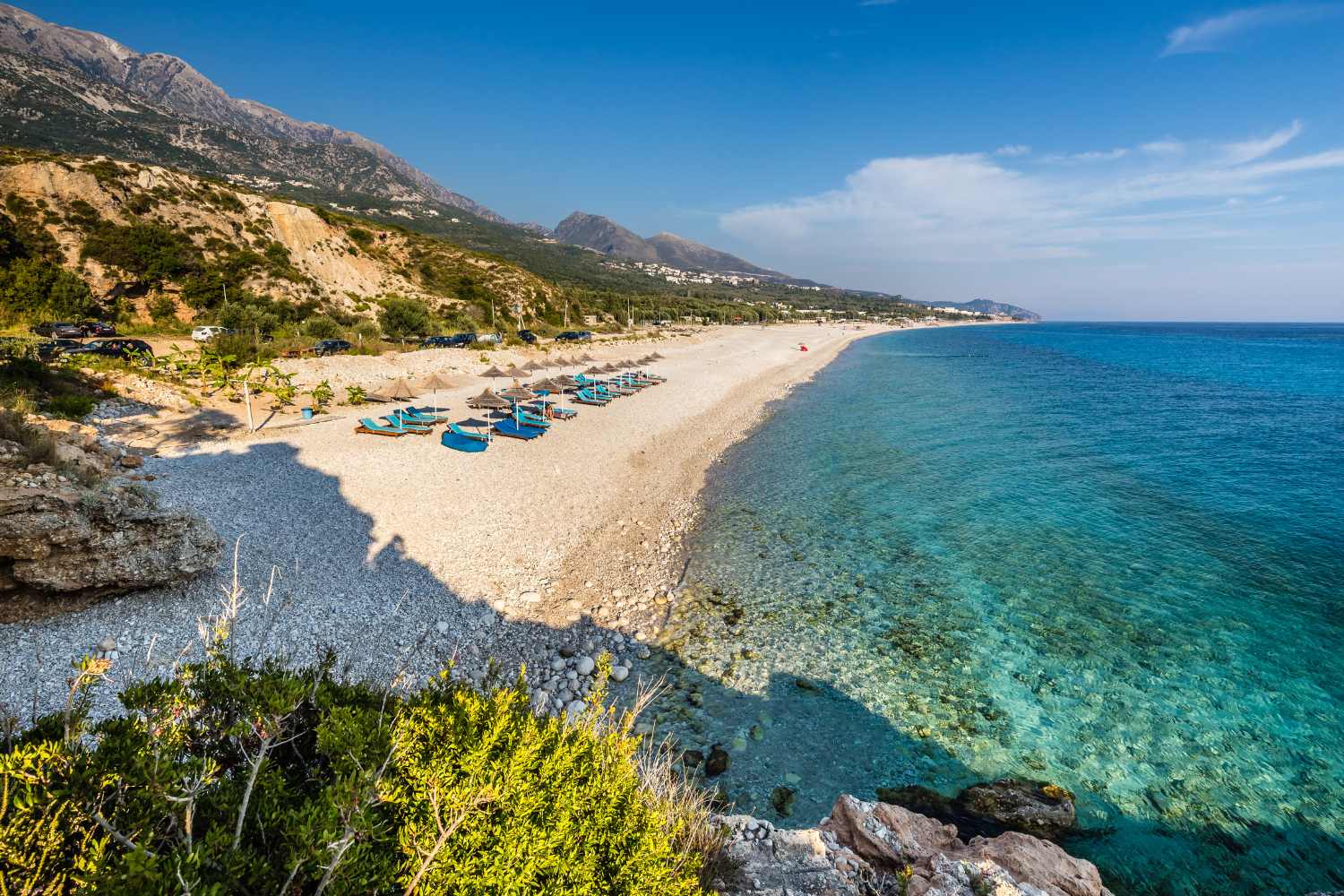
There were once the wild bays, the silent beaches of the Ionian coast, the villages suspended between sea and mountains, the kind profiles of a land that still brought the signs of its history closed to the world.
For many years, Albania has kept that promise of intact Mediterranean that seemed lost elsewhere. Today, however, something seems to creak
The tourist boom, applauded as an engine of development and economic redemption, risks transforming into an unsustainable weight for a fragile territory, full of natural beauty and resources that are not infinite. In 2023 the country exceeded 10 million international visitors, a number that becomes even more impressive if compared to approximately 2.8 million inhabitants. And this year the figures continue to grow, fueled by low cost flights, tourist packages at unbeatable prices and a promotion that presents Albania as the last economic frontier of the Mediterranean.
The government has widened doors to foreign investments. Hotels, guesthouses, coast structures, restaurants overlooking the sea. Cantieri that arise quickly, sometimes without careful planning, to intercept a question that seems unstoppable. Still, the most urgent question becomes: how much can such a fragile land hold in the face of such an intense pressure?
Prices, precariousness, loss of identity
Overertourism, mass tourism, is not an abstract concept, but a phenomenon that is reflected in people’s daily life. In the most attractive coastal areas, rents have reached inaccessible figures for residents, slowly expelled from their own countries to make room for seasonal rooms and tourist apartments. In historic centers, the traditional shops close, replaced by souvenir shops and places for visitors. The price pays are also the workers and seasonal workers, often employed in precarious conditions and in a labor market that does not guarantee protections or stability, as reported by Balkan Insight.
The biggest risk, however, concerns the loss of authenticity. That feeling of being in a real place, inhabited by those who live it all year round, can vanish under the impact of mass tourism that demands immediate services, often standardized, at the expense of local traditions and identities.
Collapse ecosystems
The Albanian environment is not a simple background, but a protagonist of this tourism race. And here, the signs of suffering are already evident.
The case of Lake Ohrid – on the border between Albania and Macedonia of the North – a wonder recognized by UNESCO for the great historical value and the biodiversity that distinguishes it, in which over 200 endemic species live, is emblematic. Yet, the uncontrolled expansion of tourist structures on its banks has brought an increase in organic pollution, caused by unsolicited discharges and inadequate disposal of waste water. The waters are loaded with substances that threaten fauna, fishing and local agricultural activities, as reported by the Reuters agency.
On the Ionian coast, the dunes disappear under cement, the beaches erod and the aquifers are lowered to feed hotels and tourist facilities. The landscape, which represents the true treasure of Albania, is transformed under the eyes of those who live there, with a speed that leaves no room for second thoughts.
Climate change, with shorter tourist seasons and extreme weather phenomena amplifies the fragility of these places. The summers become drier, the most frequent fires, the increasingly scarce water resources. The signals are there, and it would be a mistake to ignore them.
The case of Vlorë airport
A symbol of the contradictions of this development is the project of Vlorë International Airport, under construction near the Narta lagoon, one of the latest coastal ecosystems intact of the Adriatic. Pink flamingos, Aironi, Pellicani: over 200 species of migratory birds depend on this habitat.
Biologists and environmental associations, such as Birdlife International, have launched appeals to stop a work that risks compromising in an irreversible way a very precious natural heritage. But the interests related to tourism development advance quickly, leaving little room for the precautionary principle.
Which future to choose
Faced with these signals, Albania is located in front of a crossroads. Continuing to pursue ever higher numbers, building new structures and focusing on mass tourism, it could empty the country’s attractiveness of meaning. The risk is to lose just what makes Albania unique: landscapes, environmental quality, livability for those who live there.
An alternative exists. Limit access to the most fragile areas, in some periods, and to define tourist load limits for beaches, lagoons and natural parks represents a concrete first step. Moratory on new buildings in coastal areas, waste management plans, enhancement of sewage networks and investments in purification would be needed. Tools that neighboring countries, such as Italy, have often neglected, paying the price in coastal erosion and loss of biodiversity.
Different tourism is possible
Moving attention to the hinterland, mountains, rural villages, offering slow and cultural tourism, could become a strategy capable of distributing economic benefits and reducing pressure on the coasts. Creating value through the direct involvement of local communities becomes crucial: listening to those who live those territories, guarantee a redistribution of economic benefits and encourage real participation in decision -making processes.
Rethinking Albanian tourism today means safeguarding the future of the country. This is not an ideological choice, but a concrete necessity. The time to act is not infinite, and the beauty of Albania deserves to be protected before it is suffocated by the weight of its own success.
Don’t you want to lose our news?
