
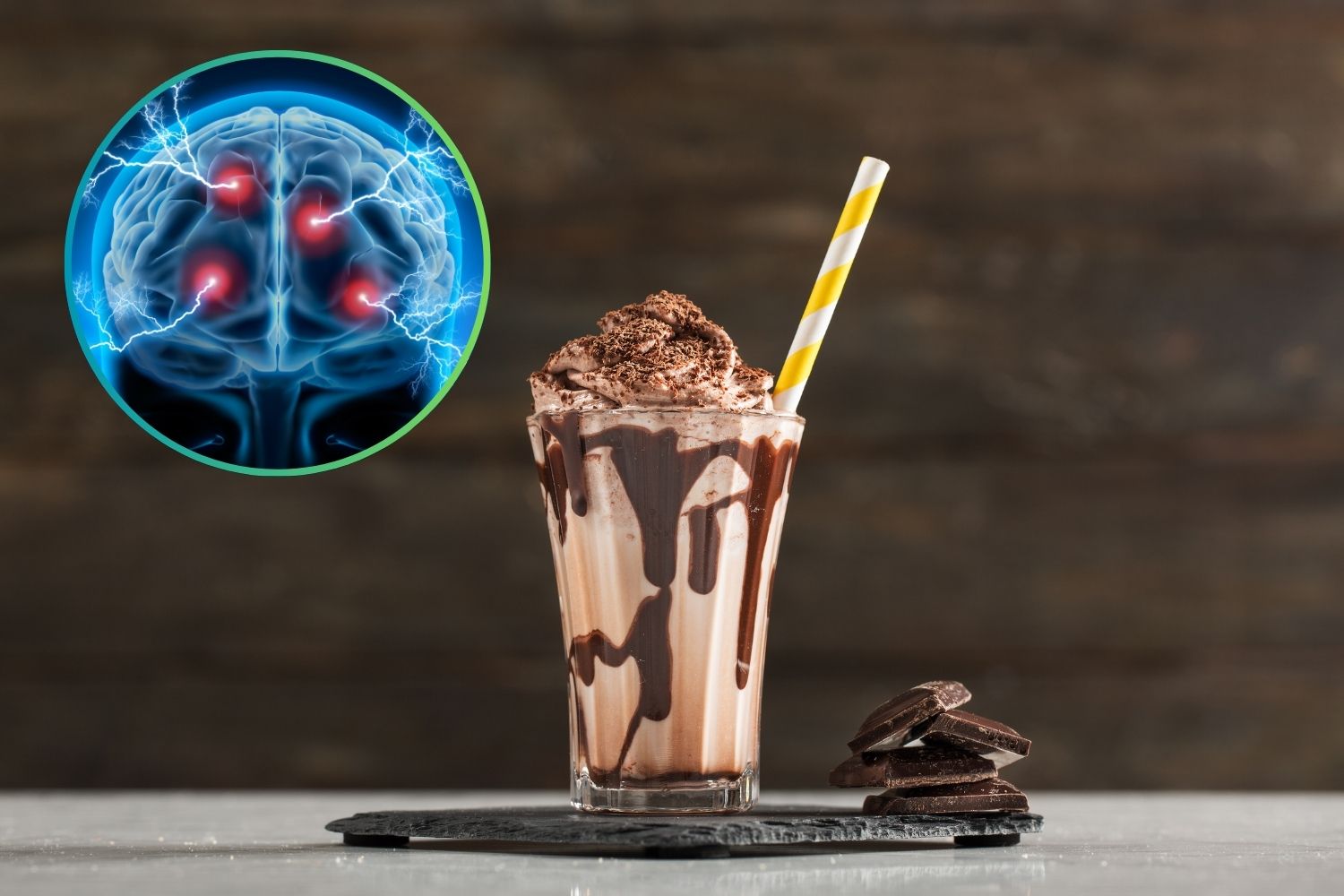
A takeaway pizza or a fast food sandwich, every now and then, look like a small innocent vice. But research conducted at the University of South Wales reveals a surprising figure: even a single meal rich in saturated fats can reduce, within a few hours, the flow of blood to the brain, increasing the risk of stroke and, in the long run, dementia.
Four hours are enough to alter the brain flow
Grassi are fundamental for our body: they provide energy, transport vitamins and protect organs and tissues. But not everyone has the same impact on health. There are saturated fats, for example in seasoned cheeses, butter, cream and worked meats, and unsaturated fats, contained in blue fish, nuts, seeds and avocado.
Numerous studies have already shown that a meal rich in saturated fat can damage blood vessels and the heart. Now, however, we know that this effect also touches the brain. Our nervous system, in fact, has no significant energy reserves and depends on a constant flow of blood to receive oxygen and glucose.
The body regulates this influx through a mechanism called dynamic brain self -regulation, which keeps the flow stable even when the pressure changes (for example when we get up or move). If this system weakens, the brain can receive too much or too little blood, increasing the risk of damage over time.
The study: a fast food milkshake to measure the impact on the brain
To understand how quickly a fat meal can affect the brain, the researchers involved 20 men between 18 and 35 years old and 21 men between 60 and 80 years old. They measured the health of the blood vessels earlier and four hours after taking a meal with high saturated fat content.
The “meal test” was a Milkshake called “cerebral bomb”: heavy whipped cream as a main ingredient, for a total of 1,362 calories and 130 grams of fat. The goal was to simulate the lipid load of a typical fast food. The researchers checked the ability of the blood vessels to dilate using the dilation mediated by the flow and, to test the brain response to the pressure variations, they made it possible to perform free body squats by monitoring the blood flow with Doppler ultrasound.
The results were clear:
These alterations appeared within a few hours of the meal, demonstrating that the effects are not limited to the long run.
Because each meal can make a difference
The British health service (NHS) recommends not exceeding 30 g of saturated fats per day for men and 20 g for women. In practice, however, between dinners outside, fast lunches and take-off take-offs, many regularly exceed these quantities. The question becomes even more relevant if we think that we spend most of the day in the state of post-prandial lipaemia, that is, in the phase after meals in which the levels of fat in the blood are high and the body can be more vulnerable.
To protect heart and brain, the guidelines advise to replace saturated fats with polyunsaturated ones, present in foods such as blue fish, seeds and dried fruit. They are associated with long -term benefits, but it is not yet clear how the brain reacts to a single meal full of these “good” fats.
Another open question concerns women: we do not yet know how the female brain reacts to a fat meal, yet in old age the risk of stroke and dementia is higher than men. The message, therefore, is simple: what we eat immediately affects the health of our brain. It is not just a matter of long -term habits: every single meal matters.
Don’t you want to lose our news?
You may also be interested in:
