
Take a rock rich in magnetite, put it in contact with water a 200 °C and over 100 bar pressurethen leave it there for 60 days. Eventually hydrogen appears. However, if the same magnetite is reduced to powder, under the same conditions it produces about five times more. This is what researchers at Edith Cowan University in Western Australia observed, working on a mineral that is practically found underfoot in the Pilbara.
The study published onInternational Journal of Hydrogen Energy adds an interesting piece to the research onnatural hydrogenwhat can form underground through reactions between water and iron-rich rocks. Here the quantity of magnetite matters, of course. But how the rock is made also matters a lot: how much surface area it offers to water, how many pores it has, how many fractures allow fluids to slip into where the reaction can take place.
The same magnetite, five times more hydrogen
The experiment compared two versions of the same material: a slab of natural magnetite and finely powdered magnetite. Both remained for two months in water at pH 9, at 200 °C and at a pressure of 103.4 bar, conditions chosen to reproduce a deep hydrothermal environment.
The dust produced 0.052 millimoles of hydrogen per gram of rockapproximately five times the yield of the plate. The reason is very physical: a stone reduced into tiny fragments exposes an enormous amount of surface area to water. In the compact rock, however, water must make its way. And to do this it needs precisely those imperfections that we would normally call cracks, pores and fractures.
During the 60 days the surface of the plate also changed. The analyzes showed a transformation of part of the magnetite into hematitetogether with greater roughness and microporosity. The layer of hematite that forms on the surface can then slow down the reaction, almost putting a lid on the spots that are still available. Powder has an advantage: it has many more fresh sites for water to come into contact with. It’s a tiny difference to see by eye and quite significant below ground.
Because everyone looks to the Pilbara
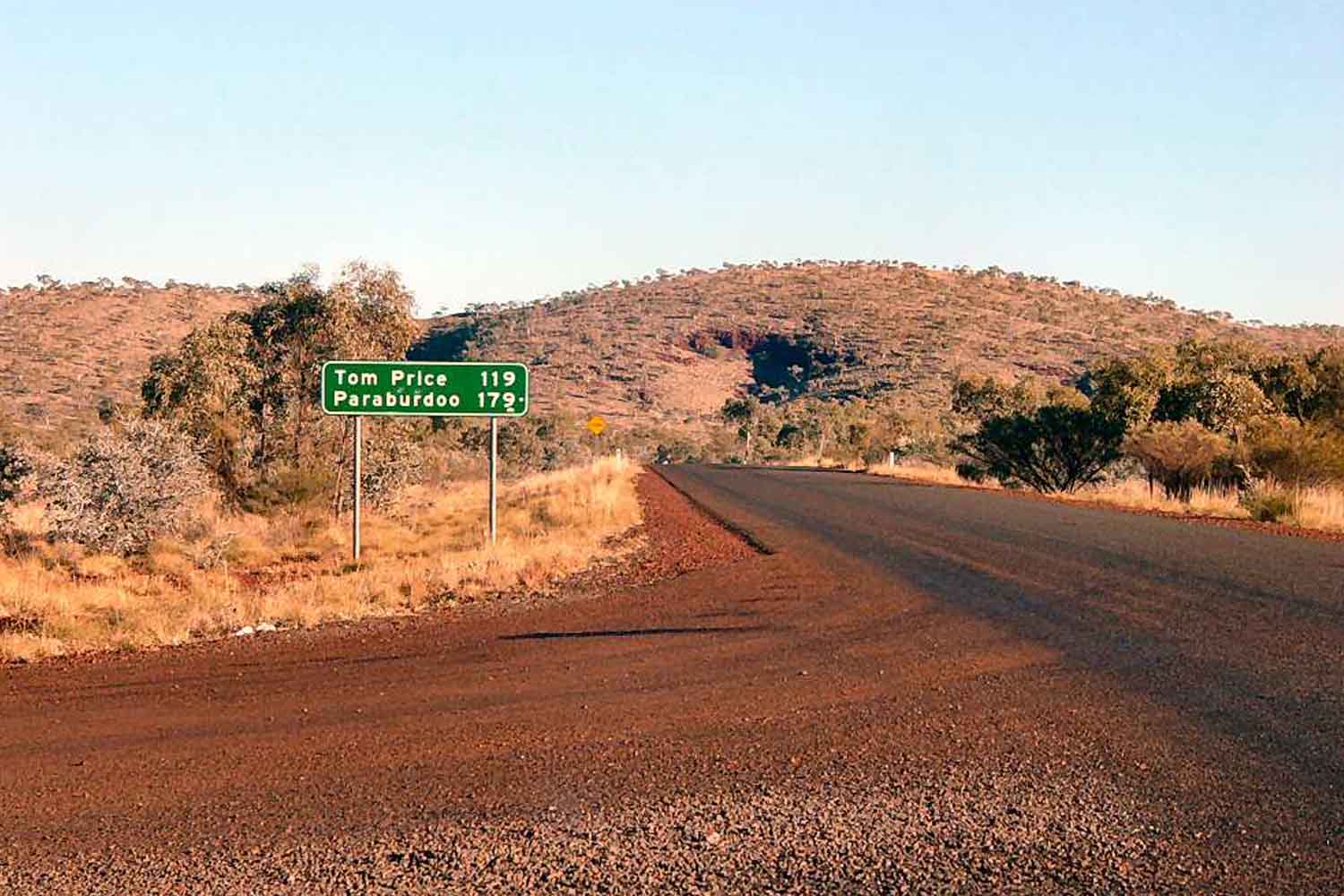
The Pilbara, in Western Australia, is famous for its gigantic layered iron formations, the banded iron formations. They are very ancient rocks, very rich in iron minerals and already at the center of one of the largest mining industries on the planet.
Inside these formations there is also magnetite. And if hot water and magnetite can react to produce hydrogen, the Pilbara underground becomes a natural laboratory the size of a region.
According to Stefan Iglauer, from the School of Engineering at Edith Cowan University, the work shows that hydrogen production also depends on the ability of water to reach fresh mineral surfaces through fractures, pores and permeable pathways. A geological formation very rich in magnetite but practically impermeable could therefore be less interesting than an area where the rock has been broken and flowed through by fluids for millions of years.
This is probably the most useful detail of the study: instead of just looking for “where is there iron”, you can start to narrow down the map by asking yourself where water and iron can really meet.
Hydrogen that is formed without an electrolyser
The hydrogen we are talking about is called natural or geological because it arises from processes that occur in rocks. It is different from green hydrogen produced above ground by passing renewable electricity through water in an electrolyzer.
There are various mechanisms underground capable of releasing it. One involves minerals containing iron: during certain reactions with water, iron oxidizes and part of the hydrogen contained in water molecules can end up in the form of H₂. A review published in 2026 places one of the favorable windows observed for various geological hydrogen generation processes between approximately 200 and 315 °C.
For this reason, in recent years, research on natural hydrogen has begun to resemble less and less a curiosity for geologists and more and more a new campaign of energy exploration.
At the Edith Cowan University they are already looking at possible applications. Alireza Keshavarz speaks of Western Australian formations as a potentially enormous resource and Kaveh Moghanirahimi, first author of the study, even indicates a possible future production capable of strengthening the region’s energy autonomy. These are perspectives that will have to come from the real underground, which is much less collaborative than an experimental chamber, but they explain well why a handful of magnetite kept in hot water for two months is attracting so much attention.
The next work will therefore be much larger than the container used in the laboratory: understanding where these conditions really exist, with what continuity the hydrogen is produced and above all where it manages to accumulate instead of dispersing through the rocks. Meanwhile, the Pilbara offers a rather concrete indication. Under that red earth, the difference could be something apparently insignificant: a crack large enough to let water through.
