
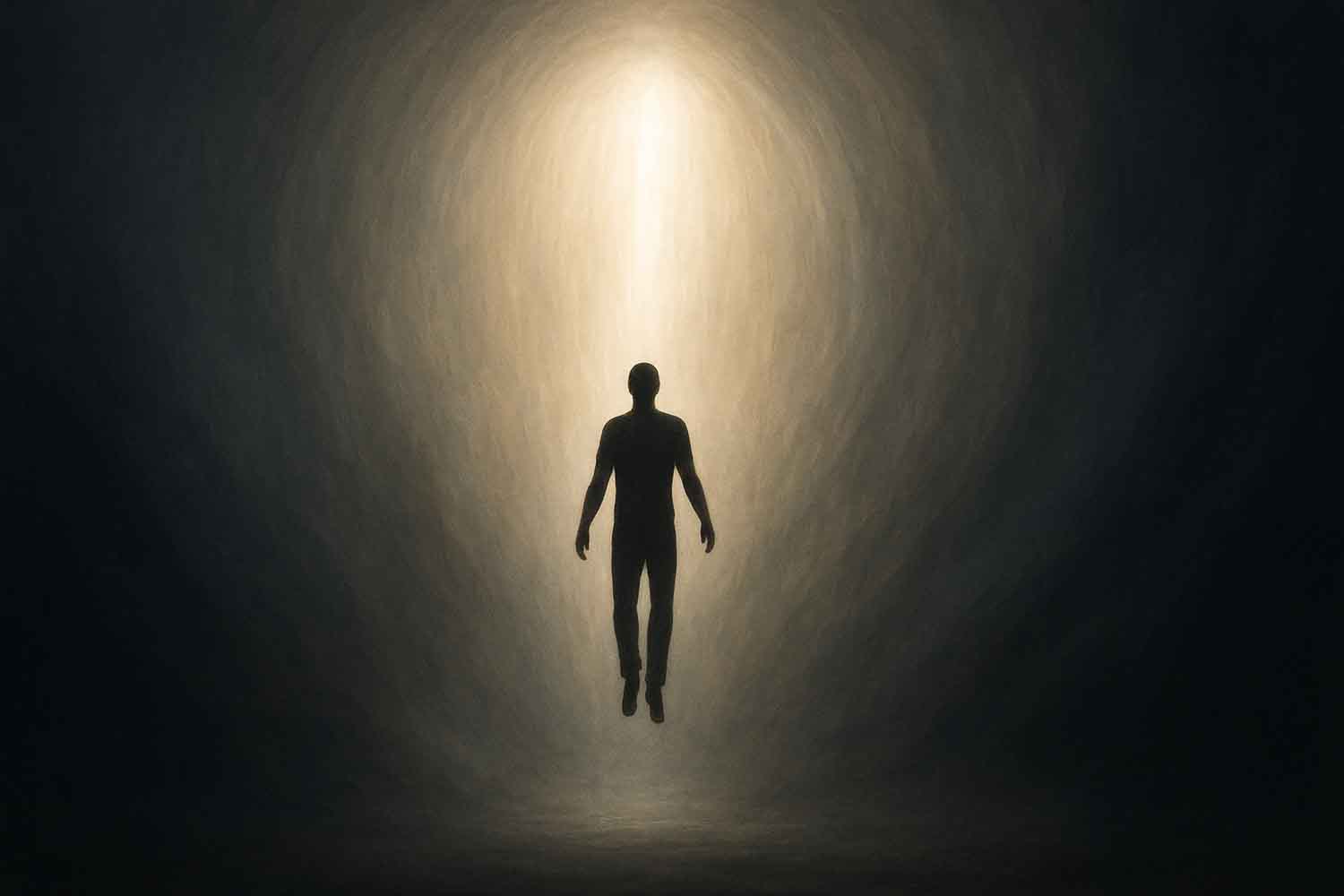
There are those who felt out of the body, those who crossed a tunnel towards an intense light, those who have already met dear people who have already been death. The experiences of pre-minor (nde- Near Death Experiences) are extraordinary stories of those who have been, even for a few minutes, clinically dead.
Modern medicine today manages to revive people after cardiac arrests, trauma or deep coma. And thanks to these resuscitation, the cases of those who return with a vivid memory, outside the ordinary, yet shiny. An experience on the border between consciousness, neuroscience and spirituality that intrigued scientists, doctors and philosophers for decades. And who still leaves a question open: what happens to mind when the body dies?
The experiences of pre-making are not so rare and follow common schemes
According to studies, between 4% and 9% of the population, they lived a NDE, a percentage that rises to 23% among critical patients. But also healthy people, who have only believed they are in danger, can live one.
Those who experience it almost always tell the same phases:
In many cases, people report to listen to the doctors who declare them dead, but without panic: only serenity. According to a research published in Yearbook of Intensive Care and Emergency Medicinethese phases are so repeated that they are now codified.
Where the concept of NDE is born from
The term “Near Death Experience” was used for the first time by doctor Raymond Moody in 1975, but the experiences had already been described for centuries in spiritual and religious contexts. Already in the late 19th century, the French psychologist Victor Egger spoke of “EXPERIENCES OF MORE DEATH”based on stories of soldiers and mountaineers who survived extreme situations.
The theme began to affect medicine and neuroscience especially with the advent of modern resuscitation techniques, which made the “returns” to life more frequent after a cardiac arrest.
Today, there are scientific stairs to measure the NDE, such as the Wcei (Weighted Core Experience Index) and the Greyson scale, used to collect and analyze these stories systematically.
Scientific hypotheses
What happens to the brain during a nde? There are many theories, but no definitive.
Some researchers, such as Charlotte Martial of the University of Liegi, believe that the NDE are linked to neurochemical mechanisms activated by extreme stress. There is talk of:
Other studies connect the nde to the effects of natural psychedelic substances produced by the brain itself, similar to the DMT (Dimethyltriptamine), known as the “molecule of the spirit”.
A 2018 research conducted by an Imperial College team compared the descriptions of over 15,000 psychedelic “trips” with hundreds of nde: the similarities are surprising.
In addition to the serene and bright experiences, there are also negative nde. There are those who tell visions of emptiness, insulation, darkness or hostile entities. These less frequent stories are often kept hidden for fear of being judged or not understood.
According to studies, there is no evidence that “good” or “bad” have different experiences. The disturbing nde can affect anyone and are often experienced as a traumatic event, which leaves deep signs in the psyche.
What changes after a nde
Almost all the people who have lived a NDE say they have had an inner transformation. Priorities, relationships, way of life change. Many stop chasing material objectives and begin to seek meaning, authenticity, presence.
According to Canadian research, some participants have changed work or founded new companies, oriented to leave a positive impact. Even those who have not had a nde, but found themselves close to death, report similar effects, even if mild.
Can we really explain what happens to consciousness when the body “dies”?
Experts admit that we still don’t have tools to fully understand what happens during a NDE. The stories come after days, months or years, and are therefore subject to memory distortions.
According to Professor Bruce Greyson, one of the greatest scholars of the phenomenon, “the nde challenge the current psychological and neurological theories”. It is possible that a mix of personal beliefs, cultural context and physical conditions triggers an altered state of consciousness that simulates a post-Morthem experience. But it’s just a hypothesis.
New research open even more complex scenarios. In some recent studies, cells taken from declared organisms dead have managed to reorganize and form new living structures, such as xenobots or anthrobot: real biological “micro-robots” capable of moving, replying and interacting with the environment.
According to the researchers, these cells are neither live nor death, but in an “intermediate state” that can be activated with nutrients and chemical signals. A hypothesis that challenges the way we define life and opens new questions about cell consciousness and autonomy.
The experiences of pre-making put us in front of a truth: we do not know everything about consciousness. Even if science seeks physiological explanations, the stories of those who have returned from the threshold of death continue to disturb, intrigue, inspire.
And perhaps it is precisely here that the NDE have their greatest value: they force us to look at life from another perspective.
You may also be interested in:
