
Mum makes all types of fried foods, specially bought flours and obsessive preparation, while later on dad cleans all types of vegetables (to be sautéed, obviously). Not to mention grandma’s Christmas desserts, between honey and butter it’s the sugar festival. It’s Christmas, my dears, do you want us not to engage in high-level culinary works? Of course not, but it shouldn’t be a competition in which everyone has to eat, swallow anything and gorge themselves without wanting to.
Yes, because since “Come on, let’s eat, it’s a party” to “come on, why don’t you eat anything?“It’s a moment. And in that moment a vortex of uneasiness can open up that you would just like to silence everyone.
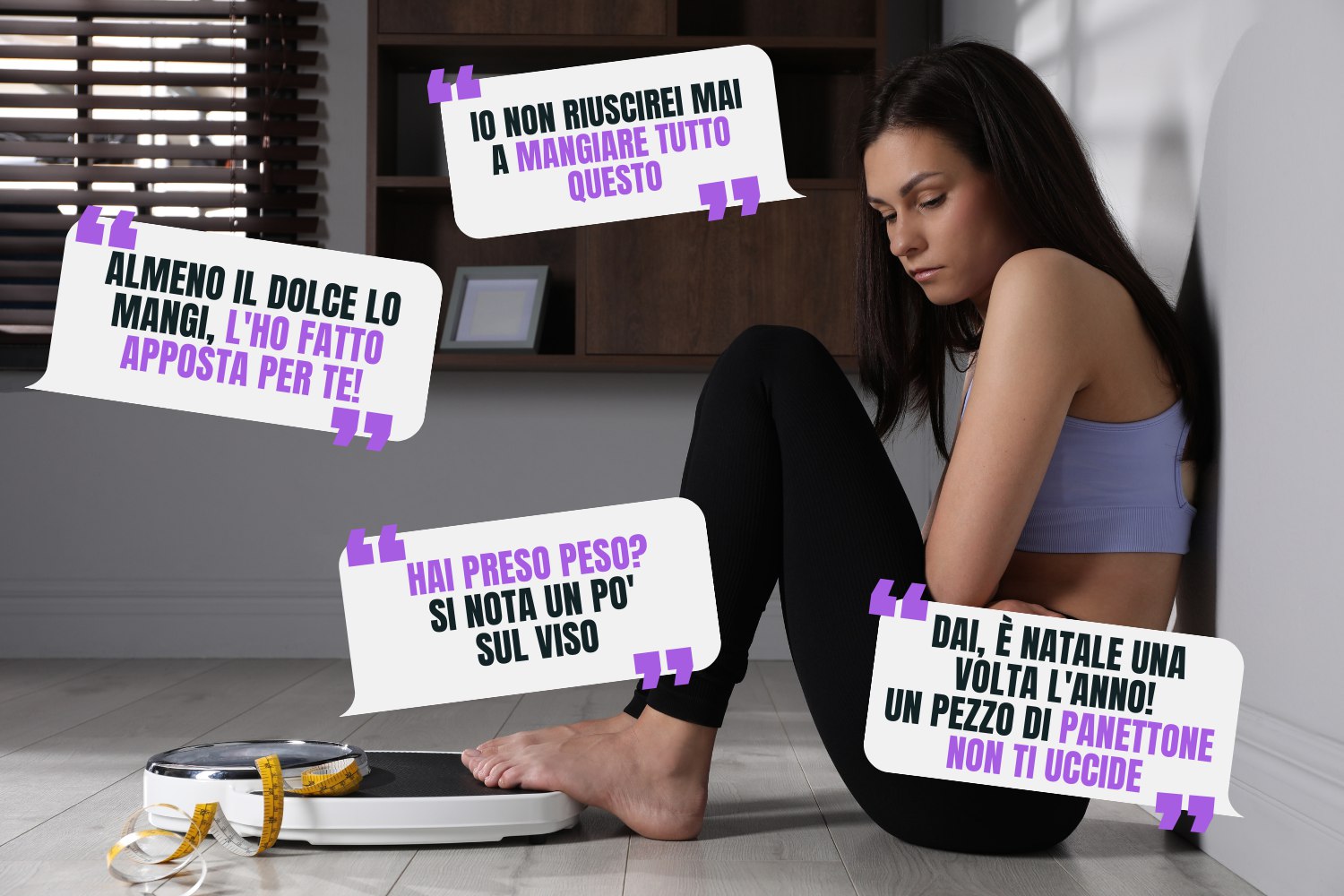
What people don’t think, in fact, is that the Christmas holidays can be a difficult time for those living with an eating disorder. Phrases that are harmless to us or said with good intentions become real abyss from which it is complicated to climb back out. That joke about “lack of appetite” or the invitation to “eat another dish, it’s Christmas anyway” is not just an extra phrase at the dinner table, but it is a pressure that can have a profound impact.
View this post on Instagram
The phrases you should never say at the table
“Come on, eat a little more, it’s Christmas anyway!” or “Come on and eat some dessert, I made it especially for you!”
These types of comments may seem innocent. In reality they may have the silent ability to increase an already raging sense of anxiety, increase feelings of guilt or pressure. Each person has their own rhythm and nutritional needs
“Don’t worry, once a year doesn’t hurt!”
Simplifying an eating disorder as something that can be easily overcome on a special occasion not only minimizes the difficulty, but may make the person feel even more isolated.
“But eat, it won’t hurt you!”
The presumption of knowing what is good for another person can be harmful: each individual faces their limits differently, and such a phrase is never helpful.
“Look how much I ate! It must be delicious!”
Sharing your experience without empathy could make those suffering from an eating disorder feel even more inadequate, fueling a sense of frustration.
“At Christmas you have to celebrate with food!”
Pushing someone to participate in lunches or dinners so that they respect a “tradition” can be an enormous burden. The holiday is not only linked to food, but to company and human warmth.
“Have you gained weight? It’s a little noticeable on the face” or “I can’t eat all of this”
This type of sentence focuses on physical appearance, a particularly sensitive point for those with an eating disorder. The focus on weight, even if disguised as a casual “observation”, strengthens the link between personal value and physical appearance, fueling shame or self-criticism and a sense of inadequacy
“You’re eating too little, you look sick!” or “Eat a little more, it’s Christmas!”
This, if possible, is the worst. Comments on physical appearance, always and not just during the holidays, are never appropriate. They can bring up feelings of shame and anxiety.
What to do instead?
Being first and foremost aware of the difficulties of others and using empathy is the best gift we can give, especially during the holidays. Comments of that type, even if made without bad intentions, should always be avoided, with anyone. Judging what and how much a person eats, commenting on their body or pressuring them at the table are not good for anyone. Everyone has a unique relationship with food and their body and a DCA should never be underestimated.
Instead of focusing on how much we eat and who eats what, we could start celebrating companionship, affection and traditions. Rather than making a comment about the dish someone just left, we can appreciate their presence and the time spent together. Rather than criticizing portions, we can ensure that the table becomes a place where everyone feels free to choose without judgement.
We create tables where everyone feels welcomed and respected, without judgments on food and bodies. Christmas is an opportunity to build moments of authentic sharing, where emotions and bonds with others prevail over everything else. Let’s ensure that every person can experience the holidays in peace, without feeling judged, and without having to fight against external pressures. A good dish is not only a full one, but also one served with respect and understanding.
