
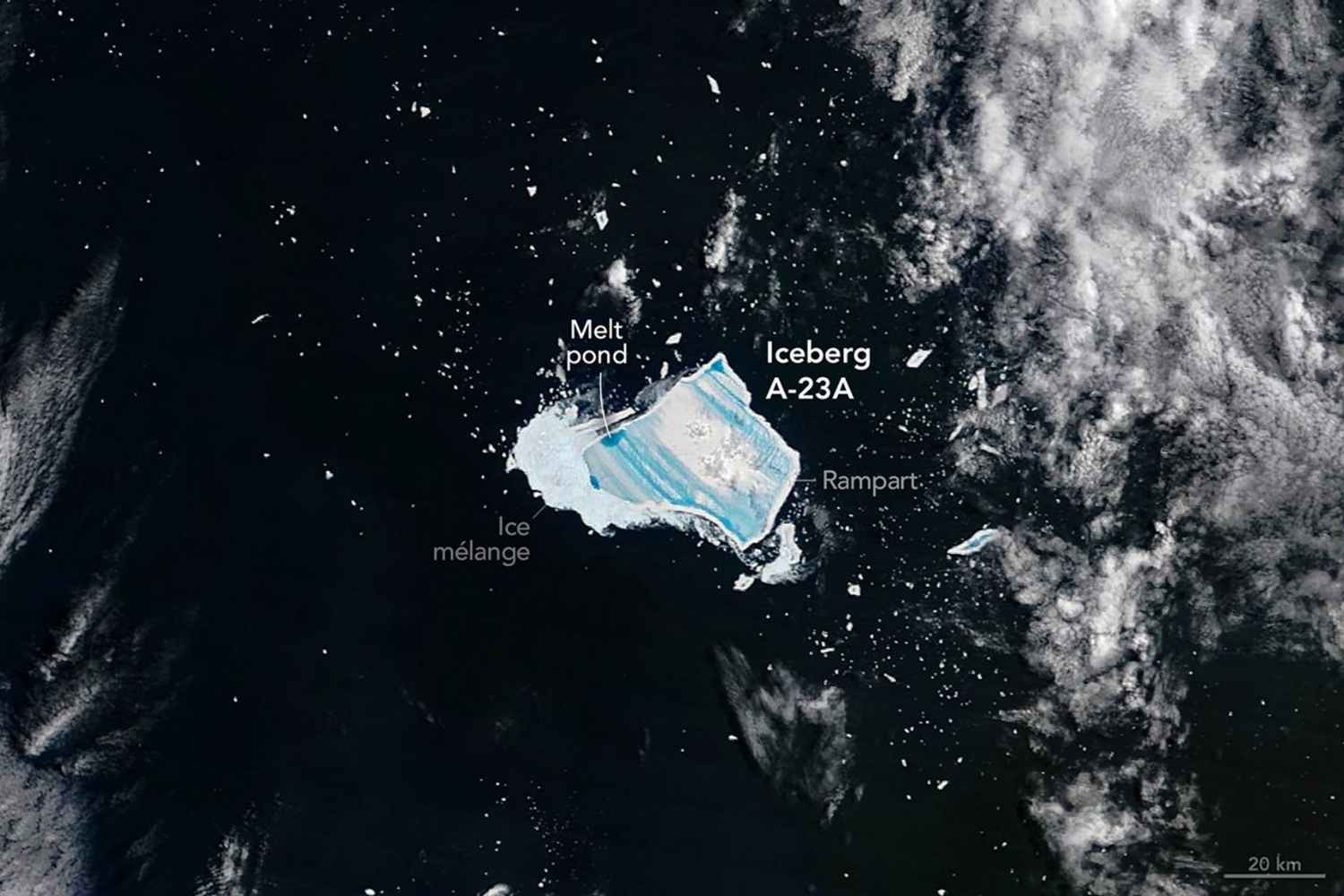
From space, the a-23a iceberg appears like a floating blue giant. The vast blue pools of meltwater that cover its surface are not just color, but a sign that the ice is cracking from within. Almost forty years after its separation from the Filchner ice shelf, this Antarctic giant is soaked in water, and the fractures on the surface tell of its slow disintegration.
Satellite images from the NASA Earth Observatory show details that can be understood even without scientific instruments: water stagnates in low points, forming deep basins and concentrating weight in critical areas of the ice.
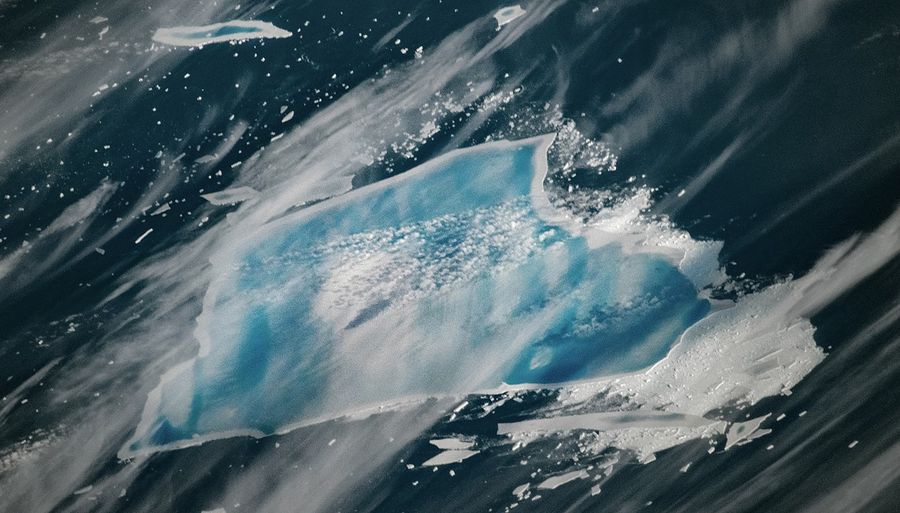
The weight of the water breaks the ice
An iceberg floats because ice is lighter than water. But when large amounts of fresh water accumulate on the surface, the weight increases. Water seeps into existing cracks and widens them, creating fractures that can break the sheet from the inside.
“The weight of the water builds up in the cracks, forcing them open,” explained Ted Scambos, of the University of Colorado at Boulder. In this way, the iceberg does not have to melt completely to collapse: all that is needed is for the melting water to reach fragile areas and trigger the fractures.
Ancient striations that guide the water
Long blue and white streaks can also be seen on the surface of the A-23A. They are grooves carved hundreds of years ago, when the ice was part of a moving glacier on Antarctic bedrock. These ridges and valleys guide meltwater today, concentrating it in precise locations and accelerating the formation of fractures.
“It is surprising that these signs are still visible after decades of snow accumulation and melting from below,” observed Chris Shuman, of the University of Maryland. They are ancient traces, but they determine the fate of the ice.
Freshwater explosions and plumes
Some areas show more violent phenomena: a white border could indicate some sort of “explosion”. When the accumulated water becomes too heavy, it can punch through the ice and pour into the sea, creating a plume of freshwater that mixes with surrounding debris.
This event accelerates disintegration and temporarily influences water circulation, favoring the upwelling of nutrients that feed phytoplankton, at the base of the marine food chain.
The fate of a giant
Today a-23a is in warmer waters, around 3 degrees Celsius, and currents are pushing it northward. “I don’t expect it to last through the southern summer,” Shuman said. They are concrete signals, visible from satellite images, which indicate the imminent end of the blue giant.
Its long history — from grounding in the Weddell Sea to eventual drift — has allowed scientists to observe live how large icebergs break up and what impact they have on the ocean.
