
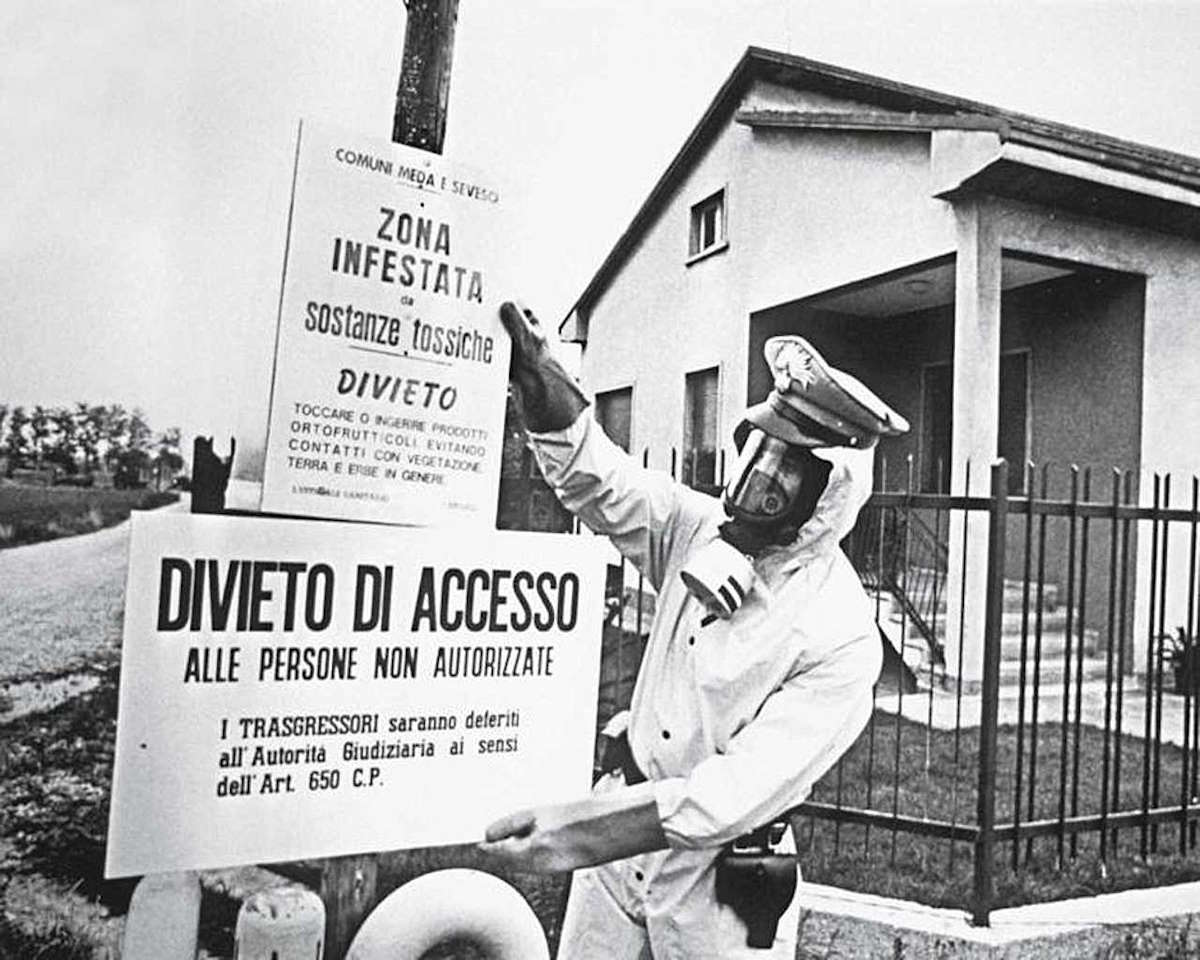
On 10 July 1976 a cloud containing dioxin escaped from the Icmesa plant, contaminating Seveso and the nearby municipalities. It was the most serious industrial accident in Italian history and one of the events that forever changed the European approach to plant safety, until the adoption of the so-called Seveso Directives. Fifty years later his legacy is above all about one question: have we learned to prevent environmental disasters?
The answer, at least looking at the numbers, is less reassuring than one might think. The latest report from the Pool Environment Observatory, released on the occasion of the fiftieth anniversary of the Lombard tragedy, overturns a now deeply rooted belief: in Italy environmental damage is not mainly caused by floods, extreme weather events or other fatalities. Over 70% of cases arise from human responsibilities, such as insufficient maintenance, corrosion of the systems, operational errors and technical failures. Exceptional natural events account for just 2.7%.
Forgotten maintenance
Every year in our country between 1,000 and 1,500 new cases of environmental contamination are recorded. An even more significant fact is that between 500 and 900 incidents concern companies that are perfectly in compliance from an authorization point of view. Being compliant with the rules, therefore, is not enough if daily risk management remains inadequate. The statistics identify a precise weak point: underground tanks, tanks and pipelines are responsible for 40.5% of environmental accidents, ahead of plant and handling areas (22.8%) and fires or explosions (10.1%). Many of these infrastructures are now past their useful life, increasing the risk of failures and leaks that often remain invisible until contamination has already occurred.
“Fifty years after the Seveso disaster we must understand that environmental protection is no longer just a question of bureaucratic compliance, but of technical and cultural management of environmental risk”, observes Lisa Casali, scientific communicator and manager of Pool Ambiente. “The prevention of environmental damage comes first of all from a predictive maintenance strategy and structured staff training, not from defensive interventions against exceptional events”.
The cost of improvidence
The environmental aspect is only part of the problem. Each contamination also translates into an often devastating economic cost. According to the Observatory’s estimates, between 2006 and 2023 around 20 thousand companies went bankrupt due to the impact of reclamation, while over 99% of accidents do not have insurance coverage dedicated to restoration costs. In the end the bill falls on the companies involved, on the public administrations and, inevitably, on the citizens.
This is why experts insist on the need to intervene before the damage occurs. The list of the most frequent errors is well known: not mapping risks, postponing maintenance, neglecting staff training, giving up containment systems, not preparing emergency plans and underestimating insurance coverage. Apparently ordinary errors which, added together, fuel the majority of Italian environmental contamination.
A lesson that is still relevant today
For decades Seveso has been told as the story of an exceptional accident. The data available today instead suggests a different reflection. Major emergencies inevitably attract the attention of public opinion, but environmental risk is built above all in normality, between postponed maintenance, aging systems, insufficient controls and organizations that continue to consider prevention as a cost rather than an investment. This is perhaps the most timely lesson of the 1976 disaster. Environmental safety depends, above all, on the ability to prevent perfectly predictable errors from continuing to transform into new cases of contamination.
