
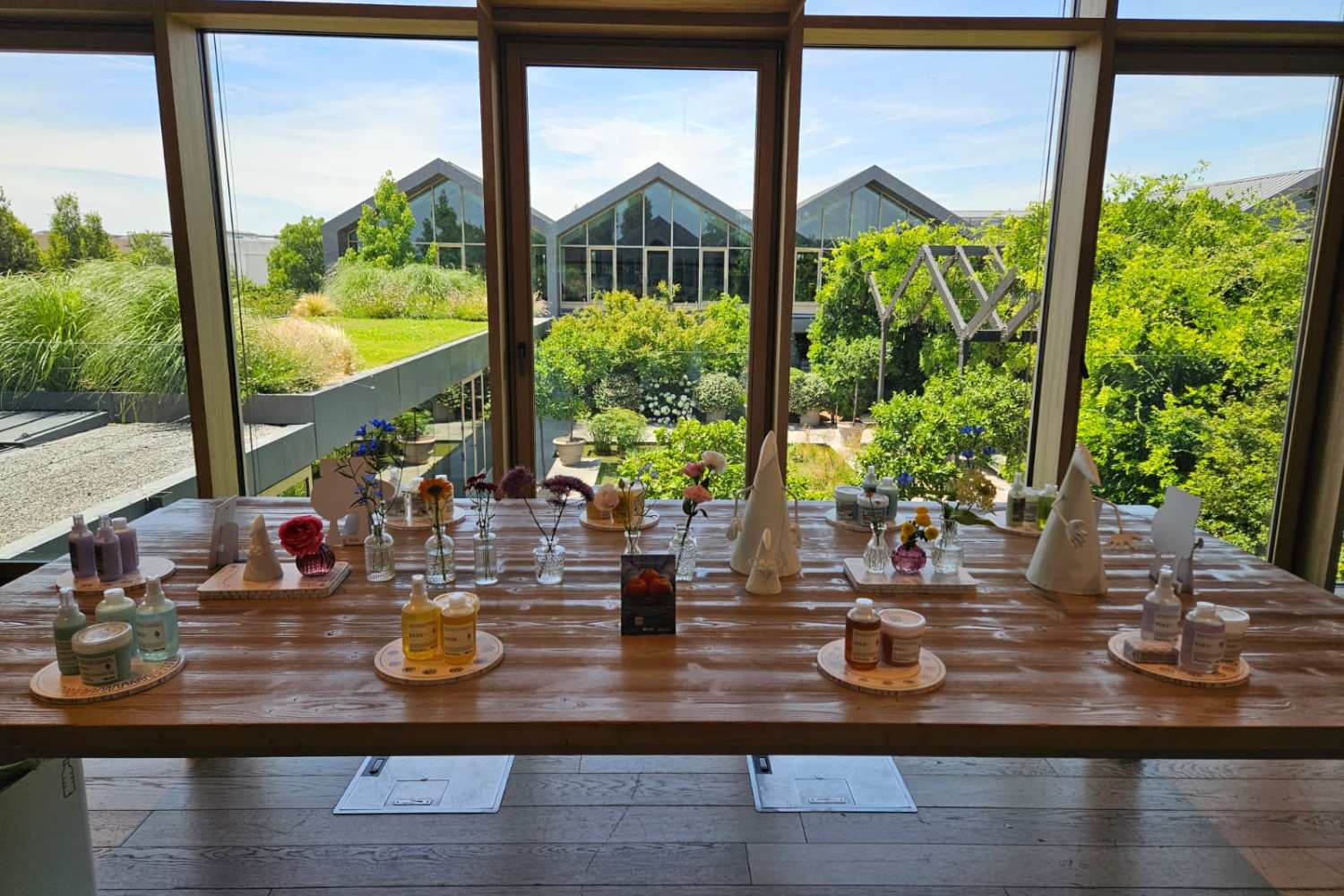
There are companies that talk about sustainability through slogans, declarations of intent, more or less effective formulas. And then there are places where those concepts become visible. Davines Village, on the outskirts of Parma, definitely belongs to the second category.
We are talking about the operational heart of Davines, an Italian brand born in Parma and today recognized internationally for its professional hair and skin care products. The Village is much more than a company headquarters: it is the place where research, production, training and the culture of sustainability coexist on a daily basis.
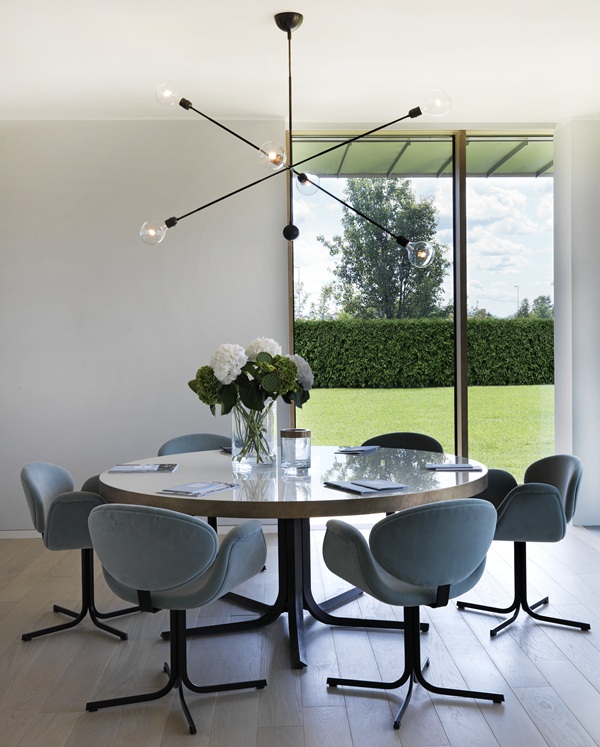
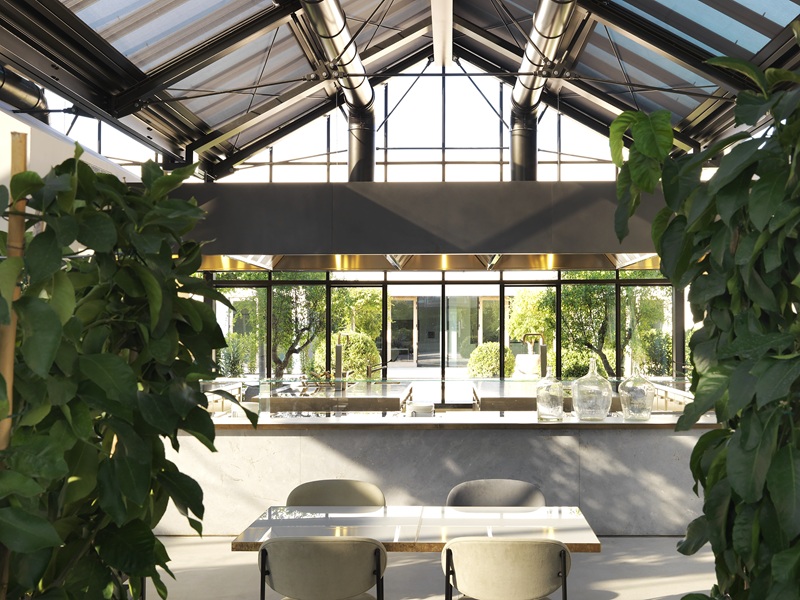
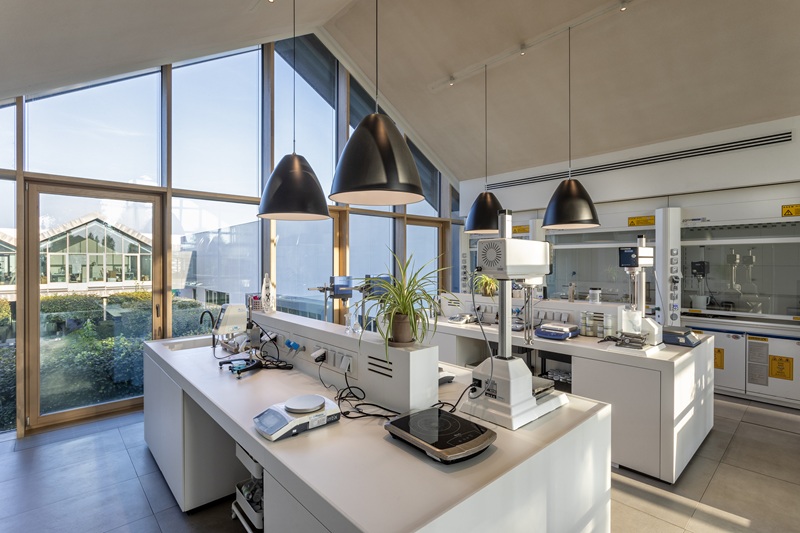
Getting here means entering a space that bears little resemblance to the traditional image of a corporate headquarters. There is no cold idea of the office as a container for desks, meetings and production. There is rather an ecosystem: glass, light, greenery, laboratories, gardens, shared spaces, experimental fields. Everything seems built to remember that work, when well thought out, can dialogue with the landscape and not necessarily oppose it.
The first impression was clear: everyone should be able to work in a place like this, indeed I correct that, we all deserve to work in a place like this! A place where the greenery can be seen from the offices, where the architecture does not close but opens, where the border between inside and outside is continuously crossed by light.
To reinforce this feeling there are also very concrete details: a company bistro with “healthy” options and a quiet room designed to take a break, listen to classical music, relax and regain clarity while looking at the greenery that surrounds the Village. A space that, on certain working days, we would all dream of having available.
In short, a company headquarters that wants to make a way of understanding the company immediately visible.
@GreenMe
Listen
@Davines
@Davines
From the Village to the garden: research as a method
The Davines Group Village, inaugurated in 2018, is the operational heart of Davines: offices, research and innovation laboratories, a production plant, training spaces and green areas coexist here. More than describing it as a simple headquarters, however, it is interesting to read it as a place where the brand’s identity takes shape: attention to beauty, care for people, scientific research and sustainability are not separate elements, but parts of the same ecosystem.
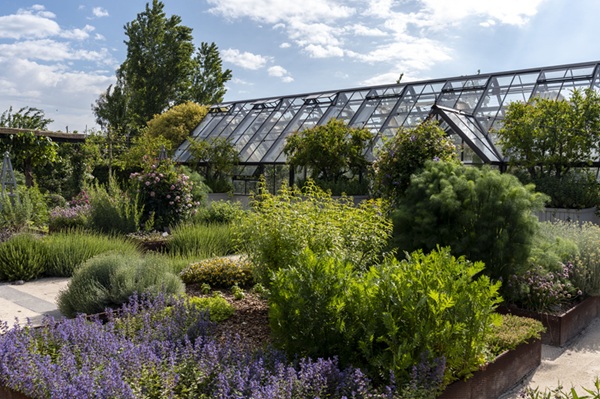
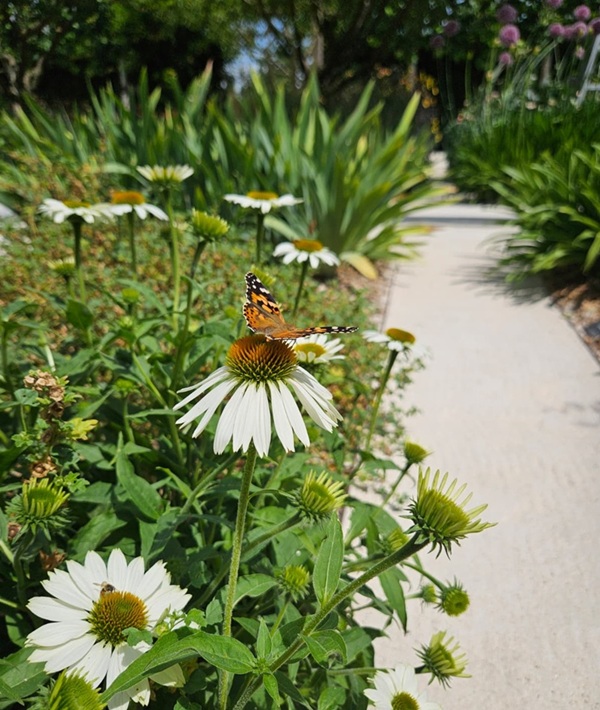
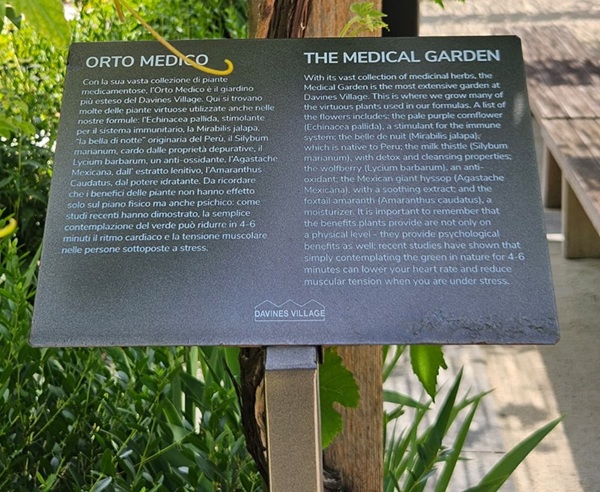
Among the most significant spaces is the Scientific Garden, a botanical garden of approximately 3,000 square meters cultivated according to the principles of organic farming. It is not a decorative element, but a real open-air laboratory, a paradise of biodiversity, where researchers observe plants, essences and ingredients that can become the basis of new formulations. It is here that Davines’ story begins to move away from the classic idea of a cosmetic product and approaches something broader: the relationship between nature, research and innovation.
During the visit, this continuity is very evident. The finished product is not presented as an isolated object, but as the outcome of a journey that starts from the plants, passes through the laboratories and arrives at the formulation. And it is precisely from this idea that my story naturally moves towards EROC, the center dedicated to regenerative organic agriculture.
@Davines
@GreenMe
@GreenMe
EROC: when cosmetics come directly from the fields
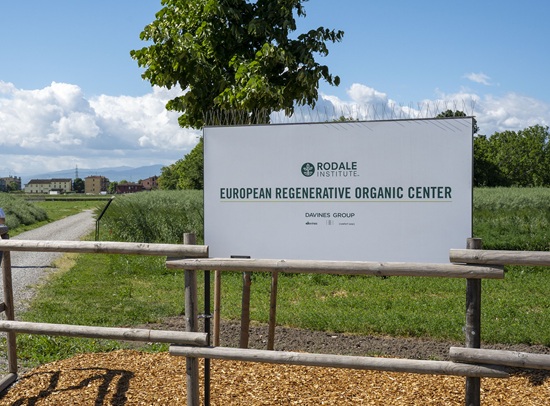
The most radical response comes by ideally crossing the road, towards the European Regenerative Organic Center, EROC, born from the collaboration between Davines Group and Rodale Institute. It is a research and training center dedicated to regenerative organic farming, located on 17 hectares of land.
Here the language changes. We are no longer just talking about cosmetics, textures or packaging, but about earthworms, organic carbon, biodiversity, and crop rotations. And this is precisely the most interesting point: a cosmetics company that decides to invest in an experimental agricultural center because it recognizes that the quality of the ingredients, and therefore of the products, also depends on the health of the soil.
During the visit, Dario Fornara, Research Director of EROC, guided us among the fields, experimental plots and research results. His was not a simple technical explanation but rather a passionate story of those who deeply believe in the value of regenerative organic agriculture. Listening to him talk about soil, biodiversity and organic carbon, one understands that EROC is not only a scientific project, but also a cultural and almost political vision of possible change.
@Davines
The goal of so much work is not only to “protect” nature, but to contribute to its regeneration. The distinction is important. Protecting means limiting the damage. Regeneration means trying to rebuild fertility, biodiversity, balance.
And it is not enough to speak generically about “regenerative” agriculture. The term, now widely used, risks becoming vague or even instrumental. For Davines the reference is regenerative organic agriculture, that is, an approach that combines regenerative practices and organic criteria, excluding the use of pesticides and synthetic fertilizers.
The practices are concrete and among these are crop rotation, cover crops, reduction of soil disturbance, use of compost and organic fertilizers. But their meaning goes beyond technique. They serve to rebuild the organic substance of the soil, to improve its ability to retain water and nutrients, to encourage microbial life, to make the agroecosystem more resilient.
The logic is simple and very powerful: if the soil returns to being a living ecosystem, what it produces can also change quality.
Hence a question arises: if the soil changes, do the plants also change? The first observations seem to indicate yes. Nutrients and biochemical components were analyzed in the experimental crops, with interesting signals on minerals such as magnesium, calcium and potassium. It is a field of research that is still evolving, but the principle is clear: better ingredients can come from healthier soils.
From fields to hair: the evolution of Essential Haircare
After visiting EROC and understanding the work behind each ingredient, trying the renewed Essential Haircare line takes on a whole new meaning. You no longer have the sensation of simply being in front of a shampoo or a conditioner, but the concrete result of a journey that starts from the ground, goes through research and arrives at the finished product.
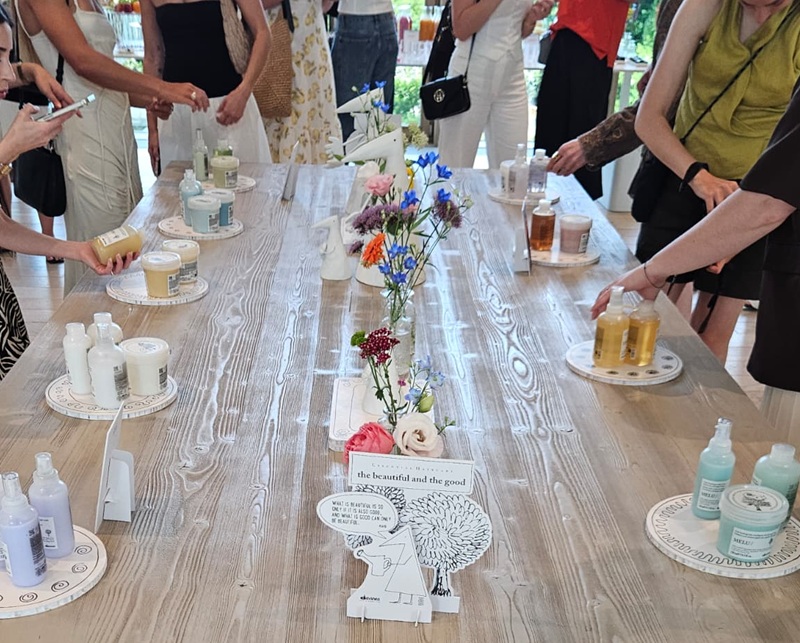
Launched over twenty years ago, Essential Haircare is one of Davines’ most iconic lines and brings the experience of products created for the world of professional haircare and salons into the home routine, which can now also be purchased through the brand’s official shop.
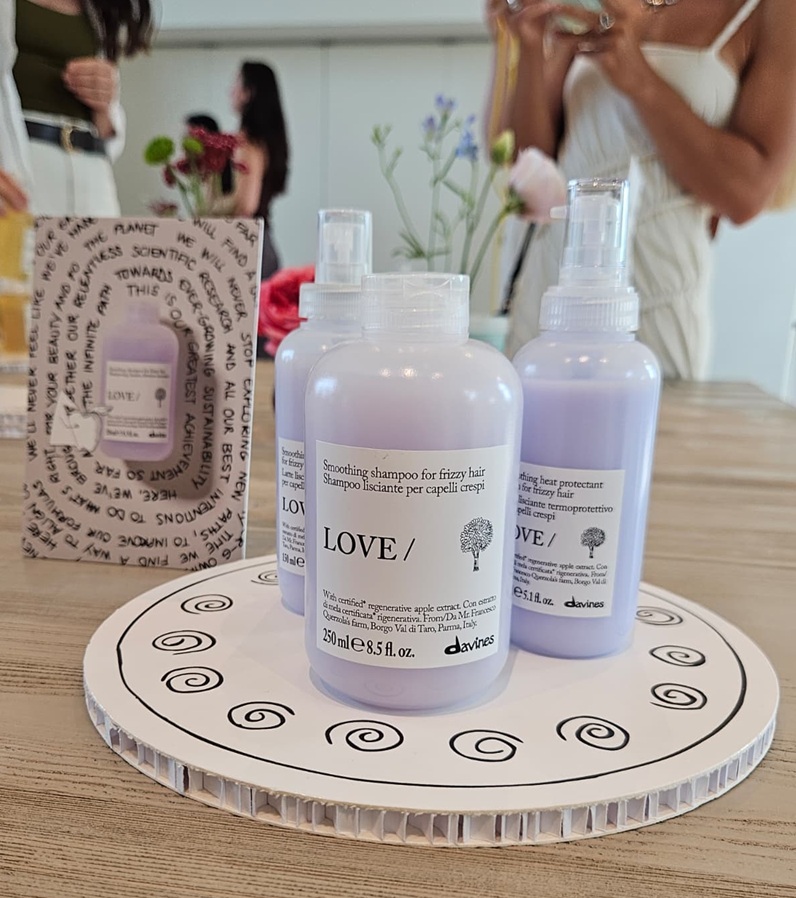
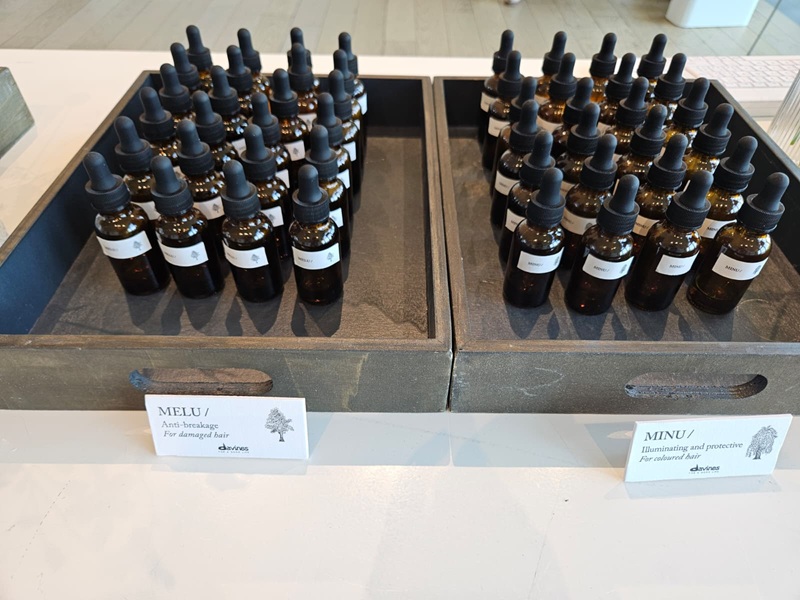
It is divided into nine families, each designed to respond to a specific hair care need: MOMO, moisturizer for dry or dehydrated hair; MINU, color protectant; NOUNOU, nourishing for treated or damaged hair; LOVE SMOOTHING, anti-frizz; LOVE CURL, enhancer for curly and wavy hair; VOLU, volumizing for fine hair; MELU, anti-breakage for long or damaged hair; DEDE, delicate for frequent use; SOLU, purifying for all hair types.
@Davines
@GreenMe
The renewal of the line now involves even more essential formulas, designed to eliminate the superfluous and maintain what is really needed in terms of effectiveness, sensoriality and sustainability. The new formulations reach an average of 93% ingredients of natural origin and an average of 92% biodegradability. The fragrances have also been the subject of research and improvement, with a biodegradability of up to 92%. Each family also contains an active ingredient from Regenerative Organic Certified farms .
.
The packaging has also been redesigned according to eco-design principles. The formats have been revised to reduce the quantity of material used, while for some shampoos 500 ml refills are available which allow you to reduce plastic consumption compared to purchasing two new bottles. It is a detail consistent with the entire project: less material, more attention to circularity, more possibilities for reuse.
And then there are the fragrances. And it’s impossible not to talk about them, because they are one of the strongest points of the experience with Davines products. Anyone who tries Essential Haircare will immediately notice: fragrances are not an accessory detail. They remain, accompany and define the memory of the product. The scent is noticed, liked, recognized. It is an essential part of the Davines identity.
In a sector where effectiveness is often spoken of in purely technical terms, Davines seems to remember that treatment also comes from the senses. A shampoo, a conditioner, a serum are not just functional tools: they are repeated gestures, small personal rituals. The fragrance is therefore something recognizable, pleasant and essential to fully enjoy the experience.
@Davines
Silvia Galafassi, Tecnica Marketing and Fragrance Innovation Specialist at Davines, explains it well:
In Davines, the fragrance is not a simple ornament of the formula, but a design material that completes its meaning and amplifies the experience. The result of the meeting between scientific research, technological innovation and creative sensitivity, over time it has become one of the most distinctive elements of the brand: a sensorial heritage through which our identity and our values take shape. The fragrances we develop are the result of constant research and refinement, aimed at combining creative evolution and responsibility. This translates, for example, into the exploration of highly biodegradable ingredients or, where possible, raw materials valorised through upcycling processes, always respecting the coherence and olfactory identity that distinguish our lines.
It is often thought that, by increasing the naturalness of formulations and their sustainability, we must inevitably give up sensorial pleasantness. Davines instead managed to find a convincing balance between effectiveness, research, sustainability and pleasure of use, demonstrating that these elements can coexist.
The visit to the Davines Group Village leaves you with a precise sensation: here the cosmetic is only the final point of a much longer story. Of course the path is not easy. EROC’s own story demonstrates this: convincing farmers to change practices requires time, support, market and trust. Conventional agriculture is supported by consolidated habits, economic interests and very strong production pressures. Moving to a regenerative organic model means taking risks and building new supply chains.
@Davines
The same complexity also applies, ultimately, to the cosmetic formulation. Creating increasingly natural, sustainable and biodegradable products, without sacrificing effectiveness, stability, safety and pleasantness of use, is not at all simple. Those who read labels and INCI with a very rigorous look will probably still find room for improvement, but it is precisely here that Davines’ work appears interesting: not in the claim of perfection already achieved, but in the search for a credible balance between professional performance, sensoriality and environmental responsibility.
Perhaps the value of the project lies precisely in this: in showing a direction. A journey made of experiments, attempts, reformulated products, certified ingredients and fields observed season after season.
In the end, what remains is a very concrete image: a cosmetics company that takes you into the fields to explain a shampoo to you. And in that apparent paradox there is perhaps the best synthesis of Davines’ work: remembering that beauty, if it wants to be truly sustainable, cannot start from the finished product. It has to start much earlier.
